S-I-L-I-C-A-0-3
Sculpture installation (2026)
Solo exhibition at Akureyri Art Museum, curated by Sigridur Orvarsdottir. Until 6th of September 2026.
The installation consists of Powered by Nature (2025), partially polished silicon-metal sculptures, irregular shape, various dimensions from 15 x 10 x 16 cm to 40 x 32 x 50 cm and Pour on the Coal (2025), unique sculpture consisting of seven glass pipes, coal, and painted metal hooks, app. 102.6 x 285 cm, each pipe ø 25 mm.
The installation was created as part of the ongoing S-I-L-I-C-A research project, in which the artist investigates the global industrial processes behind silicon production.
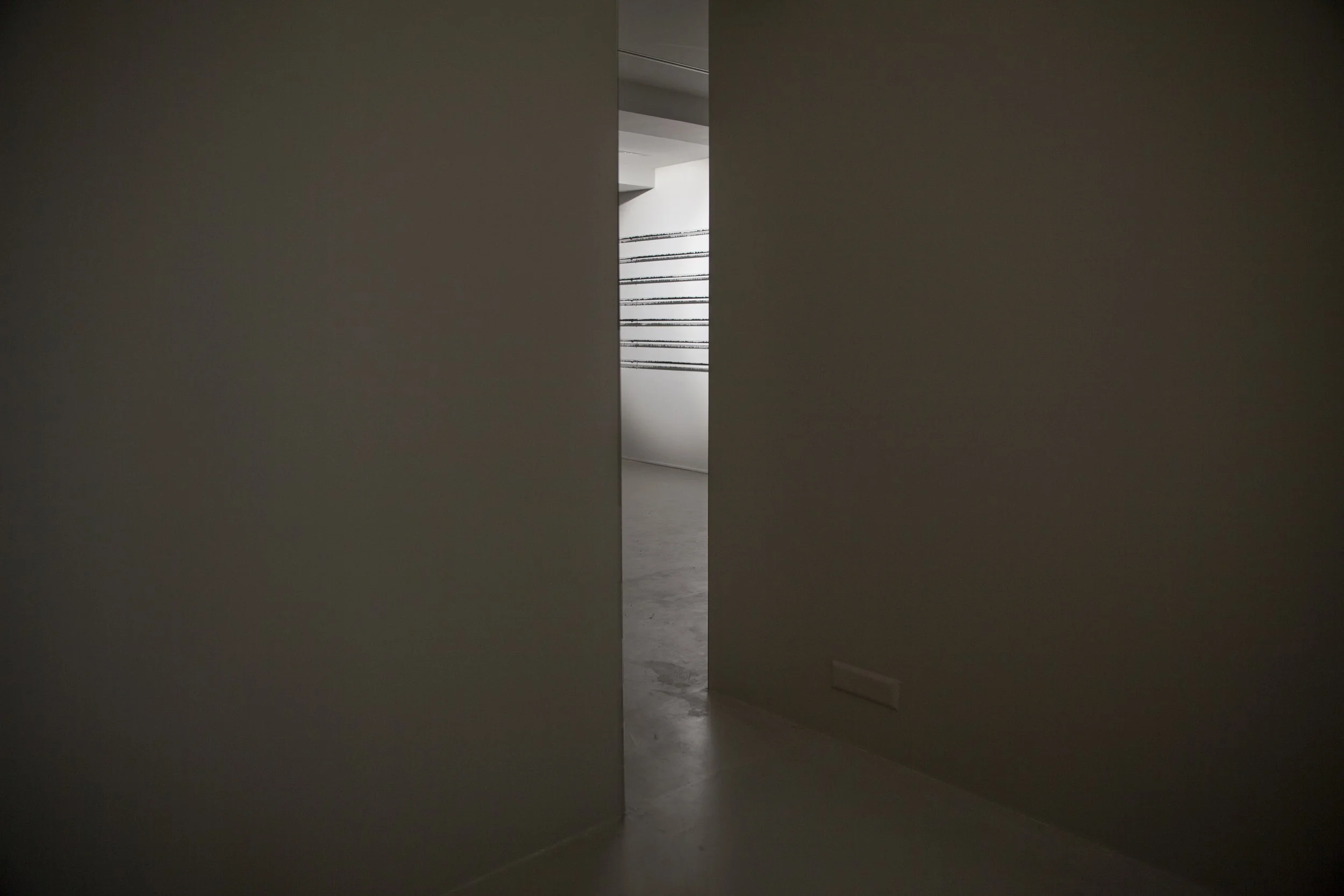
Installation view. Akureyri Art Museum.
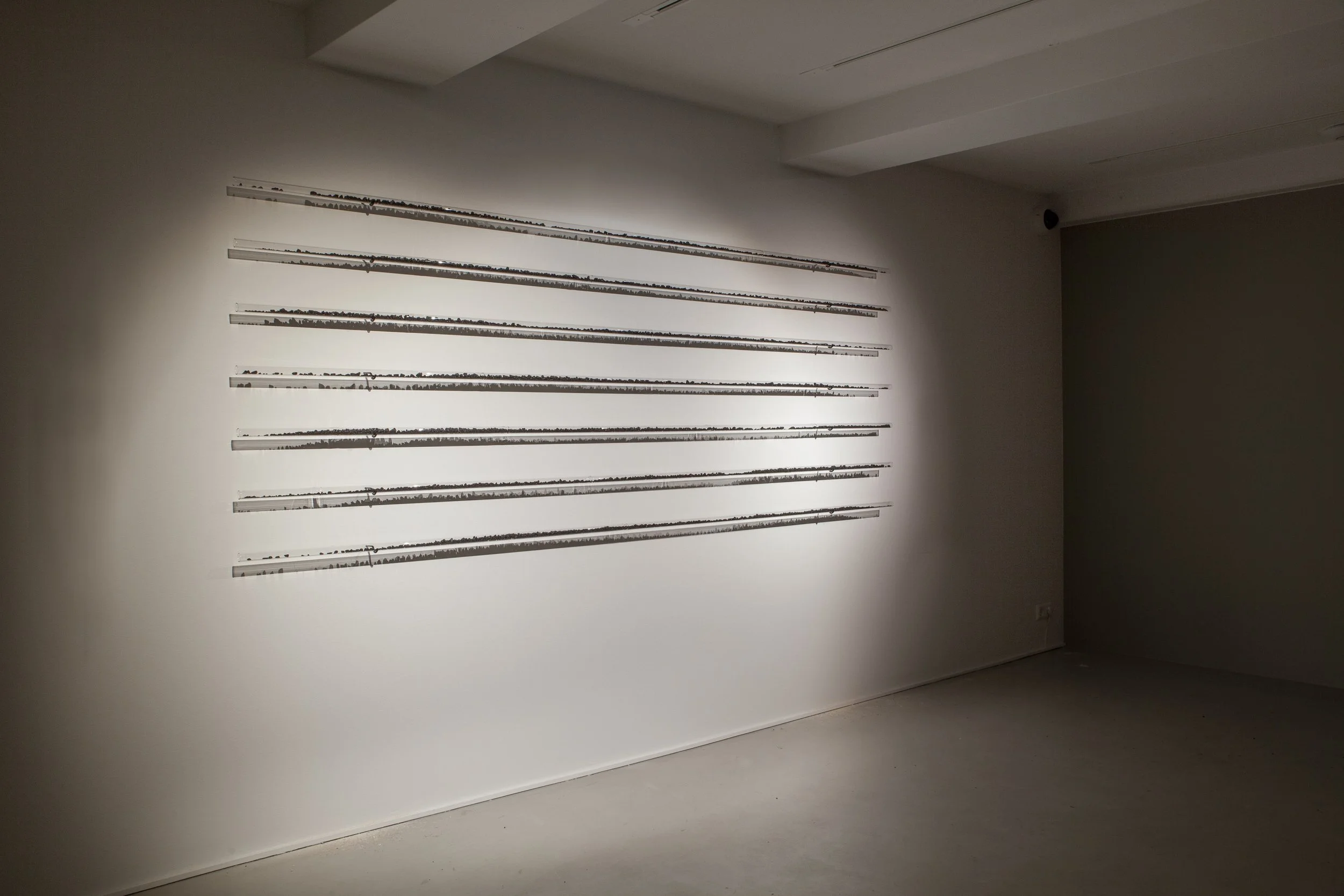
Pour on the Coal. Installation view. Akureyri Art Museum.
Curatorial text at Sigridur Orvarsdottir:
Hulda Rós Guðnadóttir (born 1973) is a working artist educated in anthropology and interactive design as well as in visual arts. She lives and works in Berlin, Germany and has exhibited her work far and wide.
Her works are characterized by her active participation in the international dialogue within contemporary art. Her approach combines research, visual representation and social criticism where social science research methods create a visual result. Guðnadóttir has received numerous recognitions such as the Guðmunda-awards, from the Guðmunda-fund in 2019.
Guðnadóttir’s art creations address the connections between international industrialization and local communities, with emphasis on the impact of resource extraction and questions on the gain, responsibility and long-term effect. A clear connection is made to discourses in contemporary art with the focus on material existence and the functionality of the materials themselves in the presentation.
Through the exhibited works Guðnadóttir addresses the interplay of natural resources, ecosystems, economy and power. She works with materials involved in the operations of the Silicon factory PCC at Bakki in Húsavík and transforms them into a platform for critical contemplation, on the one hand metallurgical-grade silicon produced at the furnaces and on the other hand pieces of coal from the factory’s smelting process. The material is not only a medium but an active participant in forming a meaning and in the spirit of Neo-Materialism its qualities and origin become a part of the work itself.
The sculptures are created from materials unconventional for industry, set straight on the floor of the exhibition space, which underlines their material presence. The materials are taken out of their original context and presented in a new fashion to make clear the economic and political connection – an approach that references the Art Povera tradition. Hence the works open as comments on local industry and as parts of a broader discourse within contemporary art, on material, energy and transformation.
The exhibition poses questions on sustainability and future vision as well as focusing on decision making that takes place far away from the remote little town in the north, where the production and industry is however set up, and how it can have a profound effect on a small community.
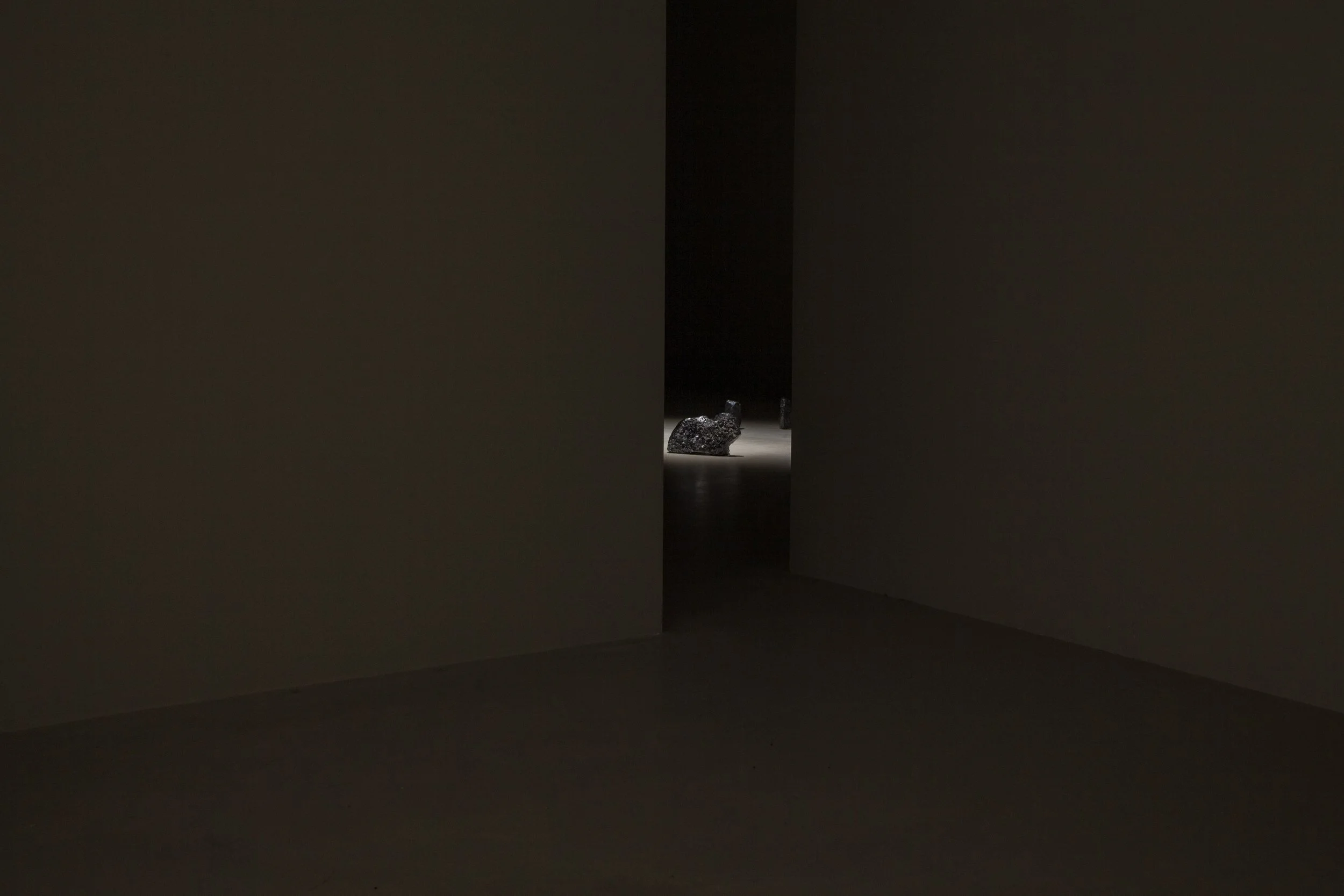
Installation view. Akureyri Art Museum.
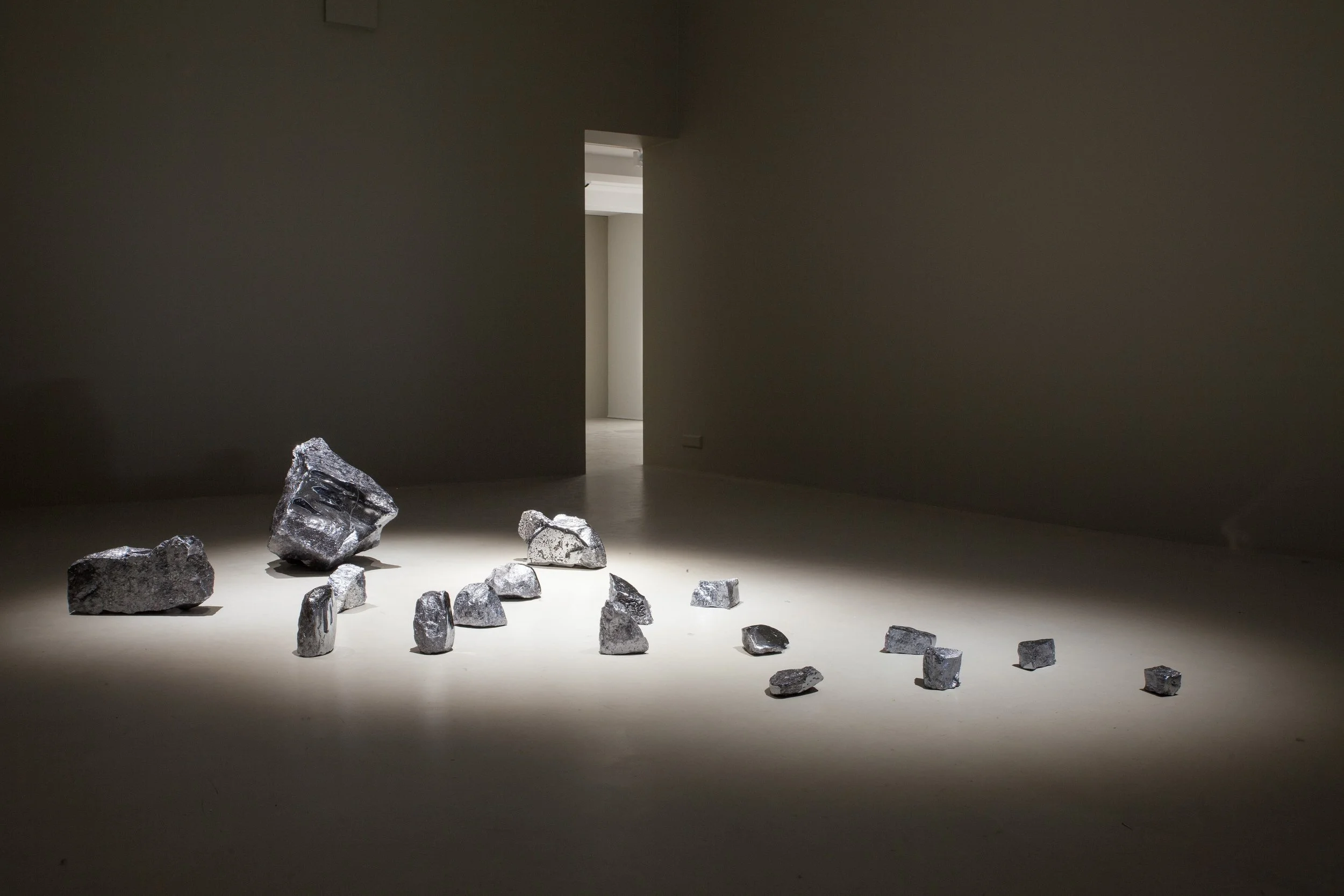
Installation view. Akureyri Art Museum.
Artist in Focus here.
An interview was originally published in Icelandic by the cultural section of the regional newspaper in Akureyri Iceland on the occasion of the opening of S-I-L-I-C-A-0-3. Link to original interview in Icelandic.
““In the project, I examine how the technology we often perceive as immaterial actually has a highly material and energy-intensive production history that stretches across the globe, reaching deep into the earth itself, depleting soils, and even penetrating mountains.” ...
“In the works, I use raw materials that I obtained from PCC at Bakki in Húsavík — chunks of coal used in the smelting process — and I have also created sculptures from the silicon itself. The silicon produced at Bakki was nearly 99% pure and was then further processed elsewhere.” ...
Very different materials and oppositions meet within Hulda’s works — coal, glass, and silicon; darkness and light; heaviness and transparency.
“I think people sense both a certain beauty and also some tension or discomfort when they realize that these materials are connected to the technology we use every day, yet rarely see how it comes into being.”
The exhibition is not presented as a direct political statement, but rather as a space for reflecting on our relationship to materials, energy production, nature, and global systems of manufacturing. Visitors can expect a highly material exhibition in which light, shadows, and the properties of the materials themselves play a crucial role. Some of the works also change depending on how people move through the space and how light falls upon them.”
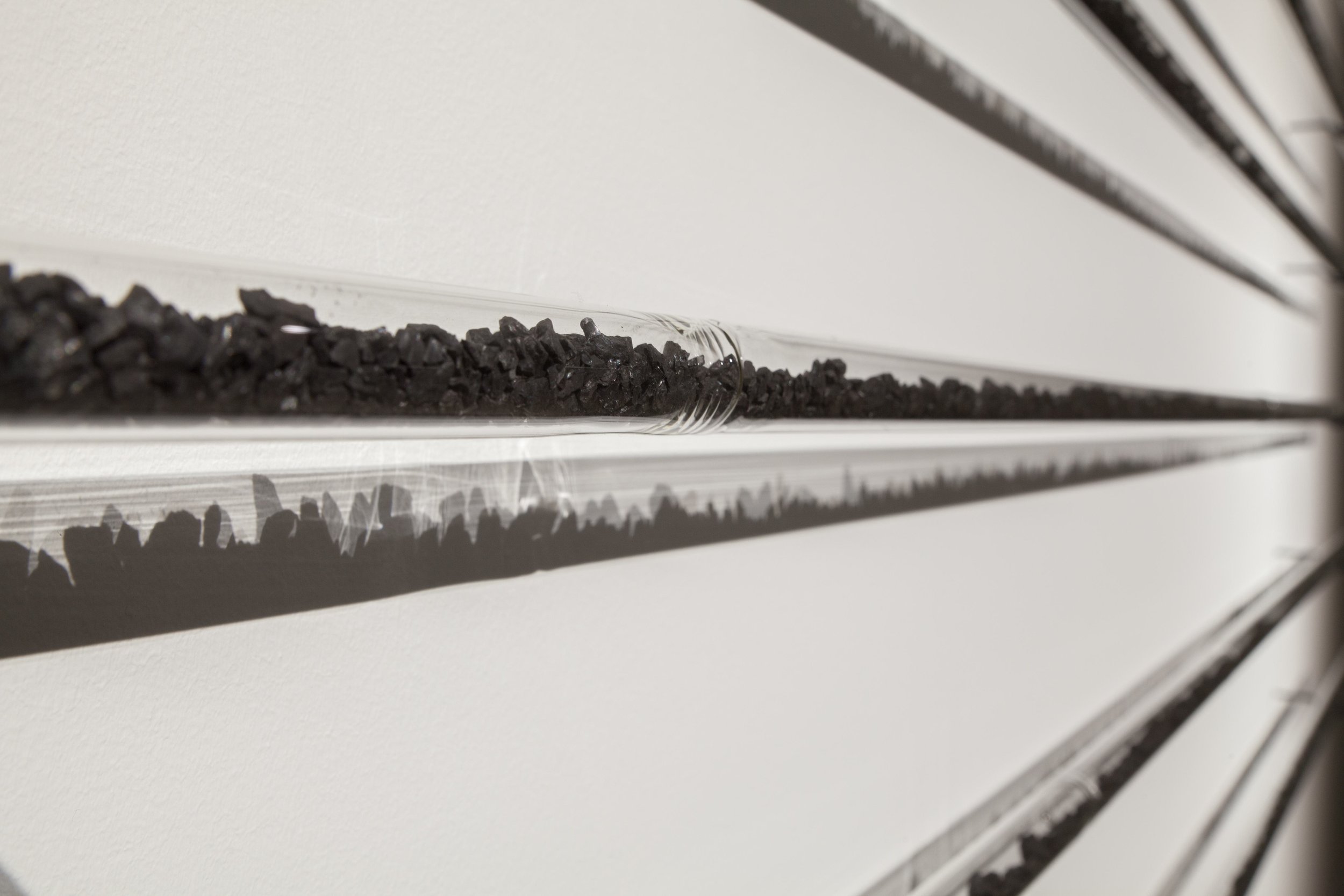
Installation view. Akureyri Art Museum.
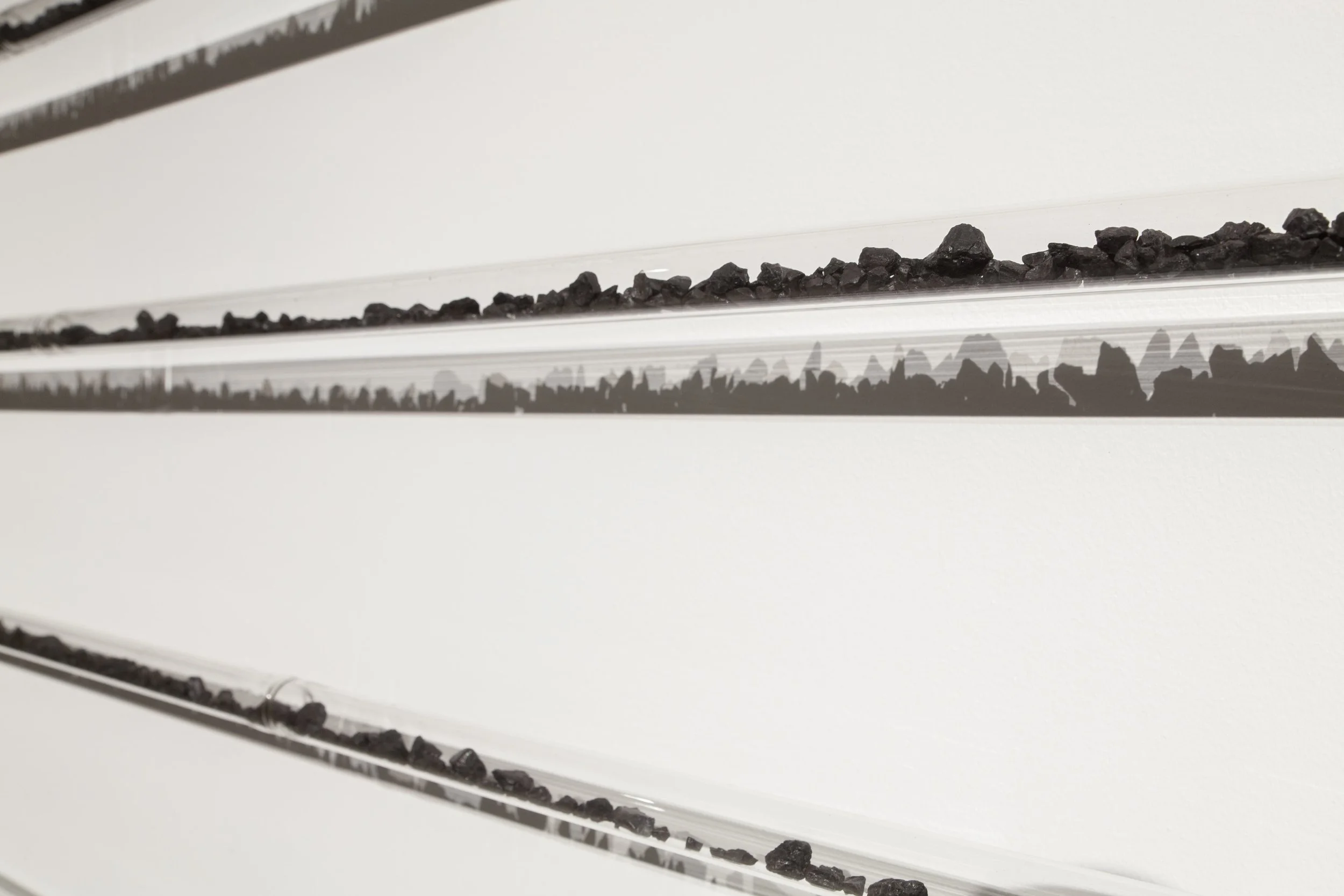
Installation view. Akureyri Art Museum.
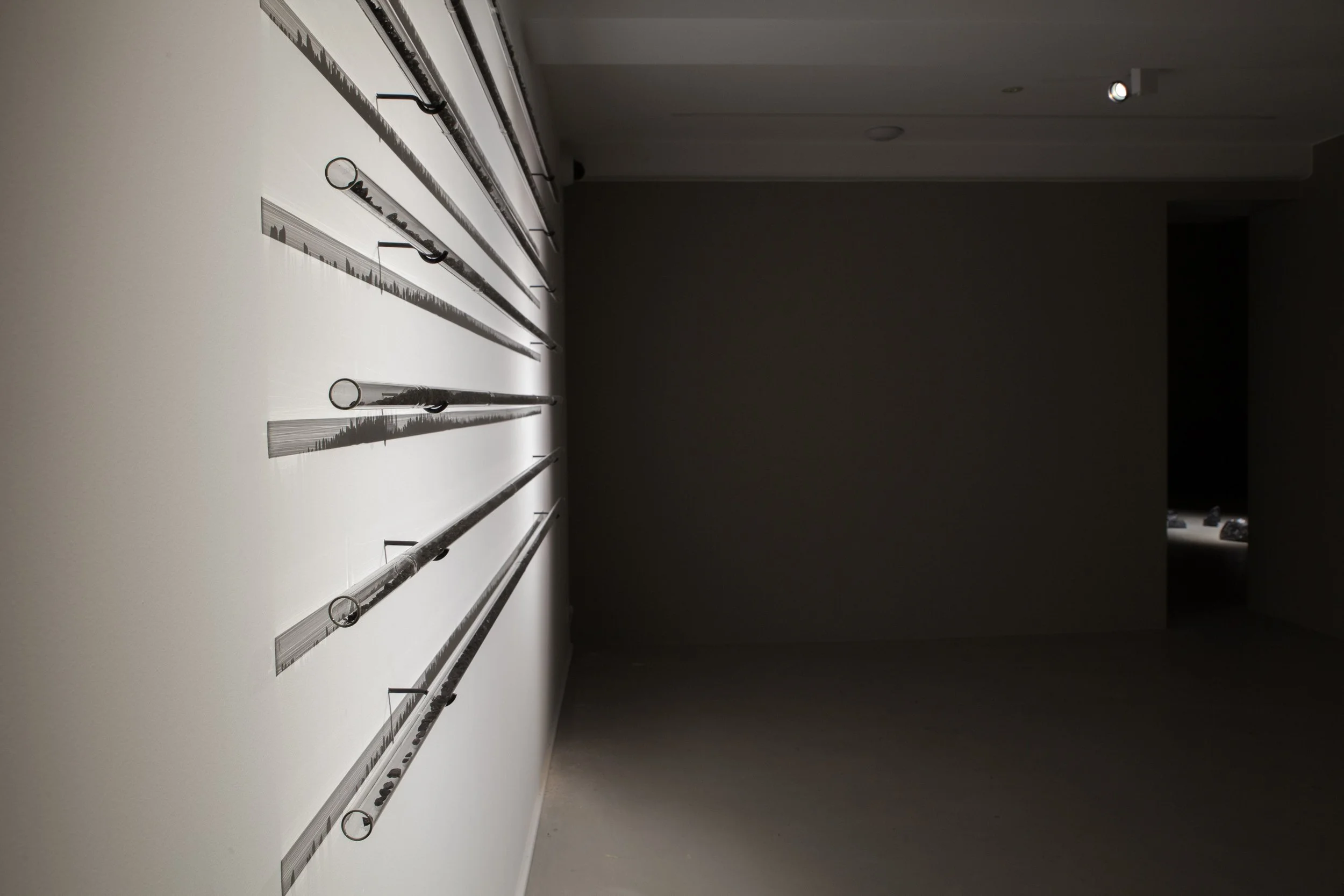
Installation view. Akureyri Art Museum.
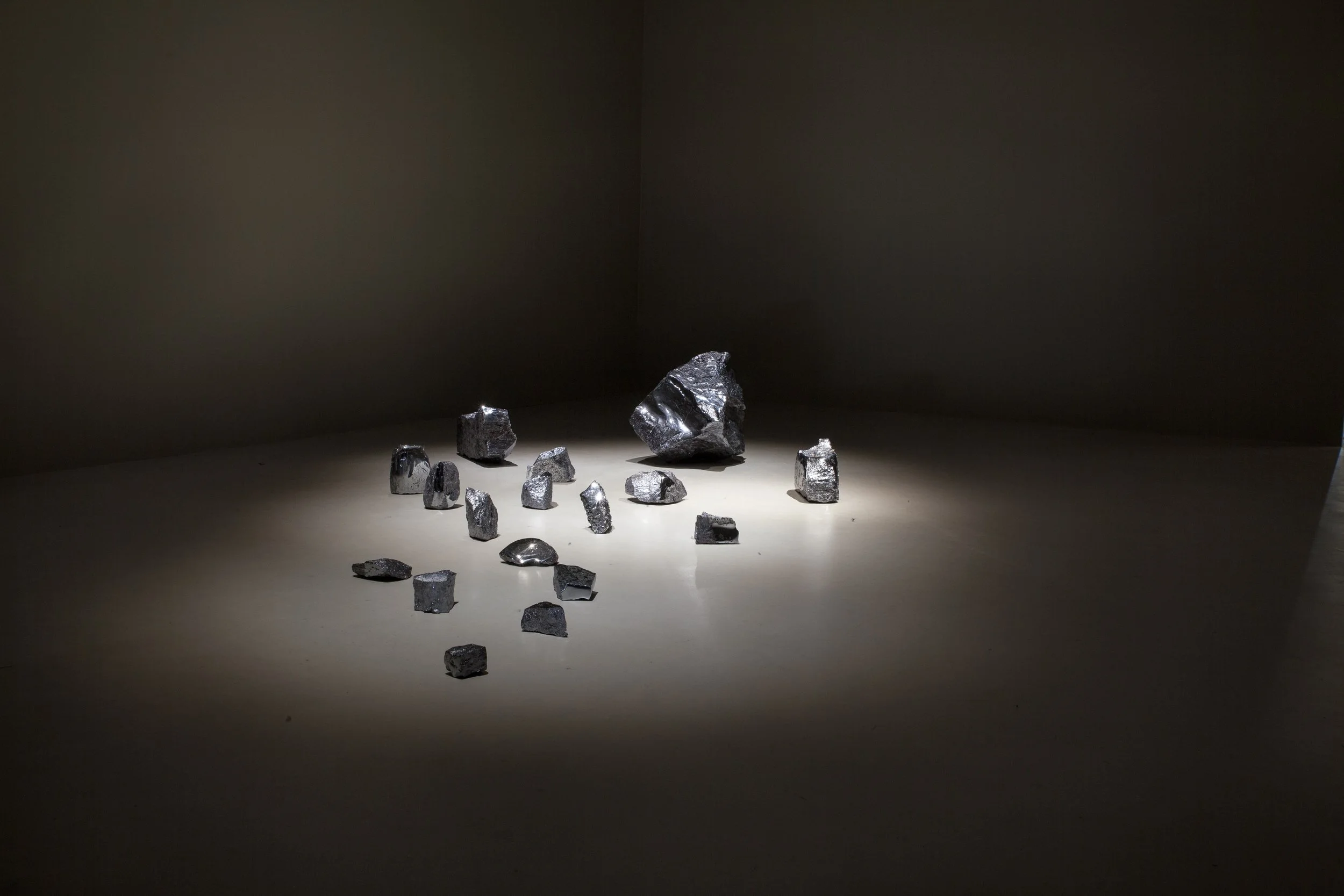
Installation view. Akureyri Art Museum.