S-I-L-I-C-A
S-I-L-I-C-A is an art-practice-as-research project that investigates the global infrastructures behind silicon manufacturing for high-tech applications. Through long-term fieldwork, sculpture, photography, moving image and installation, the project traces the transformation of quartz into one of the defining materials of contemporary society.
The project originated during an artist residency in Western Australia in 2017, where I visited a high-purity quartz mine supplying the global silicon industry. Around the same time, plans were underway for new silicon metal production in my home country, Iceland, including a smelter in North Iceland operated by an international corporation with historical roots in Germany’s Ruhr region.
From my perspective as an Icelandic artist living in Berlin, these developments appeared connected to a wider industrial shift: as former industrial centres such as the Ruhr region are reimagined as post-industrial cultural landscapes, energy-intensive industries are increasingly relocated to peripheral regions where access to land, infrastructure and comparatively inexpensive energy enables new forms of extraction and processing.
The juxtaposition of these seemingly distant places revealed a single industrial network linking resource extraction, energy production, logistics and high-tech manufacturing. Following that realization, S-I-L-I-C-A gradually evolved into a long-term investigation tracing this global infrastructure across multiple continents.
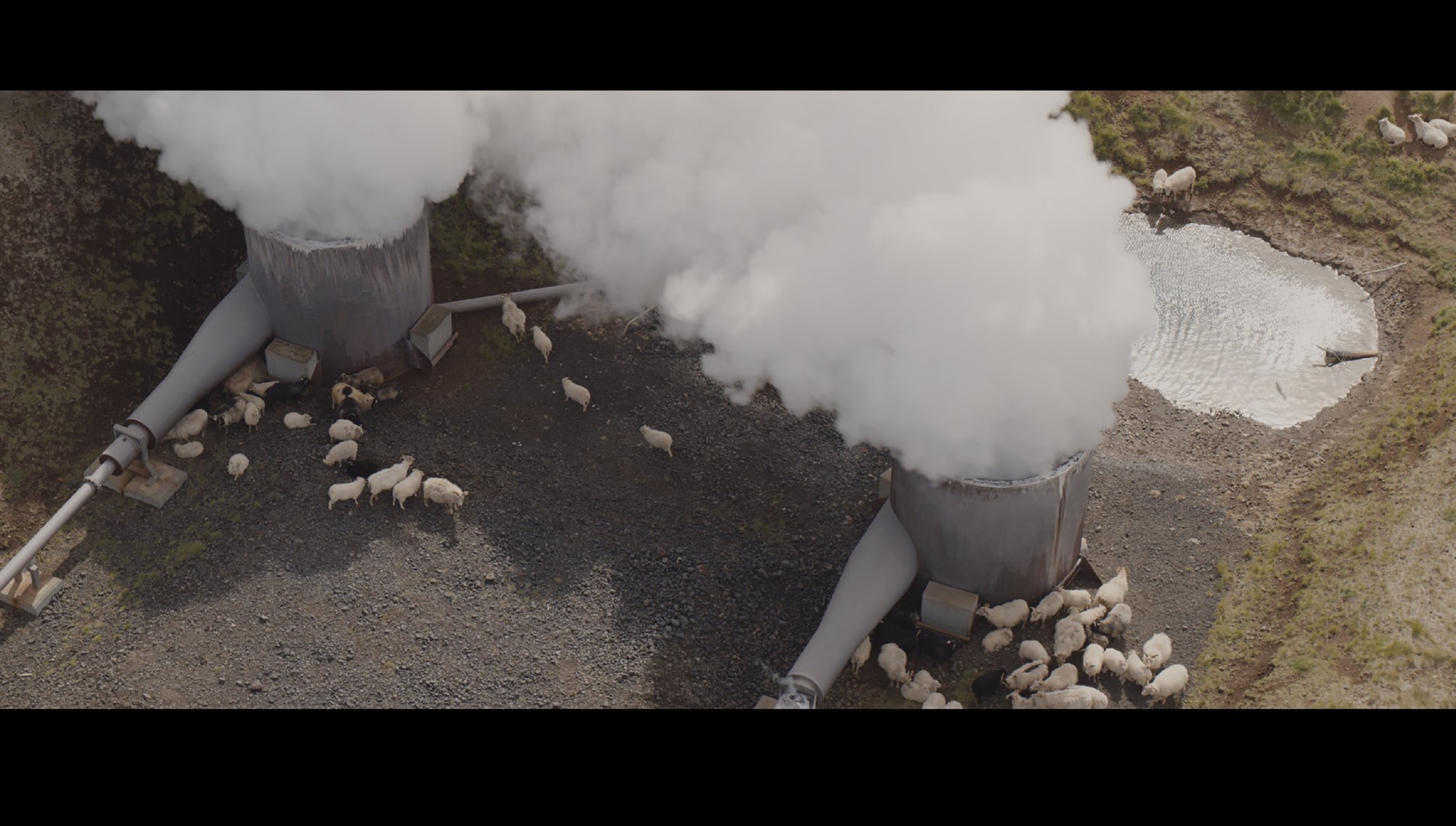
Still from S-I-L-I-C-A archive. 6k footage.
Method
S-I-L-I-C-A extends questions first developed in the earlier research project Keep Frozen, where observations of global shipping, labour and logistics shaped the artist’s approach to industrial infrastructures. If Keep Frozen followed the movement of goods through harbours and trade routes, S-I-L-I-C-A moves further upstream, tracing the extraction, energy production and material transformation that make high-tech manufacturing possible.
S-I-L-I-C-A combines long-term artistic fieldwork with methodologies informed by anthropology, filmmaking and contemporary art. Rather than observing industrial infrastructures from a distance, the project is built through relationships developed over time, as well as shorter encounters with workers on site, researchers, activists, local communities, and art and cultural institutions near the research locations.
An important relational dimension of S-I-L-I-C-A lies in the research process itself. The project does not begin with the exhibition space, but with encounters on site: with workers, technicians, researchers, local communities, guides, activists and people whose everyday lives intersect with the infrastructures being studied. In this sense, the meeting with contemporary art does not only take place later, in the museum or gallery, but also during the development of the work, through conversations, access negotiations, shared observations and informal exchanges outside the institutional space of art.
Access to research sites - including locations normally inaccessible to the public - forms an integral part of the artistic process. Rather than claiming an abstract overview of global industry, S-I-L-I-C-A works from situated knowledge gathered through proximity, access and relationships with specific sites, workers, communities and institutions. This knowledge is transformed into sculpture, moving image, photography, text and immersive installation.
Since 2017, the research has expanded across multiple sites connected to the silicon value chain and its supporting industries, including quartz mining in Egypt, open-pit coal mining in Colombia, eucalyptus monoculture plantations in Uruguay, silicon metal production and geothermal energy infrastructure in Iceland, and high-tech fabrication environments in Taiwan and South Korea.
The project investigates how geographically distant locations become interconnected through global systems of production while remaining largely isolated from one another in everyday experience. Rather than treating silicon as an isolated subject, S-I-L-I-C-A follows it as a material node within wider systems of extraction, energy, labour, logistics and high-tech manufacturing.
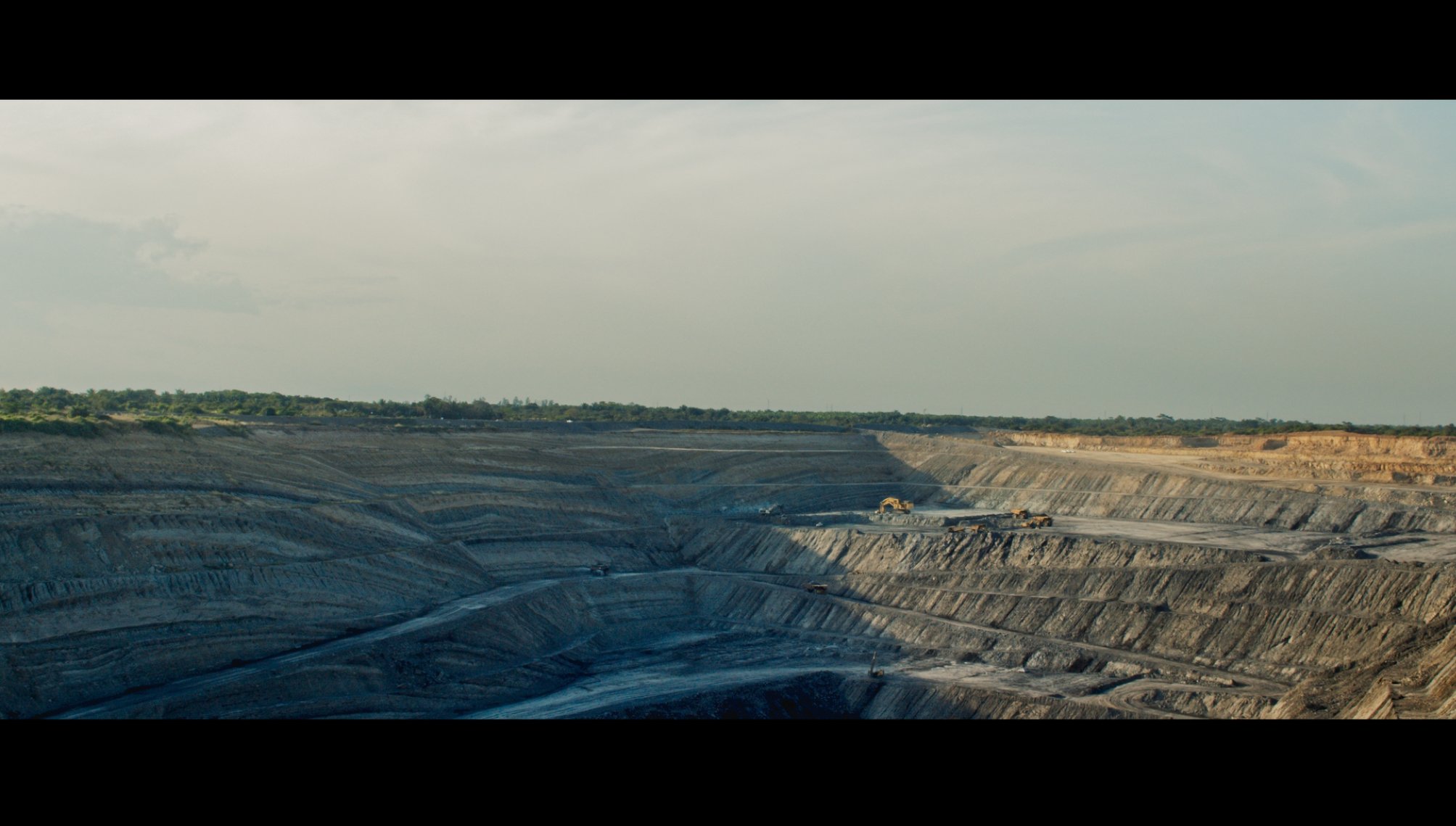
Still from S-I-L-I-C-A archive. 6k footage.
public forms
S-I-L-I-C-A is developed as an artistic research project in which knowledge is made public through exhibitions, installations, moving image, sculpture, photography, text and conversation. After several years of site-based research, S-I-L-I-C-A is currently moving into a new phase centred on studio production, exhibition development, material experimentation and the synthesis of accumulated research material. Rather than separating research from artistic form, the project treats each public presentation as part of the research process itself.
The project has unfolded through a series of public iterations, from early presentations in Berlin to the development of sculptural and installation-based formats, leading to the museum exhibition S-I-L-I-C-A-0-3 at Akureyri Art Museum in 2026. Interviews, texts, talks and project documentation further extend the research beyond the exhibition space, allowing the project to circulate among artistic, institutional and public audiences.
Next Phase
The next phase of S-I-L-I-C-A centres on the production of a six-channel immersive video installation based on the accumulated fieldwork material gathered since 2017. Alongside sculptural and material-based works, the installation will continue to translate the research into spatial, visual and experiential forms.
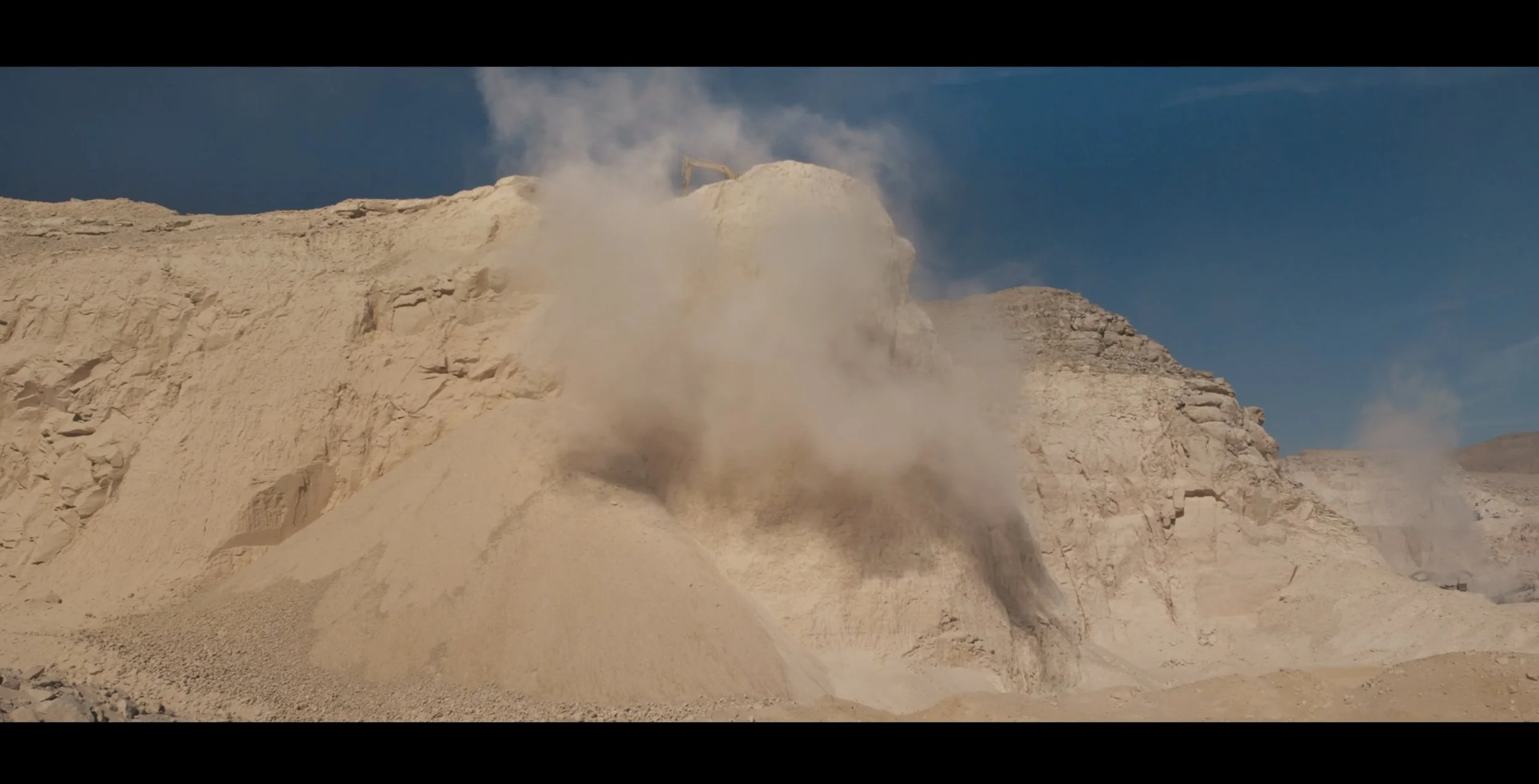
Still from S-I-L-I-C-A archive. 6k footage.
Artist in Focus
An interview with Hulda Rós Guðnadóttir was published in Icelandic by the cultural section of the Akureyri regional newspaper Kaffið on the occasion of the opening of S-I-L-I-C-A-0-3 at Akureyri Art Museum. An English translation is available through Gallery Gudmundsdóttir.
Read the Artist in Focus inteview here.
““In the project, I examine how the technology we often perceive as immaterial actually has a highly material and energy-intensive production history that stretches across the globe, reaching deep into the earth itself, depleting soils, and even penetrating mountains.” ...
Very different materials and oppositions meet within Hulda’s works — coal, glass, and silicon; darkness and light; heaviness and transparency.
“I think people sense both a certain beauty and also some tension or discomfort when they realize that these materials are connected to the technology we use every day, yet rarely see how it comes into being.”
The exhibition is not presented as a direct political statement, but rather as a space for reflecting on our relationship to materials, energy production, nature, and global systems of manufacturing. Visitors can expect a highly material exhibition in which light, shadows, and the properties of the materials themselves play a crucial role. Some of the works also change depending on how people move through the space and how light falls upon them.”
Project Iterations
2026 S-I-L-I-C-A-0-3, Akureyri Art Museum, Iceland
2025 S-I-L-I-C-A-0-2, Gallery Gudmundsdóttir, Berlin, and SPARK Art Fair, Vienna
2022 S-I-L-I-C-A-0-1, Scharaun, Berlin
2019 Preview presentation at the 20th Anniversary of the Felleshus, Nordic Embassies, Berlin
Selected works
Powered by Nature (2025)
Pour on the Coal (2025)
Here Comes the Sun (2025)
SILICA 01-05 (2022)
Ocean Glory (2019)