Art Practice as Research
Hulda Rós Guðnadóttir defines her artistic approach as "art practice as research", using the process of art-making as a method of inquiry in combination with site visits inspired by her training in anthropology. Over the years, she has developed several long-term research projects through her practice.
Currently she is working on the S-I-L-I-C-A artistic research project. S-I-L-I-C-A investigates the material, energetic, and social conditions underpinning the production of high-purity silicon for contemporary technological use. The project traces the extraction and transformation of the materials required for silicon production and subsequent fabrication of consumer technologies, across multiple sites involved in extraction, processing, energy generation, and industrial transformation, foregrounding the spatial and labour conditions embedded in materials often perceived as immaterial or abstract. The research further develops through the production of artworks, exhibition-making, and their contextualisation with audiences. Current solo exhibition is at Akureyri Art Museum in north of Iceland open until 6th of September 2026.
An early exploration, Hops Hopsi, resulted in two major solo exhibitions at Program in Berlin and the Reykjavík Art Museum.
Her most extensive investigation to date, Keep Frozen, unfolded over more than a decade and generated a wide body of work, including installations, solo and group exhibitions, a cinema-released film, two published books, and a series of seminars held in various cities around the world.
“The project, which has been running for fifteen years and counting, examines the multi-layered functioning of the global economy via the specific local dynamics of industrialized fishing in Iceland. Informed by anthropological research methods as well as her own personal experiences, Guðnadóttir’s artistic techniques use strategies of displacement and de-familiarization to disrupt familiar narratives around labor, class, and urban development, as well as their entanglement with the arts. What we are presented with is a project revolving around a complex, dynamic, and historically contingent space where the Sub-Arctic is framed in relation to broader global imaginaries.”
In the year 2025 Distanz Verlag in Berlin published a monograph of the Keep Frozen research project titled ‘Rhythm of Labor' that includes four essays, thorough introduction and context and pictures of all the works produced. Can be ordered here.
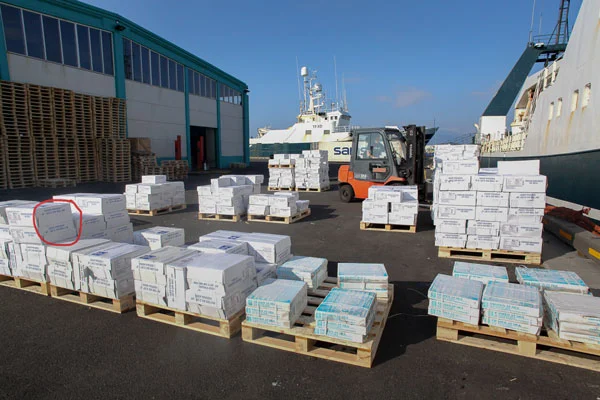
Research photo from Reykjavik harbour. Photo: Hulda Rós Gudnadóttir
“Looking back, it becomes clear that the research process of Keep Frozen went through different stages. While the initial years were mainly devoted to site visits and participatory observations, the focus increasingly shifted towards the production of discrete artworks, until the research primarily revolved around arranging mixed-media instalations that combined old and new artworks, using recontextualization as a strategy.”
Art practice as research (often called practice-based or practice-led research) is a methodology in which the creation of art itself is a form of inquiry. This means that art practice as research is a certain a mode of inquiry. Rather than separating making from thinking, this approach positions the artistic process—and its outcomes—as a legitimate and generative way of producing new knowledge or understanding. This research - in comparison to text-based research - advocates for more plural, sensory, and embodied ways of knowing and the artistic process, methods, and outputs are central to the knowledge production. The artist-researcher investigates a question or theme not just about art, but through the making of art.
Key characteristic of this artistic position are making as thinking - the creation of art is not illustrative of research—it is the research; reflexivity - critical reflects on ones own process, context, and outcomes; and embodied and situated knowledge - lived experience, material engagement, and context-specific knowledge (specific to a culture, history, or place) not easily accessible by other means, academic or not. The art work aims to extend understanding within and/or beyond the field of art—whether in cultural, political, material, aesthetic, or philosophical terms.
The artistic value of art practice as research lies in its unique ability to produce knowledge, insight, and experience through methods that are sensory, intuitive, embodied, and materially engaged—methods that often lie beyond the reach of traditional academic inquiry. It shows the value of thinking through aesthetics, intuition, and speculation—as valid and vital ways of knowing.
Artistic research generates non-verbal, experiential, and affective knowledge. The act of making—whether through performance, film, installation, sculpture, or sound—can reveal complexities that cannot be fully articulated in language. Examples of this is tacit knowledge - what we know through doing; sensory knowledge - what we understand through bodily experience; and affective knowledge - how art communicates through feeling.
As research art practice becomes a tool for asking and answering questions that are philosophical, political, cultural, or personal—through form, material, and action. It has capacity to provoke thought, reframe questions, or open ethical spaces for dialogue. It gives form to questions we didn’t know how to ask, and language to experiences we didn’t know how to name. An important artistic value of art practice as research is that there is not only artistic value in the final work, but in the process of invention and rethinking—of both art and the world. Artistic research often engages deeply with urgent contemporary issues—ecological, social, political, or technological—and offers a space for critical reflection that is not confined to academic or institutional logic. Artistic research challenges conventions and expands what art can be and how it can function.
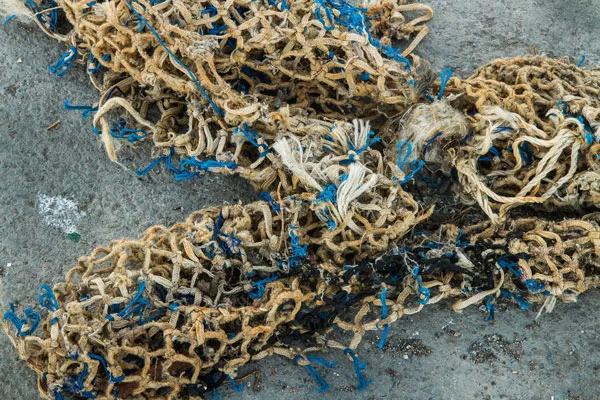
Research photograph from Essaouira, Morocco. Photo: Hulda Rós Gudnadóttir
Artistic research often intersects with science, philosophy, anthropology, or technology. It creates dialogue across disciplines, bringing new modes of inquiry into play and reconfiguring how knowledge is exchanged.
What is interesting about art practice as research - compared to conventional academic research practices - is that it fosters understanding through multiplicity rather than reduction, ambiguity rather than certainty. It uncovers perspectives that are plural and thus resists universal truths. Art practice as research contributes to the cultural imagination and increased the diversity of artistic production and our shared symbolic life.
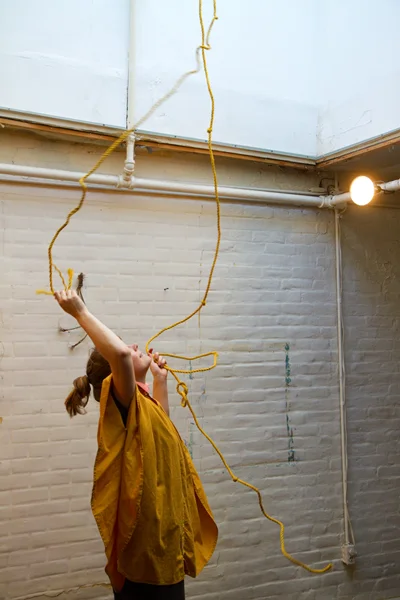
Audience performance. Keep Frozen part one @ De-Construkt, NY. Photo: Hulda Rós Gudnadóttir