Keep Frozen
Long-term artistic research project, 2010–2025
Keep Frozen is a long-term artistic research project examining the workings of the global economy through the specific local dynamics of industrialised fishing in Iceland. Developed over fifteen years, the project brings together field research, moving image, installation, sculpture, performance, photography and writing.
The research began in 2010 from a personal and embodied relationship to Reykjavík’s harbour and the working environments of Icelandic fishing. What initially emerged from childhood memories and an attraction to harbour aesthetics gradually developed into a broader investigation of dock labour, class, material infrastructures, industrial transformation and the ways local places are shaped by global economic systems.
Fieldwork was central from the beginning. Rather than approaching the harbour as a subject to be observed from a distance, I worked through repeated site visits, lived experience, participation and collaboration. Research took place in fishing villages, ports and coastal locations around the Atlantic, but a particularly important relationship developed with dockworkers in Reykjavík. Their movements, working rhythms, tools, spaces and material environment became the basis for a number of works.
Over time, the research shifted from observation and site-based encounters toward the production and recontextualisation of artworks. Moving images, performances, found objects, sculptures, photographs and paintings began to circulate between different installations, acquiring new relationships according to the architecture, institutional context and other works around them. In this sense, Keep Frozen developed not as a single artwork but as an evolving research environment.
“The project, which has been running for fifteen years and counting, examines the multi-layered functioning of the global economy via the specific local dynamics of industrialized fishing in Iceland. Informed by anthropological research methods as well as her own personal experiences, Guðnadóttir’s artistic techniques use strategies of displacement and de-familiarization to disrupt familiar narratives around labor, class, and urban development, as well as their entanglement with the arts. What we are presented with is a project revolving around a complex, dynamic, and historically contingent space where the Sub-Arctic is framed in relation to broader global imaginaries.”
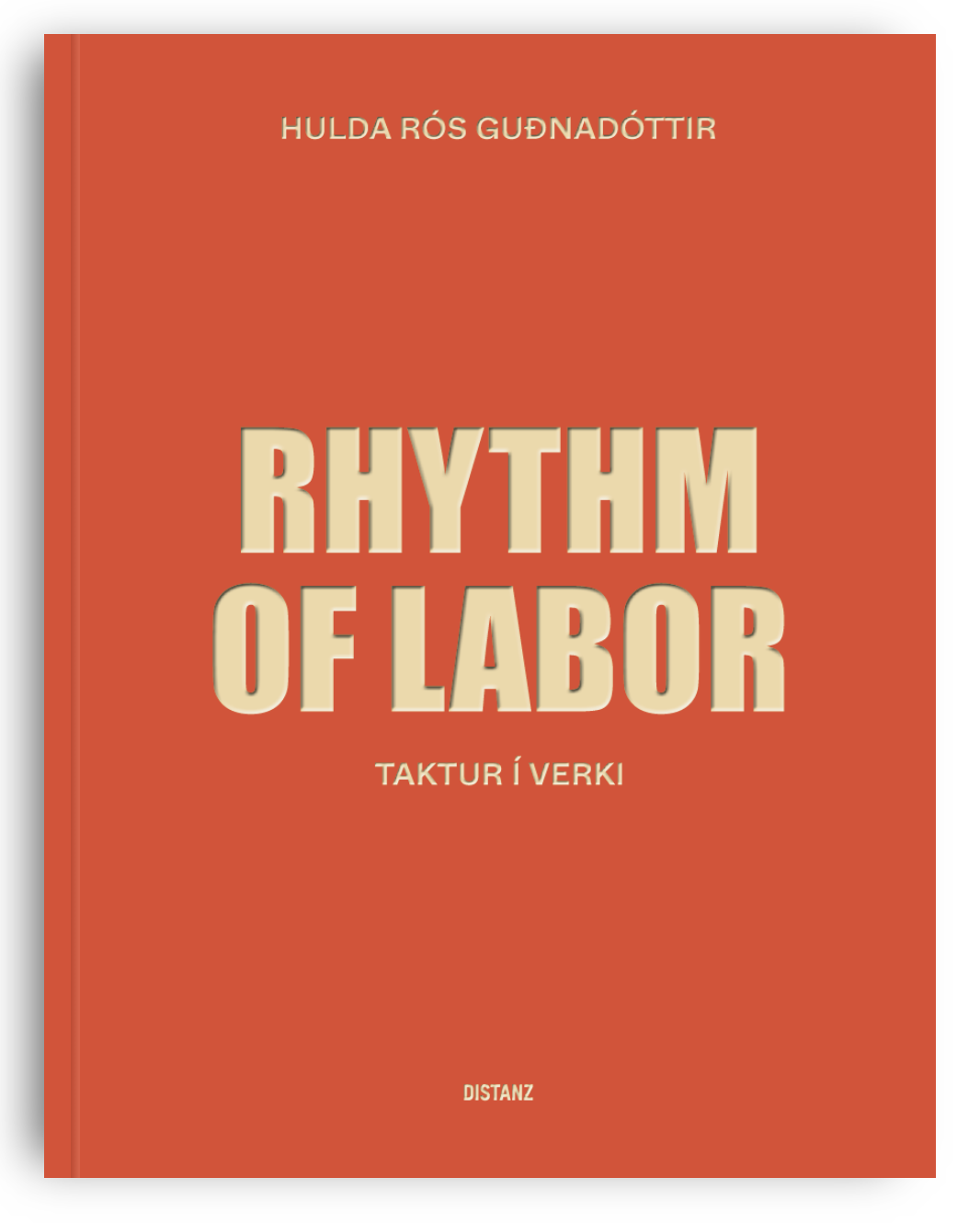
Purchase the book at Distanz Verlag website.
Published by DISTANZ in 2025, Rhythm of Labor / Taktur í Verki brings together fifteen years of Keep Frozen as an artistic research process. Rather than functioning primarily as an exhibition catalogue, the monograph traces how fieldwork, personal history, anthropology, collaboration and artistic production became intertwined across different phases of the project.
Essays by Heiða Björk Árnadóttir, Elisabeth Brun, Anamaría Garzón Mantilla and Katla Kjartansdóttir approach the work through social history, labour, Arctic and Sub-Arctic representation, coloniality, tourism and material culture. Julia Gwendolyn Schneider’s introduction provides an overview of the development and methodology of the project.
RHYTHM OF LABOR / TAKTUR Í VERKI
Monograph dedicated to the Keep Frozen art practice as research project.
Publisher. Distanz Verlag, May 2025.
Funded by Nordic Culture Fund, Icelandic Visual Arts Fund and The Icelandic Visual Art Copyright Association.
Editor: Julia Gwendolyn Schneider
Language: English/Icelandic
132 pages, 115 color images, hardcover with linen, 23 × 29.5 cm
Introduction written by Julia Gwendolyn Schneider. Essays by Heiða Björk Árnadóttir, Elisabeth Brun, Anamaría Garzón Mantilla and Katla Kjartansdóttir.
FROM FIELDWORK TO INSTALLATION
“Looking back, it becomes clear that the research process of Keep Frozen went through different stages. While the initial years were mainly devoted to site visits and participatory observations, the focus increasingly shifted towards the production of discrete artworks, until the research primarily revolved around arranging mixed-media instalations that combined old and new artworks, using recontextualization as a strategy.”
The development of Keep Frozen took place through successive exhibitions, films and installations rather than through a predetermined final form. A particularly productive period began in 2016 with the 48-hour Dock Worker’s Performance, the three-channel video Labor Move, Golden Ship, Shipyard Paintings and Ghostnet. The feature-length documentary Keep Frozen premiered the same year in the Regard Neuf competition at Visions du Réel and subsequently circulated internationally in both film and contemporary-art contexts.
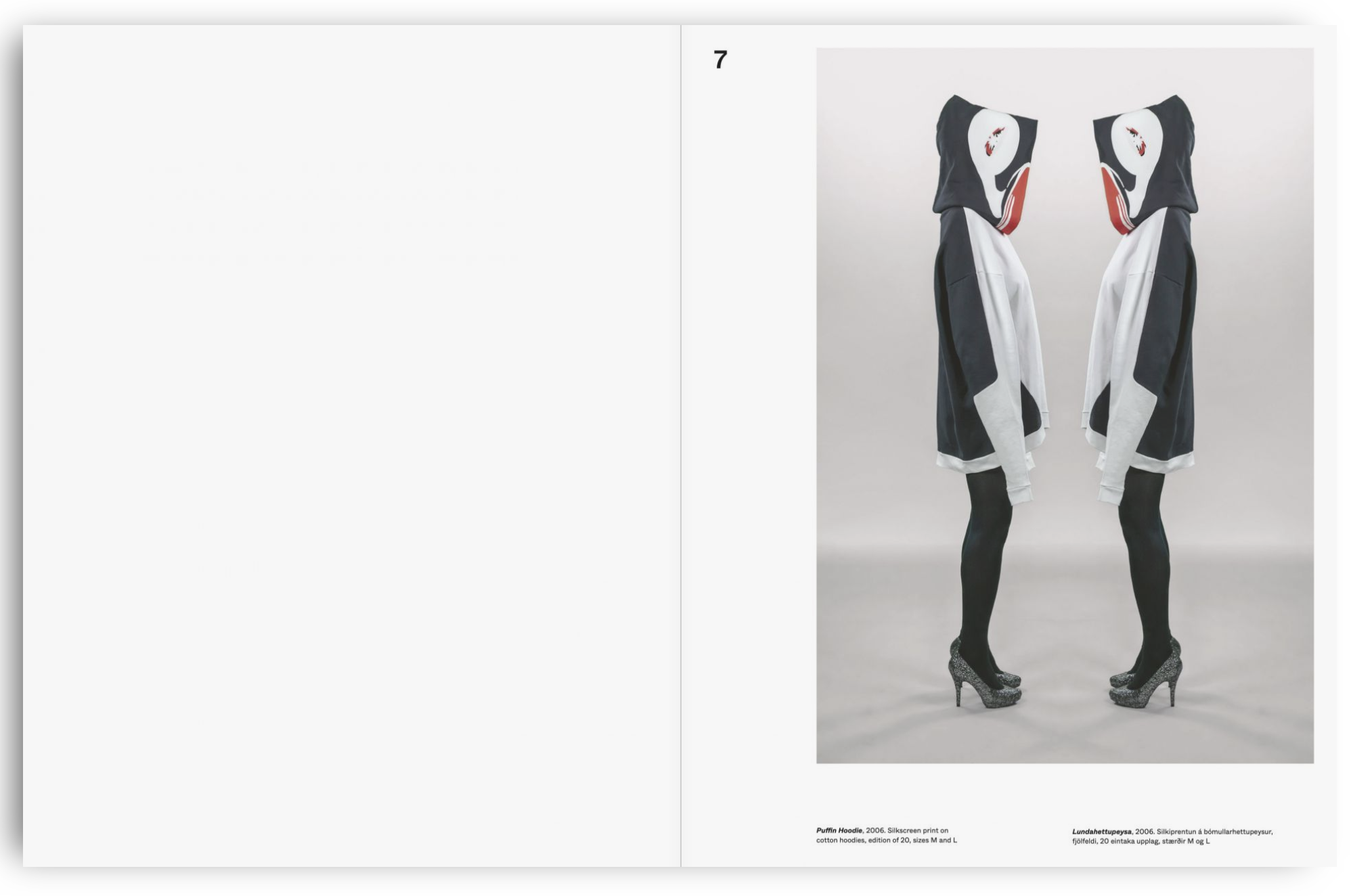
Later installations increasingly brought works from different moments of the research into relation. All is Full of Love at Künstlerhaus Bethanien, Berlin, in 2019 and WERK – Labor Move at Reykjavík Art Museum in 2021 were major manifestations of this approach. Earlier works could be displaced and re-read alongside newly produced material: Puffin Shop, for example, developed the project’s investigation of tourism and Icelandic identity through the mass-produced puffin souvenir, while WERK – Labor Move transformed moving image, industrial fish-transport boxes and architectural space into an environment through which the viewer physically moved.
Works from Keep Frozen have also continued to enter new contexts through group exhibitions, including Based on a True Story at MeetFactory, Prague; Swimming Pool – Troubled Waters at Künstlerhaus Bethanien, Berlin; and Great Patch at UFO Art Gallery, Kraków.
The methods developed through Keep Frozen—long-duration field research, embodied observation, collaboration, repetition, recontextualisation and the movement of research across different artistic forms—continue to inform my practice and provided an important methodological foundation for the later S-I-L-I-C-A project.
Early Public Forms, 2010–2015
Up to 2015, Keep Frozen had taken several public forms.
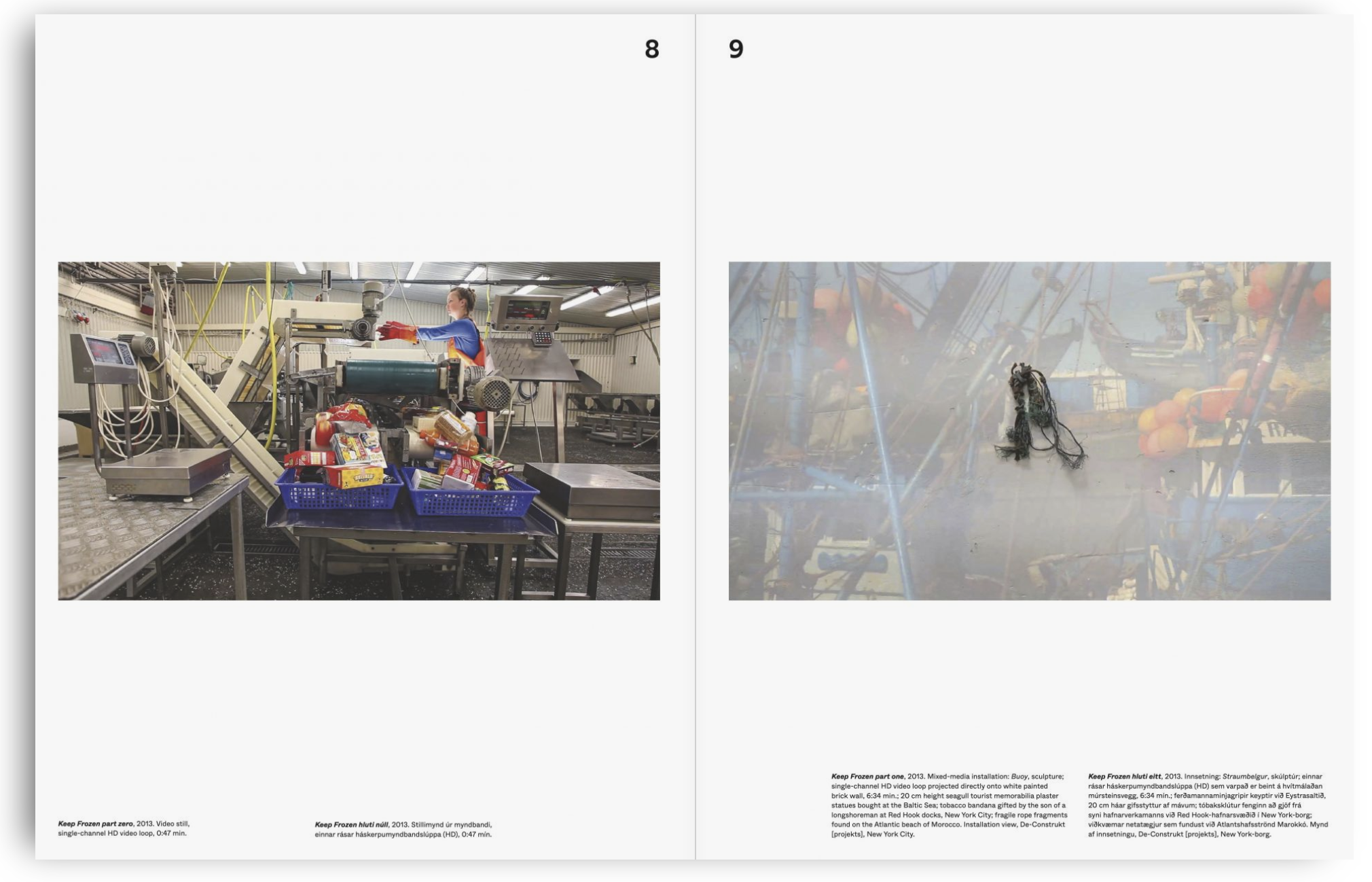
Keep Frozen part zero was a single channel video work.
Keep Frozen part one developed as a mixed-media installation and event in Red Hook, New York, where the Buoy sculpture was presented for the first time.
Keep Frozen part two, presented in connection with Reykjavík Arts Festival, was also a mixed-media exhibition and introduced the video work Material Puffin and the photographic print series Artist as a Worker for the first time within an installation context.
Earlier Publication
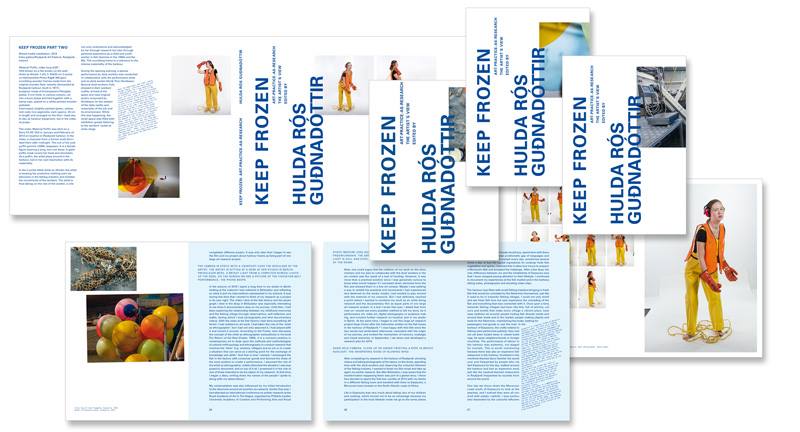
The early research process up to early 2015 is described in The Story, a collaborative text between the artist and German curator Berit Schuck, that was printed in the the publication Keep Frozen: Art-practice-as-reseach. The artist’s View, a collection of texts and images edited by the artists herself.
Keep Frozen: Art-practice-as-research. The Artist´s view
THE BOOK IS AVAILABLE AT;
+ PROQM, BERLIN, GERMANY
+ MENGI, REYKJAVÍK, ICELAND
+ SKAFTFELL, SEYÐISFJÖRÐUR, ICELAND
+ MOTTO, BERLIN, GERMANY
+ SALON FUER KUNSTBUCH, WIEN, AUSTRIA
+ LUGEMIK, TALLINN, ESTONIA
+ KUNSTNERENS HUS, OSLO, NORWAY

2015
Edited by Hulda Rós Gudnadóttir
96 pages, 165 illustrations, 4 dust jackets.
Edition of 500 copies.
Funded by Nordic Culture Point and
Icelandic Visual Arts Fund.
Text by Jonatan Habib-Engqvist, Bryndís Snæbjörnsdóttir/Mark Wilson,
Berit Schuck/Hulda Rós Gudnadóttir, Valur Antonsson and Sigrídur Melrós Ólafsdóttir.
Design by Anja Lutz.
Published by De-Construkt projekts, New York.
Distribution: Torpedo Press, Oslo and Útúrdúr, Reykjavík.

Presentation and discussion with curator Jonatan Habib-Engqvist at Proqm, Berlin. 16th of September 2015 as part of Berlin Art Week. Moderated and organised by Berit Schuck.
“Keep Frozen is an ongoing art-practice-as-research project concep tualised by me – the artist and editor of this publication. The book is intended for other artists to use as a tool to reflect on their meth- ods and practice in a call for a pluralistic view on the topic of what art-practice-as-research might be. It was a conceptual decision to assume the role of editor and to invite other artists as well as non- artists to share their points of view and have their writing edited by an artist. It is my hope that many such stories will be published, all surprising us in their different ways.
I ́m not going to trace the thoughts of the different writers in this book, as is the custom of the editorial note; instead, I ́m going to credit everyone that got involved in this project in one way or another. I call each one of them my collaborators in order to make a statement about the production of art works. The end result, or the many results, was influenced along the way by opportunities that arose, chances that were given, infrastructures that offered support, and by all the people who made it happen through their faith, through the experiences they shared, through hard work, ideas and the talent that they gave to the project.
Dennis Helm, Berit Schuck, Valur Antonsson, Helga Rakel Rafnsdóttir, Hinrik Þór Hinriksson, Salvitore Maglio, Sigurþór Sigurþórsson, Jens Pétur Kjærnested, Sigurður Gáki Árnason, Dale Odle, Pétur Kristinsson, Pétur Már Ólafsson, Valur Ísak Aðalsteinsson, Dariusz Niescier, Piotr Pasiuk, Andrzej Szewczuk, Grezegorz Halys, Valdimar Jóhannsson, Guðmundur Jónsson, Svavar Ásmundsson, Hermann Gíslason, Stefán Sigurjónsson, Karolina Boguslawska, Grímur Jón Sigurðsson, Carolina Salas, Bogi Reynisson, Helena Hansdóttir Aspelund, Yrza Roca Fannberg, Unnur Guðjónsdóttir, Þórður Egilsson, Sjöfn Guðmundsdóttir, Guðni Þórðarson, Ingvar Högni Ragnarsson, Hildigunnur Birgisdóttir, Guðrún Benónýsdóttir, Eivind Slettemeås, Karen Christine Tandberg, Dalia Castel, Frances Mossop, Ólafur Þórðarson, Hamid Drissi, Jón Þórðarson, Kristín Scheving, Dr. Ming Turner, Laura Arena, Aldís Snorradóttir, Hanna Styrmisdóttir, Candace Goodrich, Gréta Ólafsdóttir, Halldór Björn Runólfsson, Ásmundur Ásmundsson, Dorothee Kirch, Björg Stefánsdóttir, Edda Kristín Sigurjónsdóttir, Ólöf K. Sigurðardóttir, Ólöf Gerður Sigfúsdóttir, Kristín Guðnadóttir, Margrét Elísabet Ólafsdóttir, Ásdís Sif Gunnarsdóttir, Hlynur Helgason, Halldór Ásgeirsson, Hulda Stefánsdóttir, Kristján Steingrímur Jónsson, Katrín Jakobsdóttir, Sigurður Guðjónsson, Jonatan Habib-Engqvist, Bryndís Snæbjörnsdóttir, Mark Wilson, Sigríður Melrós Ólafsdóttir, Skarphéðinn Guðmundsson, Anja Lutz, Michael Polacek, Guðni Th. Jóhannesson, Claus Lehmann, Lisa Matthys, Maria Lind, Nina Möntmann, Tinna Grétarsdóttir, Olof Olsson, Dafna Maimon, Laila Hida, Allan Sekula, Sören Kjörup, Andrei Siclodi, the staff of Medienwerkstatt and Druckwerkstatt des bbk in Berlin Bethanien and storytellers at Sirkus bar, Reykjavík, in the 2000s.”
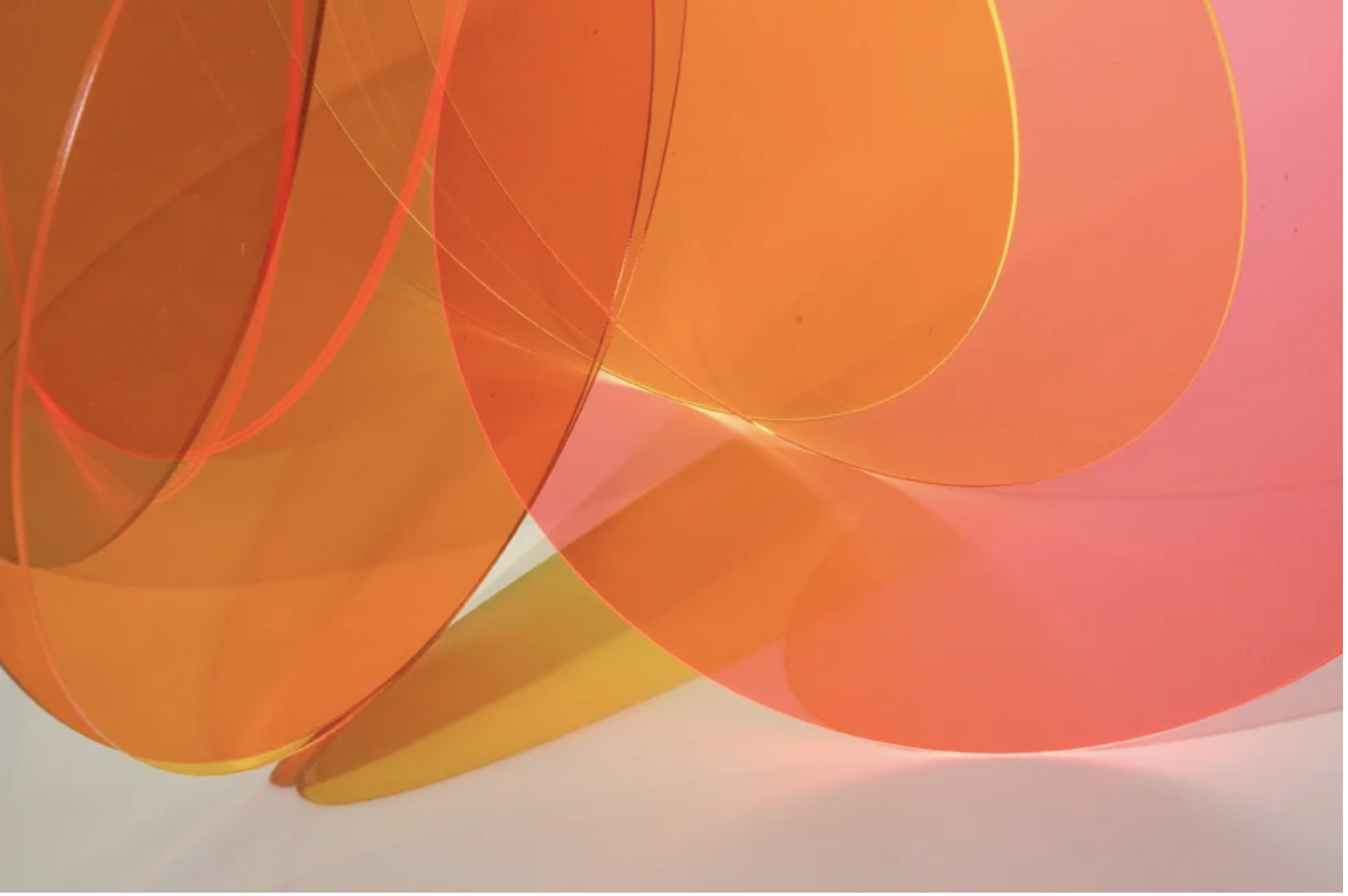
Sculpture from Keep Frozen part one @ De-Construkt, NY. Photo: Hulda Rós Gudnadóttir
The following year the symposium ‘Keep Frozen Projects’ became a high-point of the research project. With symposiums and practical showing of artistic research of other artists both in Leipzig and Reykjavik the approach to the issue of the artist´s view of art practice as research was broadened up to become a discussion that included all artists and artists works.