S-I-L-I-C-A
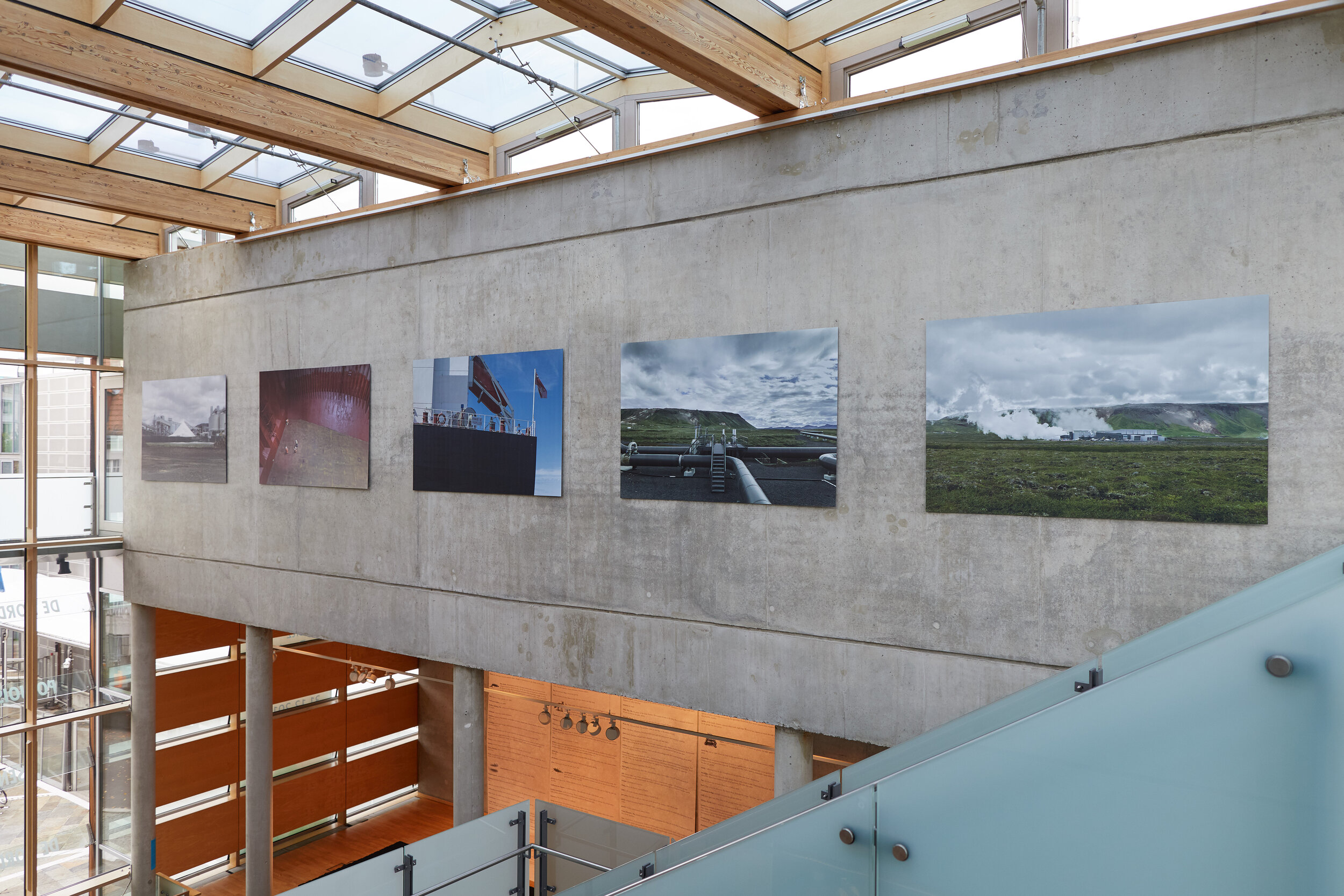
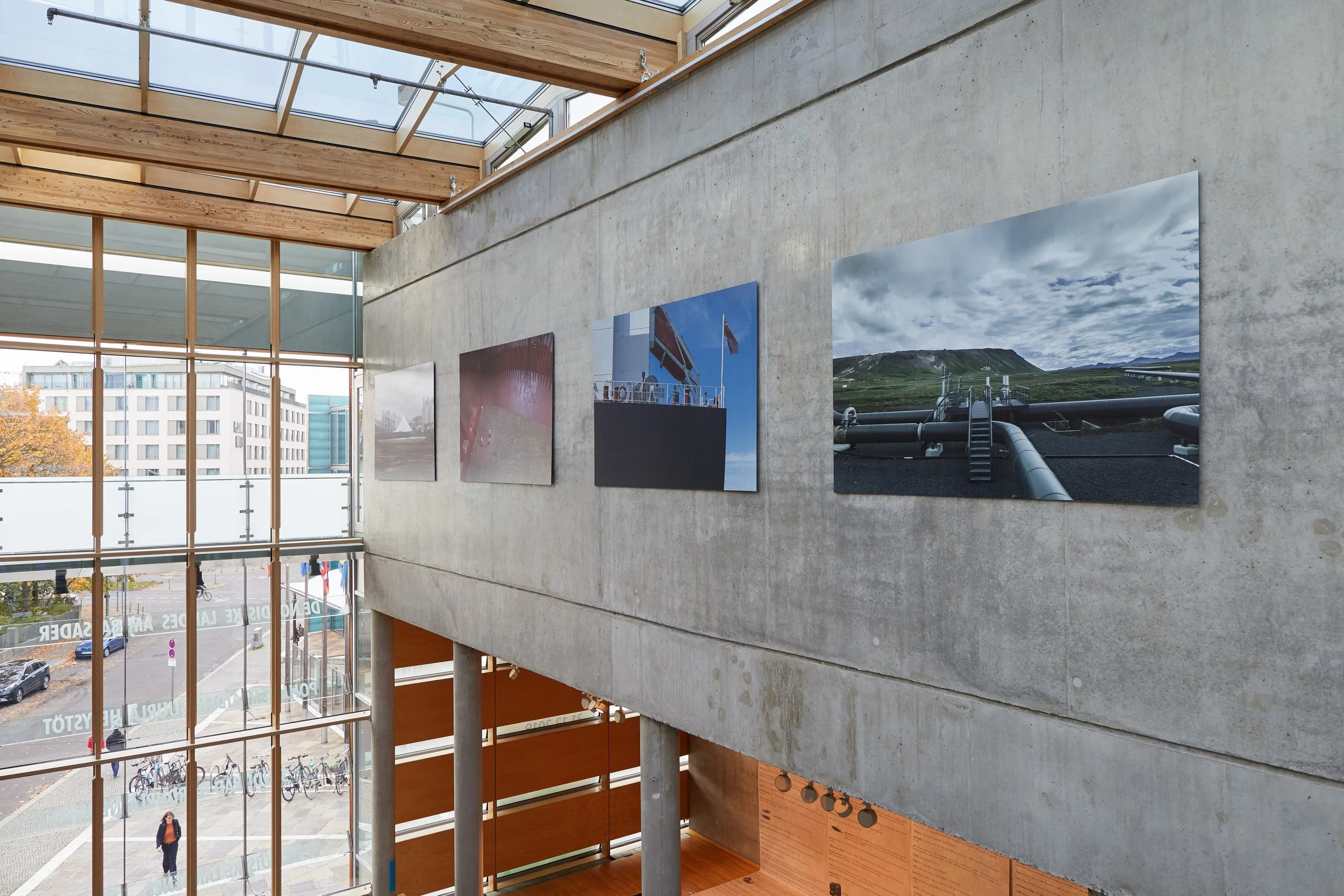
Site-specific billboard installation (2019)
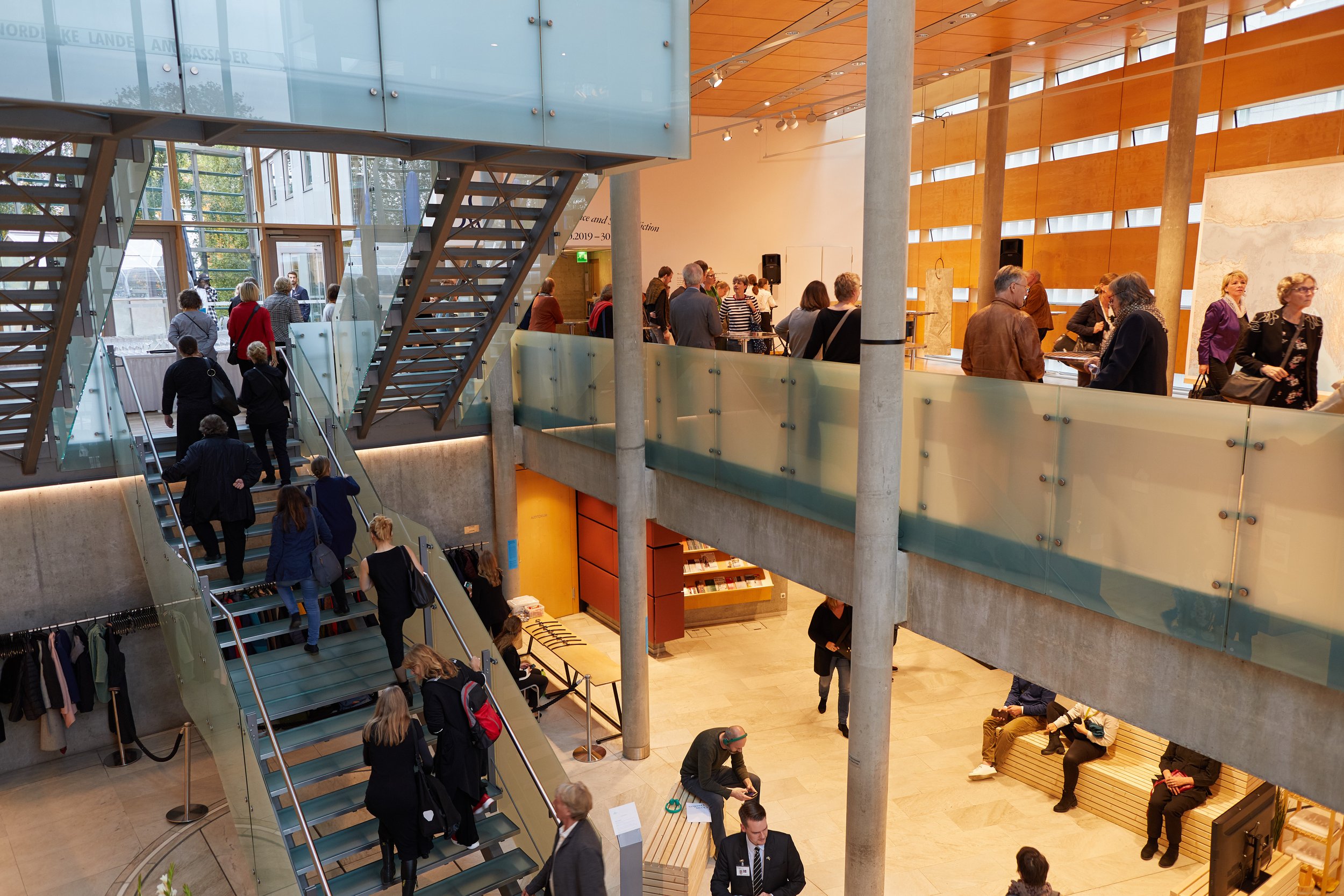
Exhibited as part of the group exhibition Ocean Dwellers - Meeresbewohner. Art, Science and Science Fiction (2019/2020) curated by Solvej Helweg Ovesen at t the Felleshus exhibition gallery of the Nordic Embassies in Berlin.
Each billboard was 133 x 200 cm. After the exhibition the work exists as SILICA 01 - 05 (2022), a series of five framed archival pigment prints on fine art paper, each 80 x 120 cm,
The installation was created as part of the ongoing S-I-L-I-C-A research project, in which the artist investigates the global industrial processes behind silicon production.
Ocean Dwellers - Meeresbewohner. Art, Science and Science Fiction
Artists: Hulda Rós Guðnadóttir (IS), Johannes Heldén (SE), Tellervo Kalleinen & Oliver Kochta-Kalleinen (FIN), Laboratory for Aesthetics and Ecology (LABAE; DK), Andrew Merrie & Simon Stålenhag (Radical Ocean Futures; SE), Jacob Remin (DK), Kirstine Roepstorff (DK), Rúrí (IS), Elsa Salonen (FIN), Sissel Tolaas (NO), Jana Winderen (NO).
Curatorial text:
What would it mean to inhabit a sea worldview?
20th Anniversary of the Nordic Embassies, Berlin
Focusing on the Nordic Region and Seas, Ocean Dwellers is a hydra-active exhibition at the Nordic Embassies, Berlin, on the occasion of the 20th anniversary of their diplomatic cohabitation in Berlin. An exhibition that asks visitors to reflect on the current developments in, around and on the ocean; to think fluidly the way of water and its dwellers.
“We are all bodies of water. To think embodiment as watery belies the understanding of bodies that we have inherited from the dominant Western metaphysical tradition. As watery, we experience ourselves less as isolated entities, and more as oceanic eddies: The Nordic Seas – including the Greenland Sea, the Norwegian Sea, and the Iceland Sea; the Baltic Sea, the Atlantic Sea, and the Barents Sea – are subject to rapid transformations due to weather changes, cargo-exploitation and toxification; how do we, and can we, perceive of the radically changing biotope, its volume, temperature and hydrosphere, which also plays a key role in global freight and trade? How do we, and can we, as humans relate to it? How do the changes in the Nordic Seas influence the life in and around it? Water is the mirror of our world, but it is also the hiding place of what we do not want to see or accommodate on earth. How have we betrayed the oceans so far? Deprived them of a history, and turned them into a dumping ground? How can we teach ourselves to think oceans positively, to think fluidly about identity, like ocean dwellers? I am a singular, dynamic whorl dissolving in a complex, fluid circulation. The space between ourselves and our others is at once as distant as the primeval sea, yet also closer than our own skin—the traces of those same oceanic beginnings still cycling through us, pausing as this bodily thing we call “mine.” Water is between bodies, but of bodies, before us and beyond us, yet also very presently this body, too. Deictics falter. Our comfortable categories of thought begin to erode. Water entangles our bodies in relations of gift, debt, theft, complicity, differentiation, relation.” - Neimanis, Astrida. “Hydrofeminism: Or, On Becoming a Body of Water.” In: “Undutiful Daughters: Mobilizing Future Concepts, Bodies and Subjectivities in Feminist Thought and Practice”, Hrsg. Henriette Gunkel, Chrysanthi Nigianni and Fanny Söderbäck. New York: Palgrave Macmillan, 2012. S. 96.
The Nordic Seas – including the Greenland Sea, the Norwegian Sea, and the Iceland Sea; the Baltic Sea, the Atlantic Sea, and the Barents Sea – are subject to rapid transformations due to weather changes, cargo-exploitation and toxification; how do we, and can we, perceive of the radically changing biotope, its volume, temperature and hydrosphere, which also plays a key role in global freight and trade? How do we, and can we, as humans relate to it? How do the changes in the Nordic Seas influence the life in and around it? Water is the mirror of our world, but it is also the hiding place of what we do not want to see or accommodate on earth. How have we betrayed the oceans so far? Deprived them of a history, and turned them into a dumping ground? How can we teach ourselves to think oceans positively, to think fluidly about identity, like ocean dwellers?
“Under its many names, and with variations in color and mood, this single ocean spreads across three fourths of the globe. Geographically it is not the exception to our world but by far its greatest defining feature. By social measures it is important too. At a time when every last patch of land is claimed by one government or another, and when citizenship is treated as an absolute condition of human existence, it is a place that remains radically free. Expressing that freedom are more than 40,000 large merchant ships that ply the open ocean (... that) between them carry nearly the full weight of international trade—almost all the raw materials and finished products on which our lives are built.” - William Langewiesche, “The Outlaw Sea: A World of Freedom, Chaos, and Crime”, The Atlantic Magazine, 2003.
Through a selection of art installations and artistic laboratories combining art and science, by artists from Iceland, Sweden, Norway, Finland, and Denmark, the Nordic Embassies Felleshus in Berlin will be transformed into a site for ocean dwelling, for ocean dwellers. A site enabling new interpretations of and reflections on the relations we humans in the North have with the “greatest defining feature” of our world, the ocean.
What would it mean to inhabit a sea worldview? How will rising water-levels and accelerated global warming derange our current order of land and water, bios and geos? How will a new sea map with seaways and routes from Scandinavia to Beijing emerge and how will geopolitics change accordingly? How do artists in collaboration with marine-biologists, divers, thinkers, and anthropologists describe and reframe the ocean as (in-)hospitable, historical and imaginative space? How is and can politics and legislation make a difference in managing the results of the ecological transformation of this outlandish and tremendously precious sea space?
These are questions that are highly relevant for our near future in the North, and also underpin Ocean Dwellers as an exhibition, which presents new artistic works that, in a participatory manner, will aim to tackle them. Many Nordic artists take up the theme of the transforming ocean in their work as Northern countries are highly likely to be affected by rising sea-levels, weather changes and the new migratory, territorial, and economical questions and opportunities that the melting ice, amongst others, brings about. Exhibition goers will be ocean dwellers for a while, experiencing the sensorium of a near future, where the borders between ocean and land have changed. How can we think the way of water?
The Ocean Dwellers exhibition is – in a metaphorical but also spatial sense – flooding the different institutional spaces and country borders at the Nordic Embassies complex. For example, the work Sauna Encounters is a sound piece recorded inside the sauna in the Finnish embassy. The auditorium is used for the recurring immersive underwater sound performance Through the Bones; Listening with Carp, and the terrace hosts an ocean greenhouse, Veden väelle. Finally, there is S-I-L-I-C-A, a series of photographs that can be viewed from the top floor cantina while employees and visitors are dining, which reflects on shipping and para-ecological consumption.
-Solvej Helweg Ovesen