S-I-L-I-C-A-0-2
Mixed-media installation (2025)
Solo exhibition at SPARK Art Fair, Vienna and Gallery Gudmundsdottir, Berlin, curated by Gudny Gudmundsdottir
SPARK Art Fair, invitation of Marina Fokidis. Walkthrough introduction by gallerist here. Virtual Tour here.
The installation consisted of SILICA 01-05 (2022), a series of five framed archival pigment prints on fine art paper, each 80 x 120 cm, Powered by Natue (2025), silicon metal partially polished sculptures, irregular shape, various dimensions from 15 x 10 x 16 cm to 40 x 32 x 50 cm, Here Comes the Sun 01-02 (2025), a pair of framed archival pigment prints on fine art paper, each 50 x 50 cm, Pour on the Coal (2025), unique sculpture consisting of seven glass pipes, coal, and painted metal hooks, app. 102.6 x 285 cm, each pipe ø 25 mm, and Konnexion I (2023), from series of waterbased charcoal drawing on fine art watercolor paper, 30 x 21 cm.
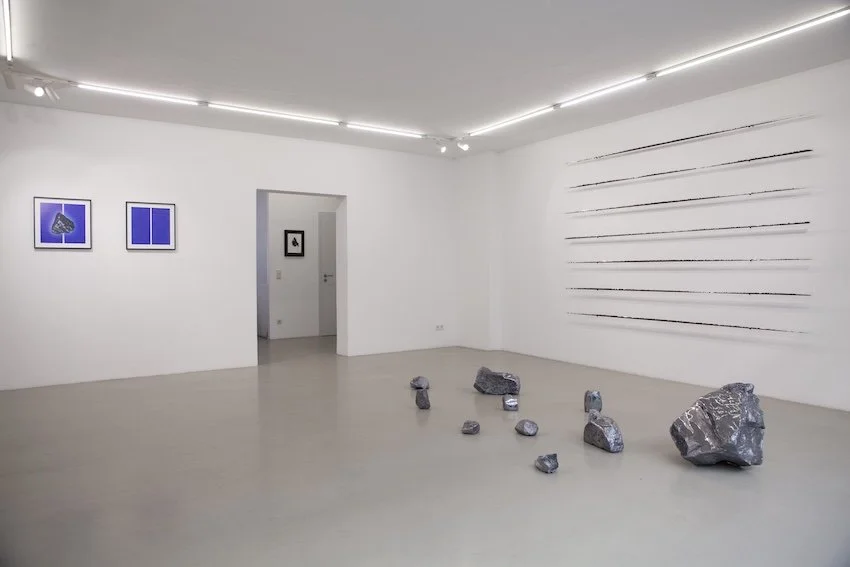
Installation view. Gallery Gudmundsdottir, Berlin.
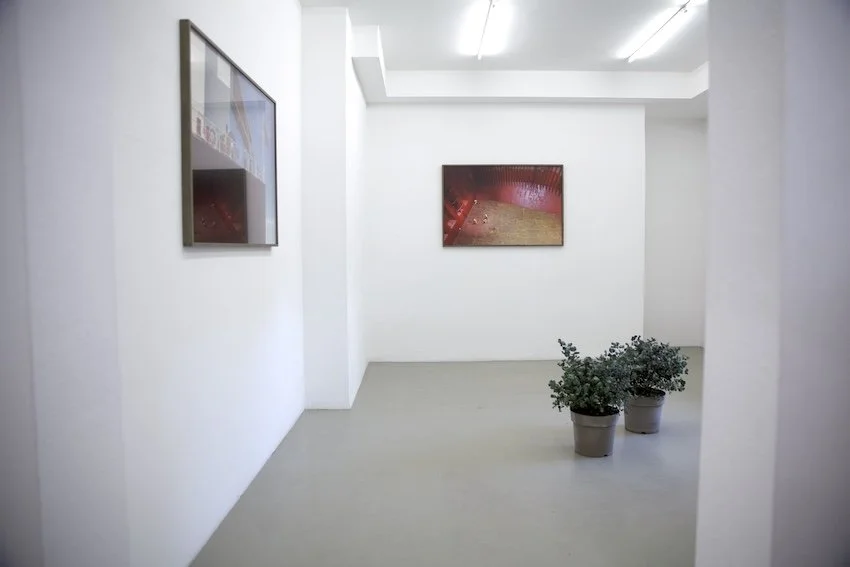
Installation view. Gallery Gudmundsdottir, Berlin.
Curatorial text at Gallery Gudmundsdottir:
Hulda Rós Gudnadóttir’s exhibition S-I-L-I-C-A-0-2 examines the global manufacturing structure behind silicon—a key component in technologies central to green energy transition such as solar cells as well as consumer electronics and our social infrastructure in general. Through sculptures, photographs, and materials from the production process, Hulda Rós Guðnadóttir traces the material’s journey from extraction to the creation of purer silicon and beyond, revealing the vast network of industries, landscapes, and geopolitical forces that shape its production. The work in the exhibition investigates entanglements of what is labelled green and non-green and the extractive economies that most objects in our everyday life are a part of.
For over a decade, Hulda has researched global trade and the hidden labor behind industrial supply chains. Her long-term project Keep Frozen focused on the shipping industry, revealing the human and environmental impact of maritime logistics. S-I-L-I-C-A-0-2 extends this inquiry, looking at how Iceland, Australia, Colombia, Egypt, Taiwan, and other regions are connected through the silicon supply chain. Iceland, often positioned as a leader in renewable energy, plays a crucial role in the creation of purer silicon using its geothermal resources before it is sent for further processing. As geopolitical tensions over the Arctic intensify—driven by resource extraction, trade routes, and strategic interests—the subject of Iceland’s role within the global system shifts from being of peripheral interest to gaining a major international attention.
The exhibition features silicon metalloids alongside images from Hulda’s research archive in Australia and Iceland, documenting the landscapes and infrastructures shaped by silica extraction and processing. The digital photo series Here Comes the Sun juxtaposes a scan of a solar cell with a silicon metalloid, underscoring the raw material origins of renewable energy. A sculptural installation of seven elongated glass pipes, each over two meters long and filled with coal, highlights the continued reliance on fossil fuels within the green technologies sector.
Hulda Rós invites us to examine the complexity embedded in the clean energy transition as well as in the infrastructure of our social systems. What does sustainability mean when it depends on extractive industries spanning multiple continents? How does Arctic geopolitics intersect with resource economies, and what role does Iceland play in this increasingly contested region?
Through her research-driven practice, Hulda Rós Guðnadóttir challenges us to look beyond the surface of materials and industries we take for granted, highlighting the hidden entanglements of energy, economy, and environment.
-Gudny Gudmundsdottir
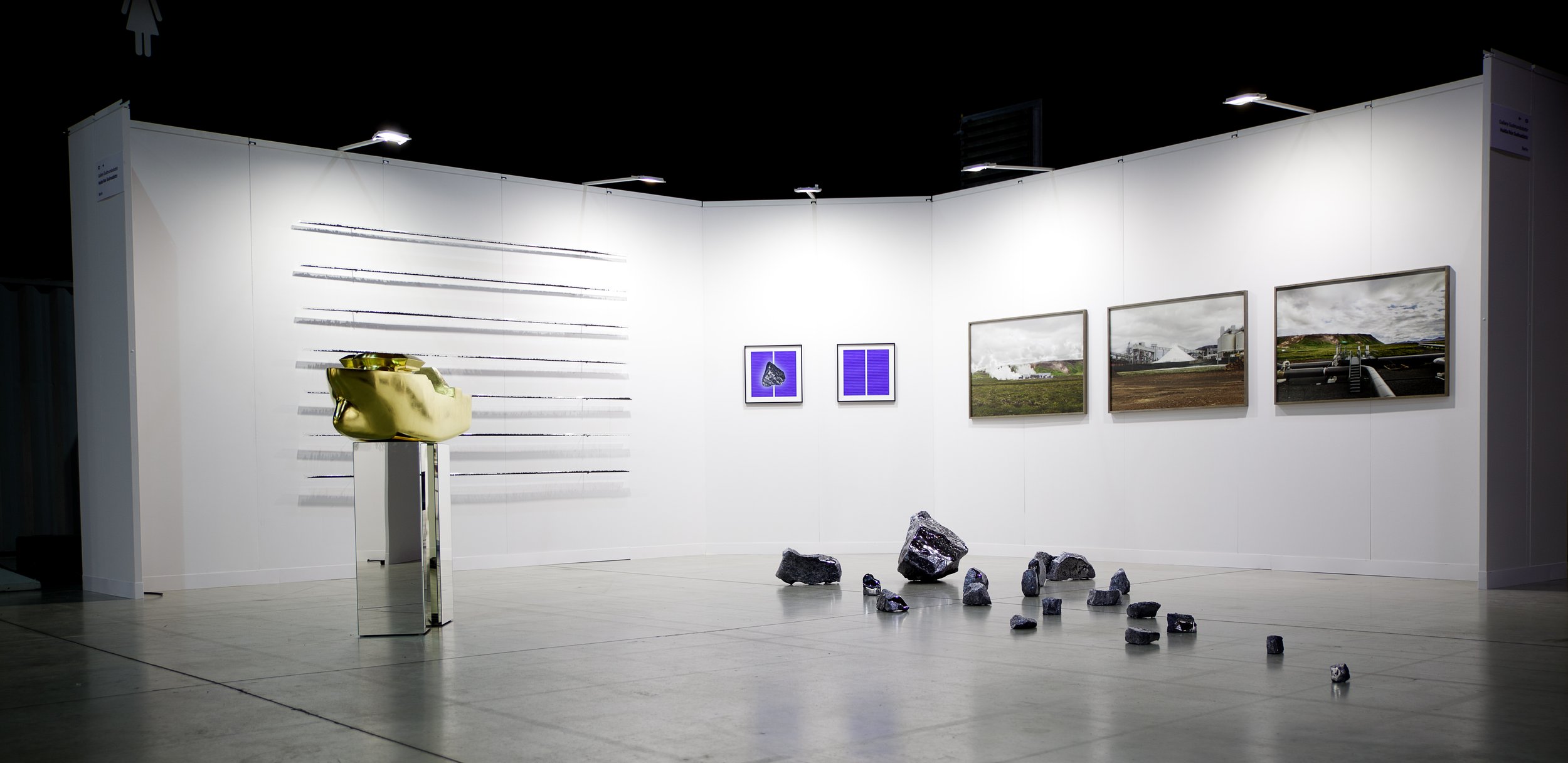
Installation view. SPARK Art Fair, Vienna.
Curatorial text at SPARK:
Gallery Gudmundsdottir presents Icelandic artist Hulda Rós Gudnadóttir at SPARK Art Fair, featuring her latest research-based project S-I-L-I-C-A. Her installation brings together pigment prints, documentary work, and sculptures that examine the extractive industries that underpin the global energy economy. Guðnadóttir explores how coal mining, monoculture farming, and solar cell production are deeply intertwined with both historical and contemporary realities of colonial capitalism. Focusing on material transformation, she allows the physical materials themselves to take center stage and exposes the hidden costs behind the promise of “clean” energy. By drawing parallels between the Arctic and the Global South, Guðnadóttir reveals how 21st century colonial expansion is no longer only driven by nation-states but by private enterprises and multinational economic forces, particularly in resource extraction and ocean-based industries. A centerpiece of the presentation is the Golden Ship, a sculpture that reflects on the stakes of maritime trade and the enduring myths of the ocean as a site of wealth and conquest. Guðnadóttir invites a reconsideration of the Arctic’s role in global extraction, showing how the region has long been embedded in systems of resource circulation while also gaining increasing geopolitical significance today. Guðnadóttir’s practice demonstrates how artistic processes can reveal the interwoven networks of labor, landscape, and economy that continue to shape our world.
-Gudny Gudmundsdottir