Grafarvogur hægri >< vinstri
Mixed-media installation (2026)
Solo exhibition at IPA gallery, Reykjavík. Curated by Dr. Ann-Sofie Gremaud. Read her curatorial essay.
The installation consisted of nineteen pairs of archival pigment prints on fine art paper, each 30 × 20 cm, mounted in coordinate-inscribed passe-partouts (40 × 30 cm), together with one charcoal drawing on 440 g/m² cotton paper, 28 × 38 cm. The coordinates correspond to the geographical locations depicted in the photographs.
The work was originally commissioned in digital form by curator Birta Guðjónsdóttir as part of the 2020 Grafarvogur edition of The Wheel, an anniversary series of public art projects by the Reykjavík Association of Sculptors. It was subsequently presented online on The Wheel’s website.
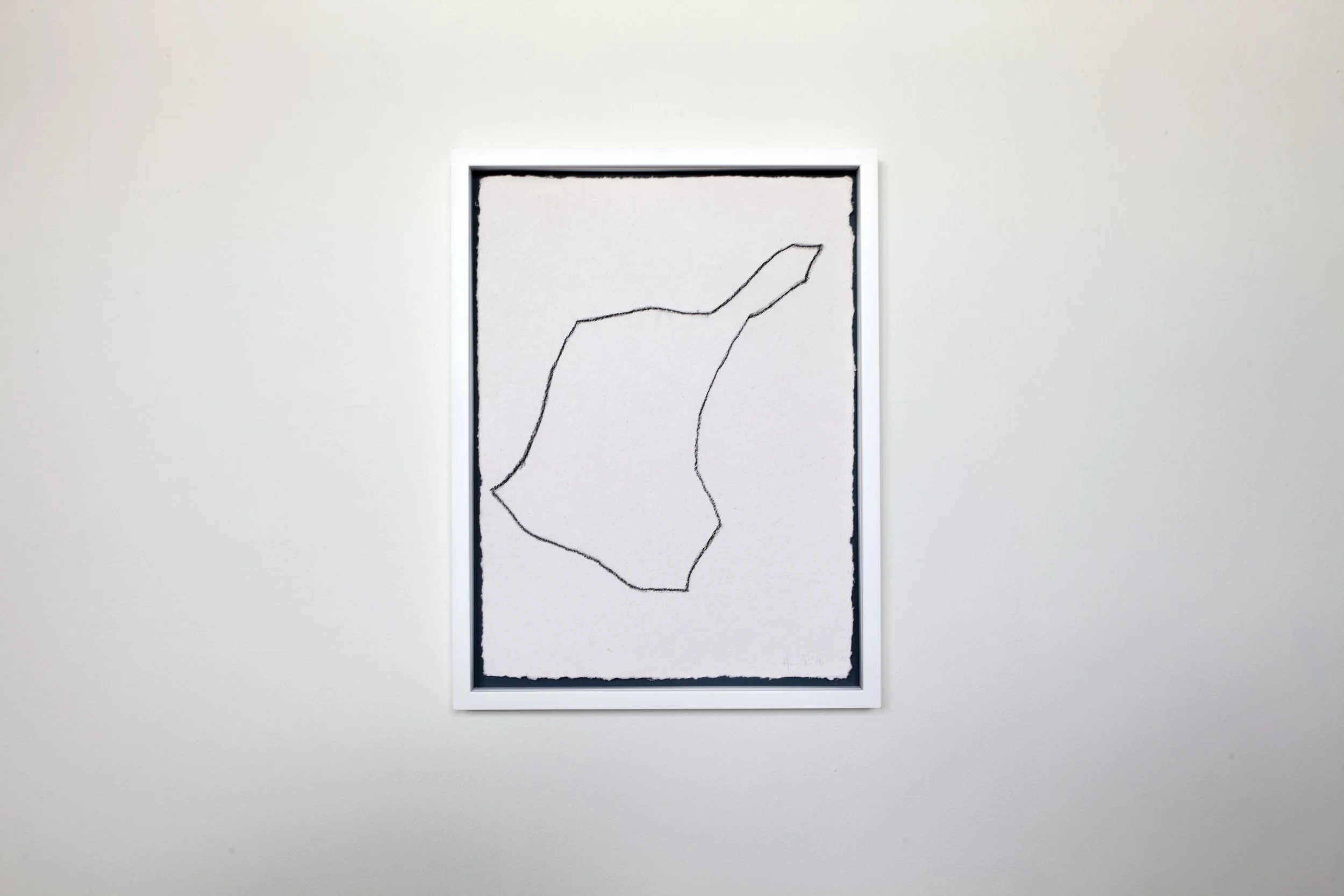
Charcoal on cotton paper. Topographic rendering based on coordinates corresponding to the geographical locations depicted in the photographs.
.
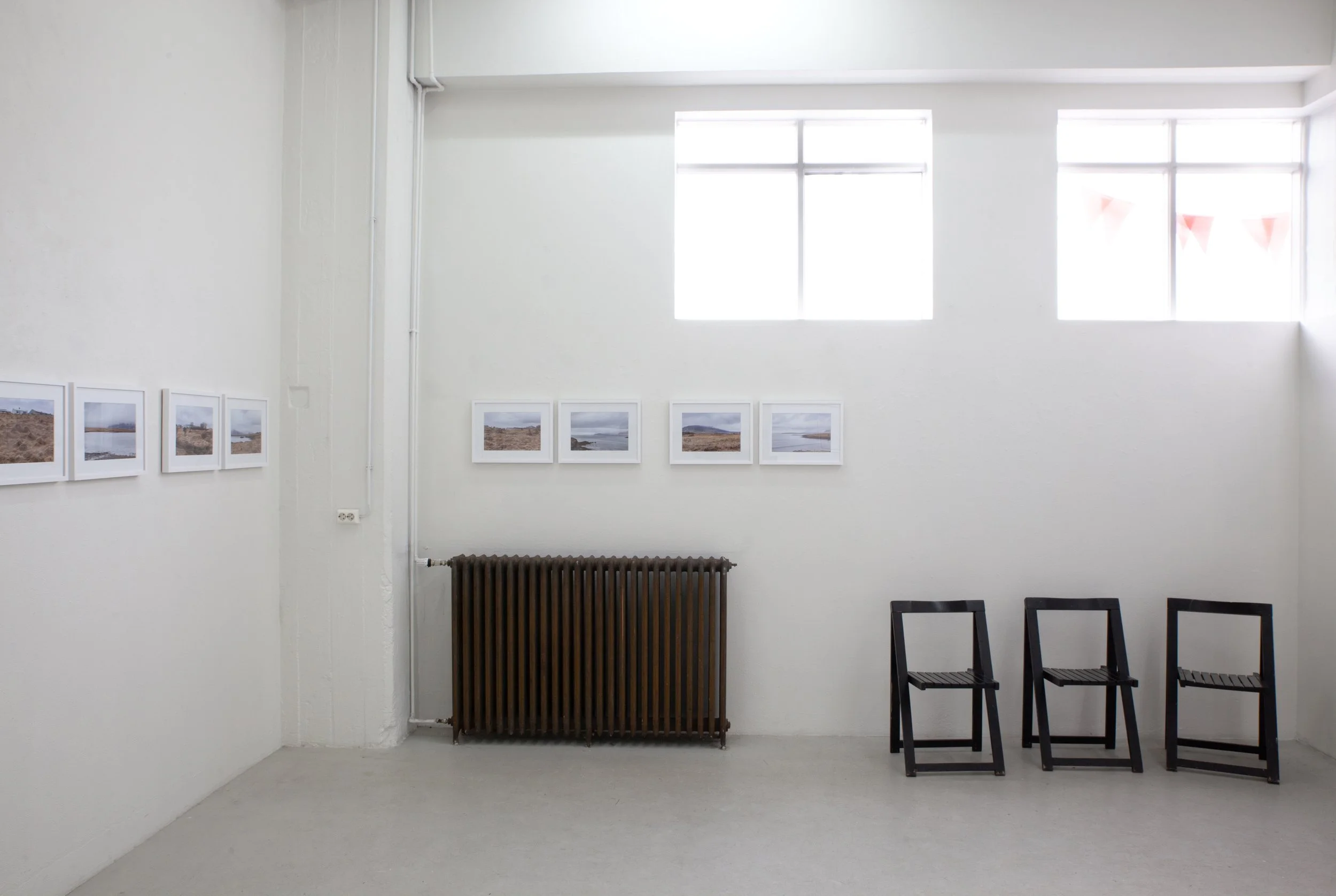
Installation view at IPA Gallery, Reykjavik.
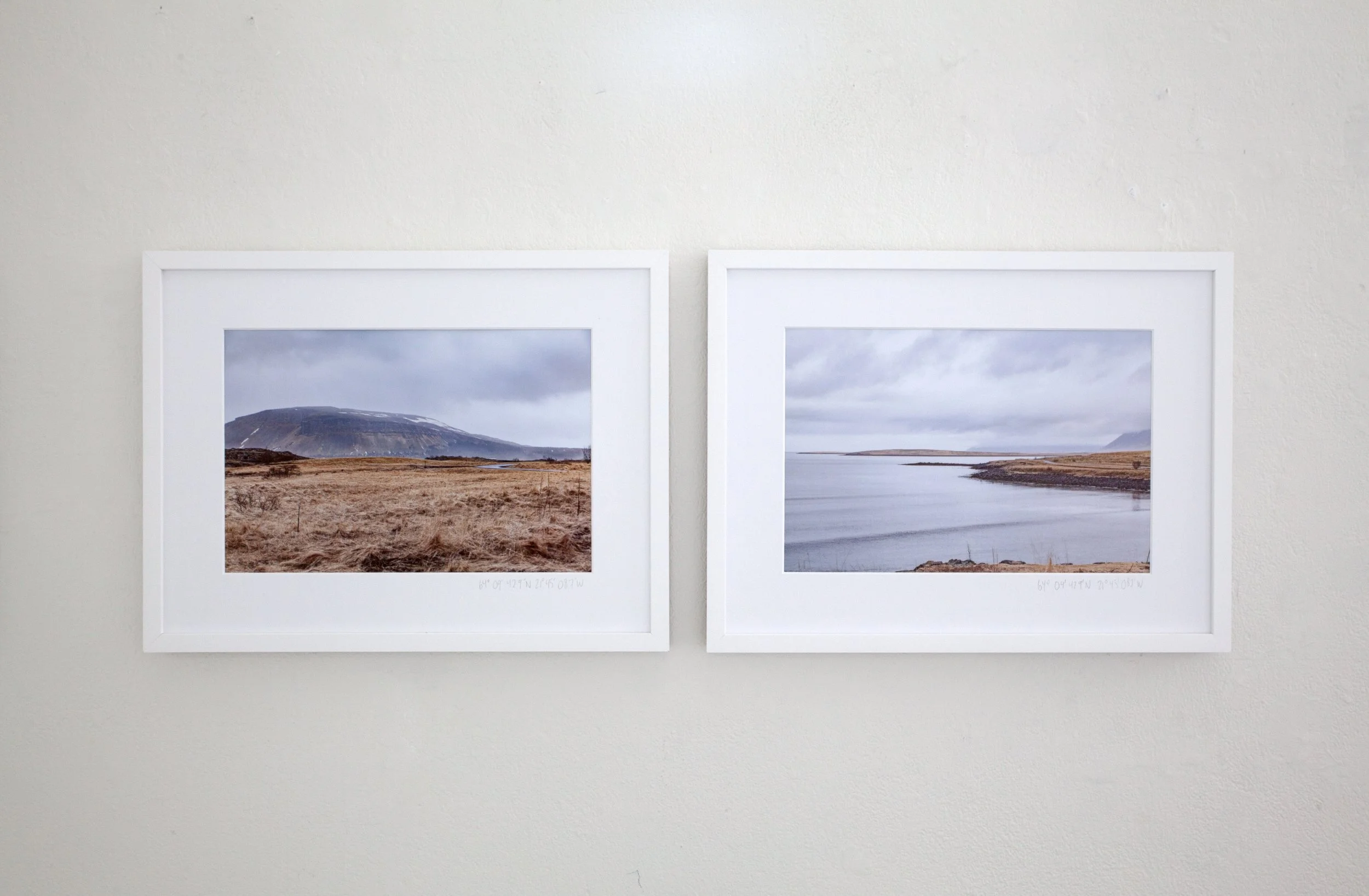
Pair 1: 64° 09'42.9" N, 21° 45'08.7" W. Archival pigment print on fine art paper, 30 × 20 cm, mounted in a passe-partout inscribed with the coordinates of the depicted location, 40 × 30 cm.

Pair 2: 64° 09′ 34.85″ N, 21° 45′ 32.80″ W. Archival pigment print on fine art paper, 30 × 20 cm, mounted in a passe-partout inscribed with the coordinates of the depicted location, 40 × 30 cm.
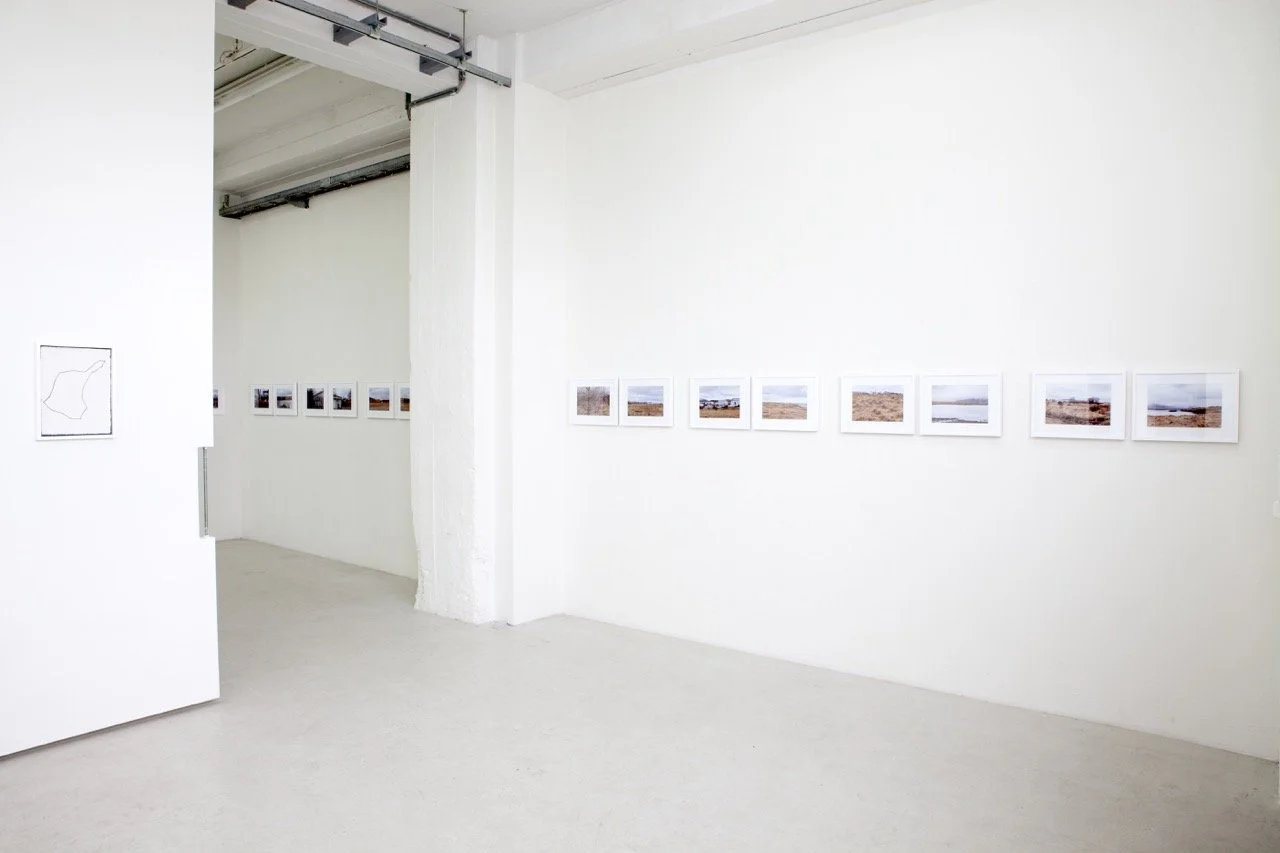
Installation view at IPA Gallery, Reykjavik.

Pair 3: 64° 09′ 15.05″ N, 21° 46′ 14.52″ W. Archival pigment print on fine art paper, 30 × 20 cm, mounted in a passe-partout inscribed with the coordinates of the depicted location, 40 × 30 cm.
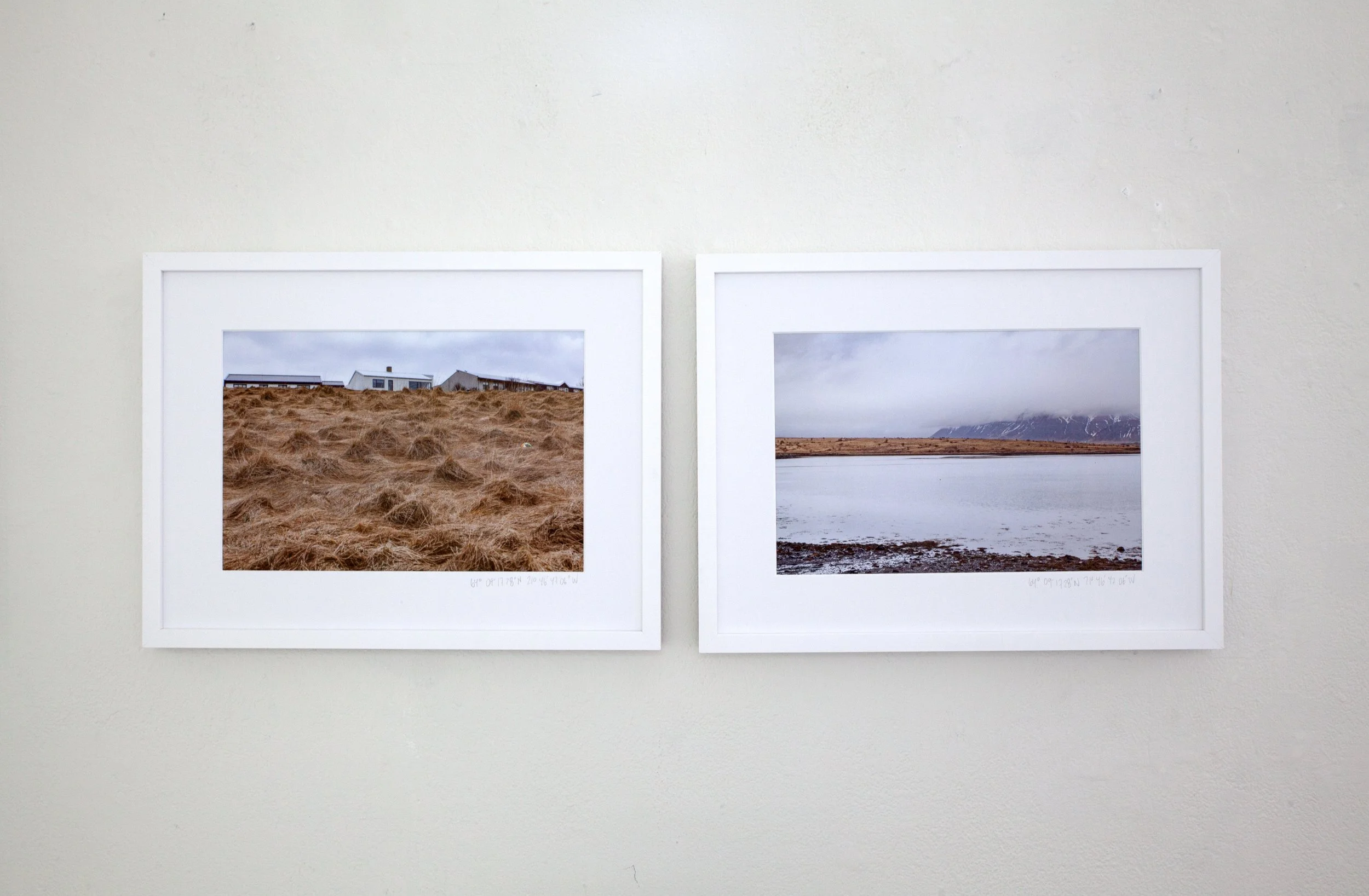
Pair 4: 64° 09′ 17.28″ N, 21° 46′ 47.06″ W. Archival pigment print on fine art paper, 30 × 20 cm, mounted in a passe-partout inscribed with the coordinates of the depicted location, 40 × 30 cm.

Pair 5: 64° 09′ 12.14″ N, 21° 47′ 54.17″ W. Archival pigment print on fine art paper, 30 × 20 cm, mounted in a passe-partout inscribed with the coordinates of the depicted location, 40 × 30 cm.

Pair 6: 64° 09′ 12.14″ N, 21° 47′ 54.17″ W. Archival pigment print on fine art paper, 30 × 20 cm, mounted in a passe-partout inscribed with the coordinates of the depicted location, 40 × 30 cm.
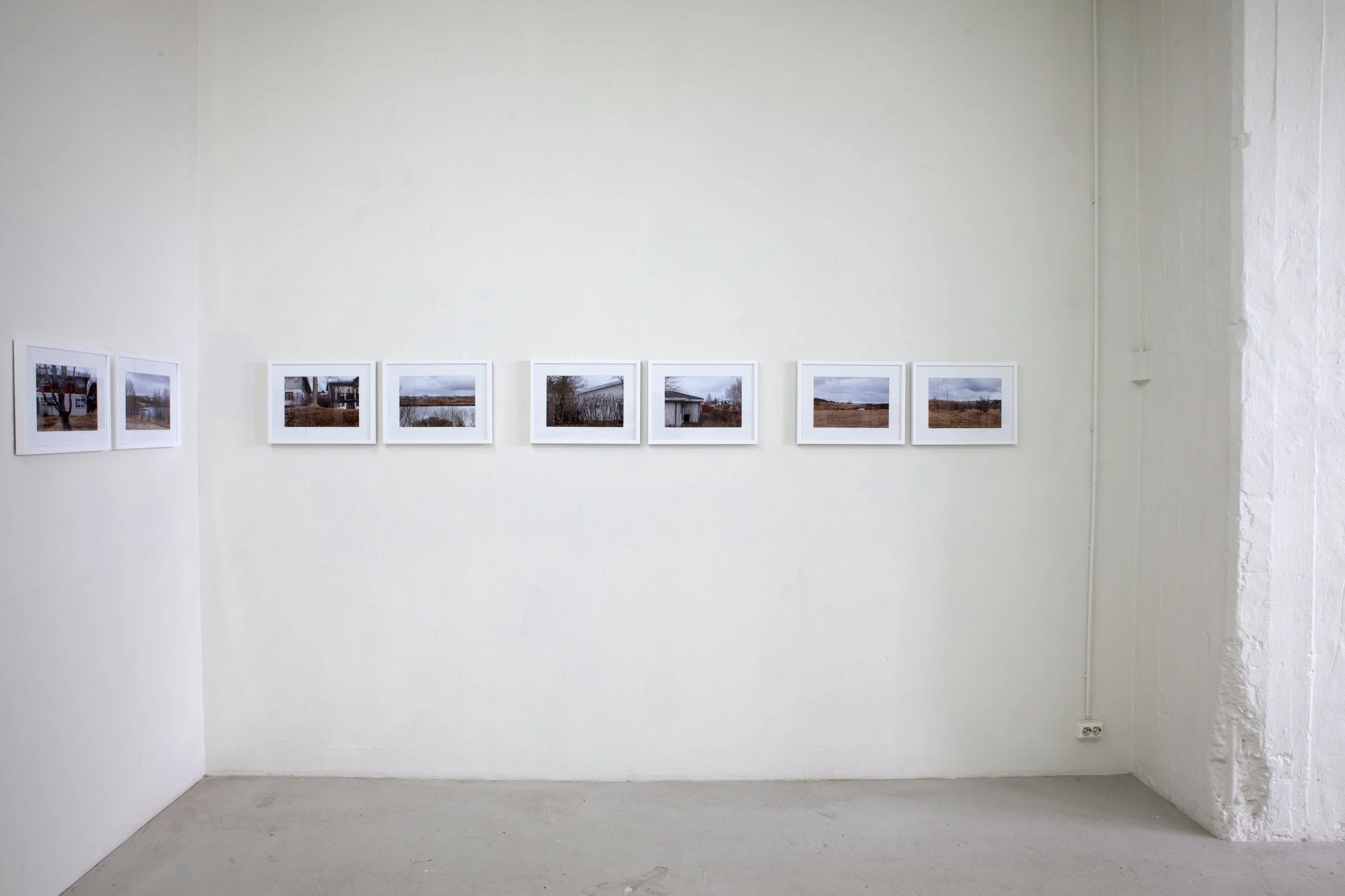
Installation view at IPA Gallery, Reykjavik.
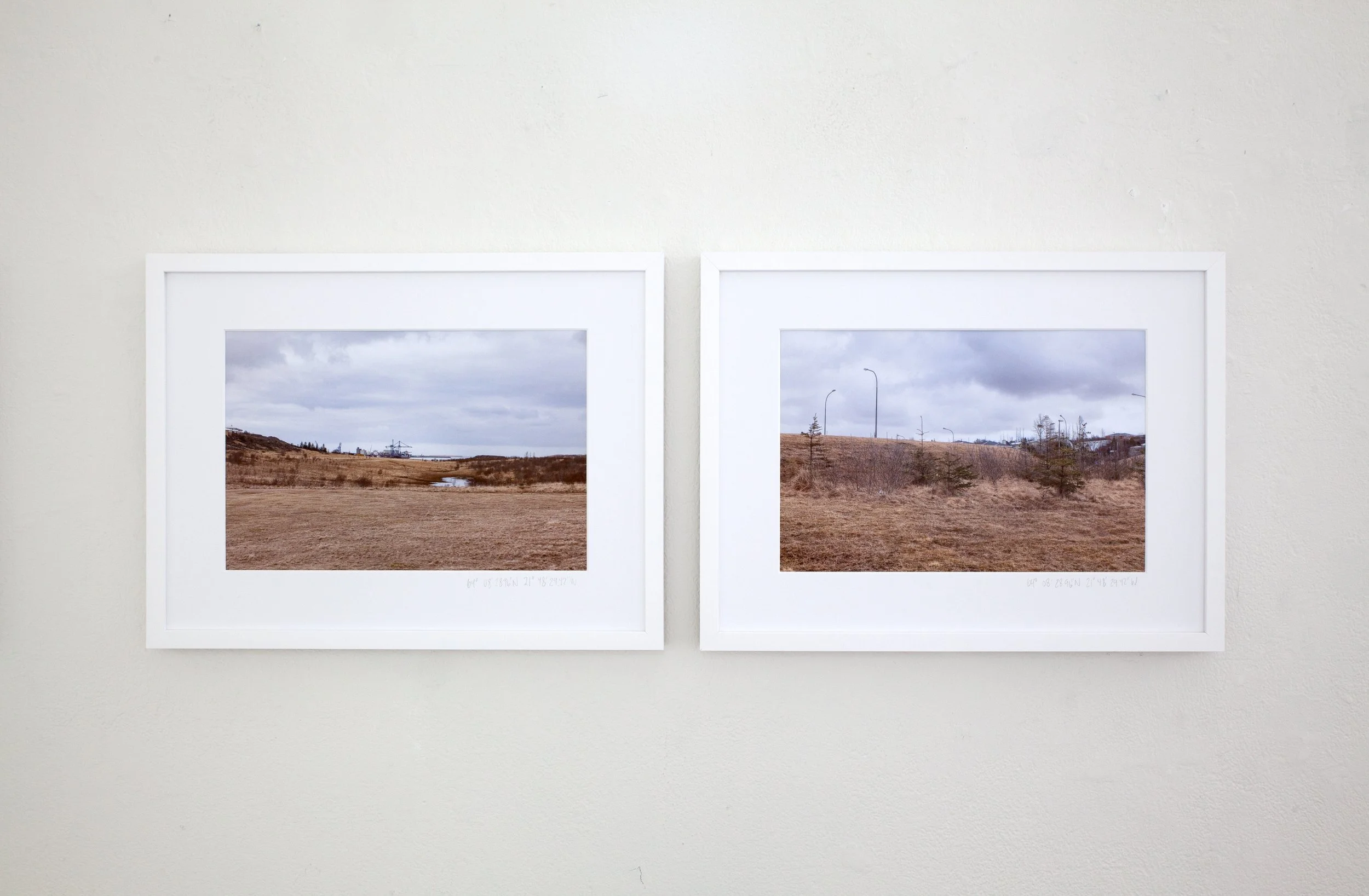
Pair 7: 64° 08′ 28.96″ N, 21° 48′ 29.42″ W. Archival pigment print on fine art paper, 30 × 20 cm, mounted in a passe-partout inscribed with the coordinates of the depicted location, 40 × 30 cm.
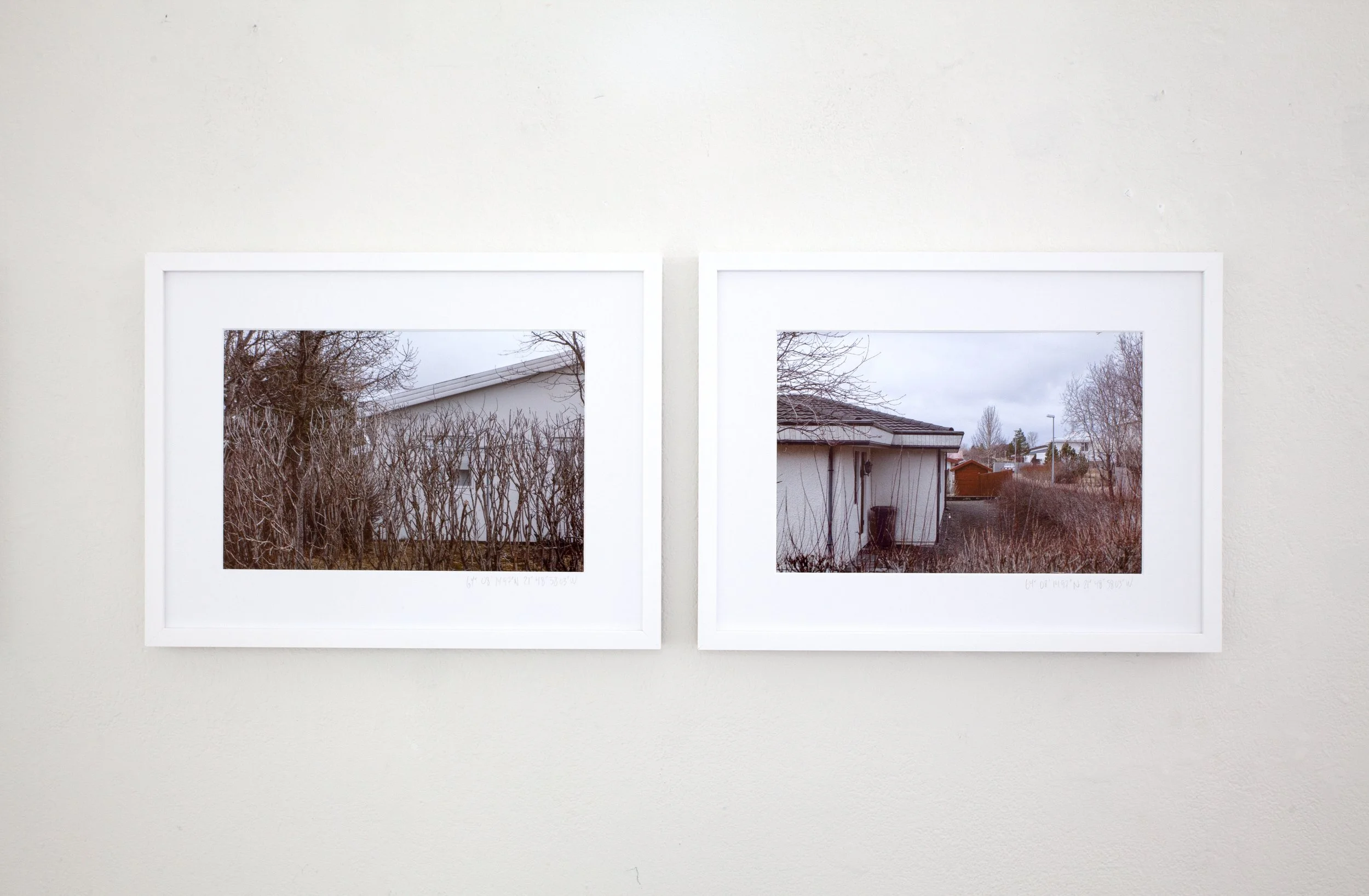
Pair 8: 64° 08′ 14.97″ N, 21° 48′ 58.03″ W. Archival pigment print on fine art paper, 30 × 20 cm, mounted in a passe-partout inscribed with the coordinates of the depicted location, 40 × 30 cm.

Pair 9: 64° 08′ 01.01″ N, 21° 48′ 27.60″ W. Archival pigment print on fine art paper, 30 × 20 cm, mounted in a passe-partout inscribed with the coordinates of the depicted location, 40 × 30 cm.
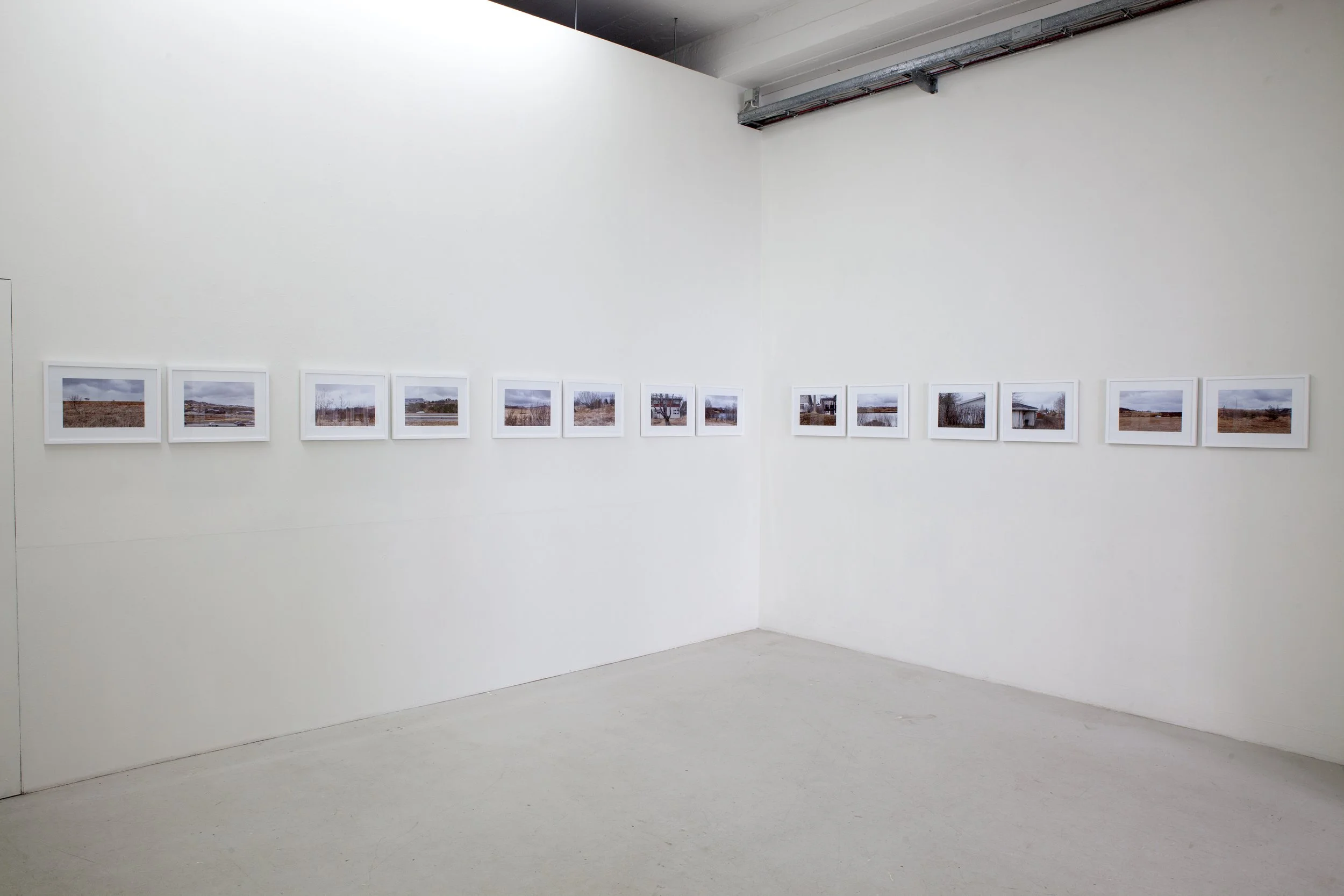
Installation view at IPA Gallery, Reykjavik.
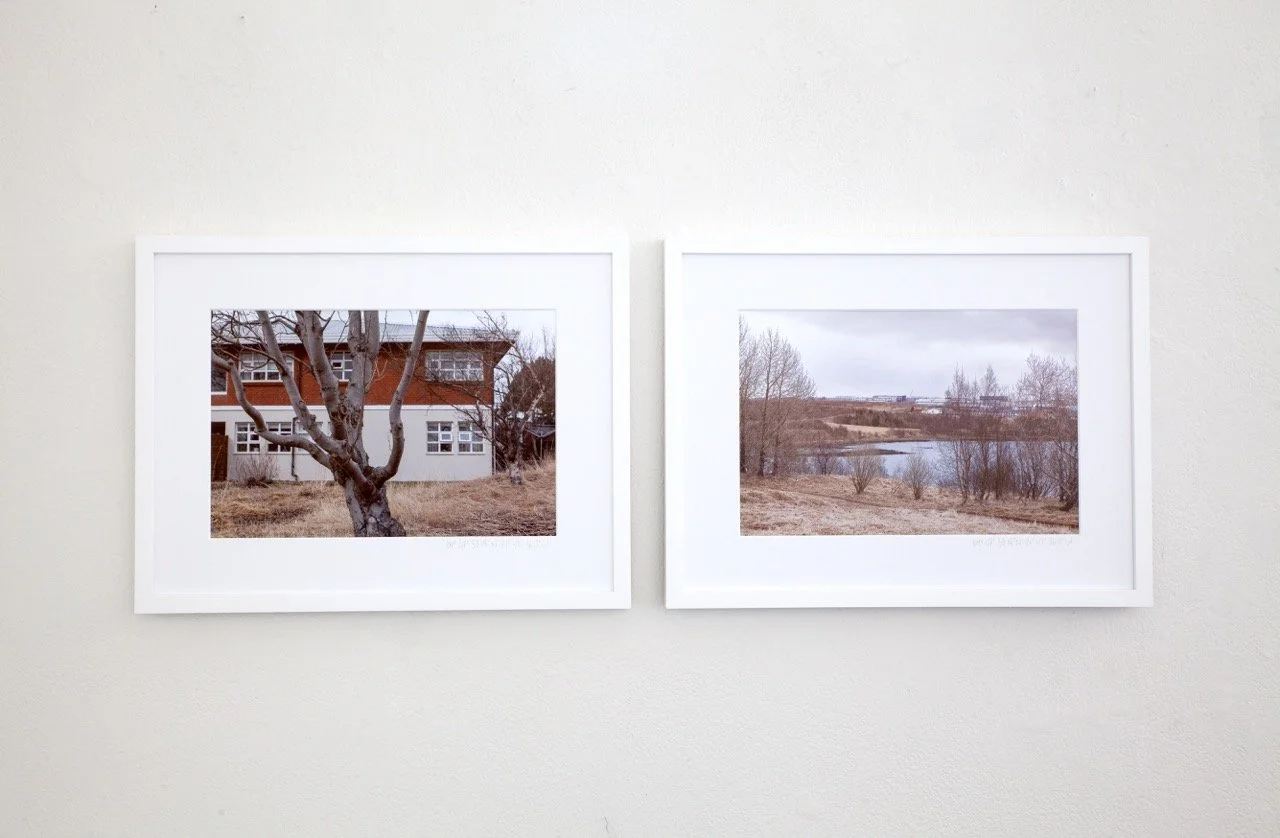
Pair 10: 64° 07′ 53.19″ N, 21° 47′ 36.13″ W. Archival pigment print on fine art paper, 30 × 20 cm, mounted in a passe-partout inscribed with the coordinates of the depicted location, 40 × 30 cm.

Pair 11: 64° 07′ 43.54″ N, 21° 47′ 02.49″ W. Archival pigment print on fine art paper, 30 × 20 cm, mounted in a passe-partout inscribed with the coordinates of the depicted location, 40 × 30 cm.
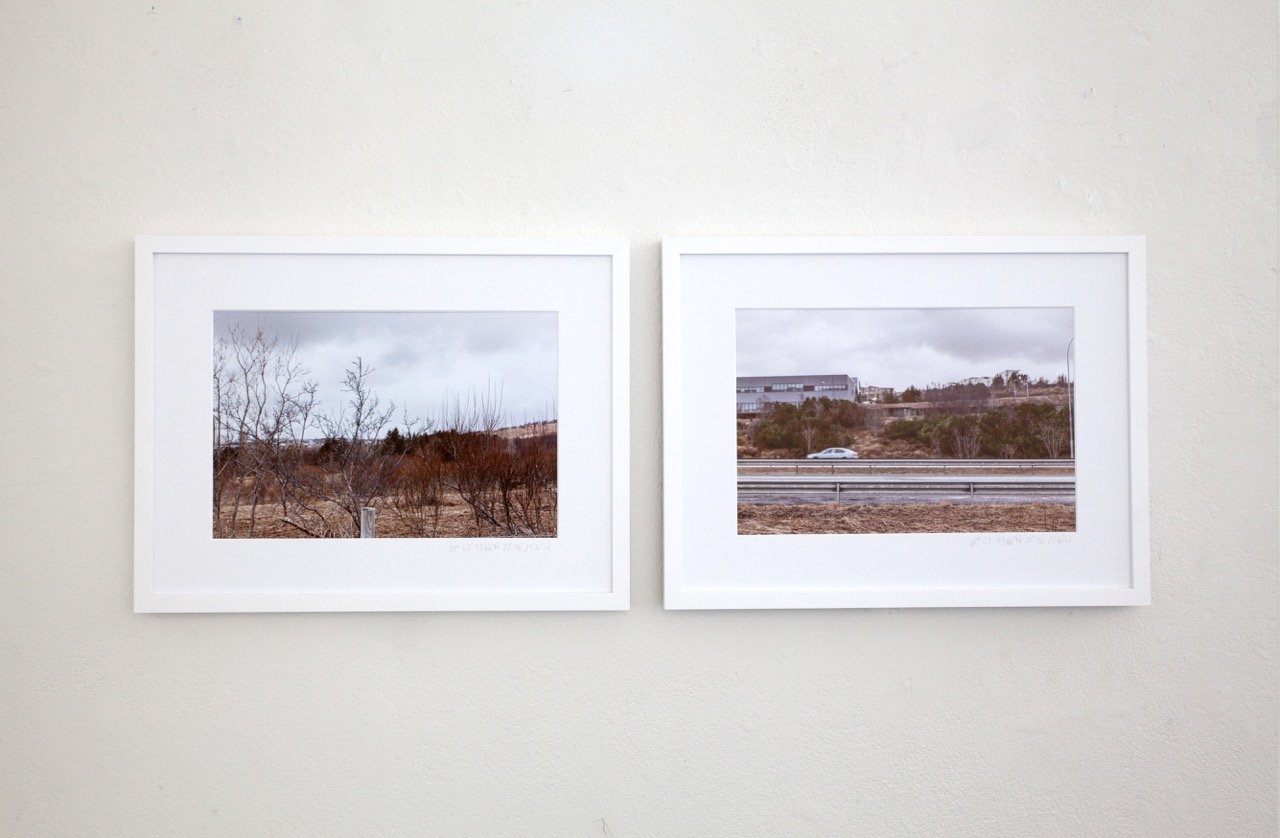
Pair 12: 4° 07′ 43.66″ N, 21° 46′ 24.70″ W. Archival pigment print on fine art paper, 30 × 20 cm, mounted in a passe-partout inscribed with the coordinates of the depicted location, 40 × 30 cm.
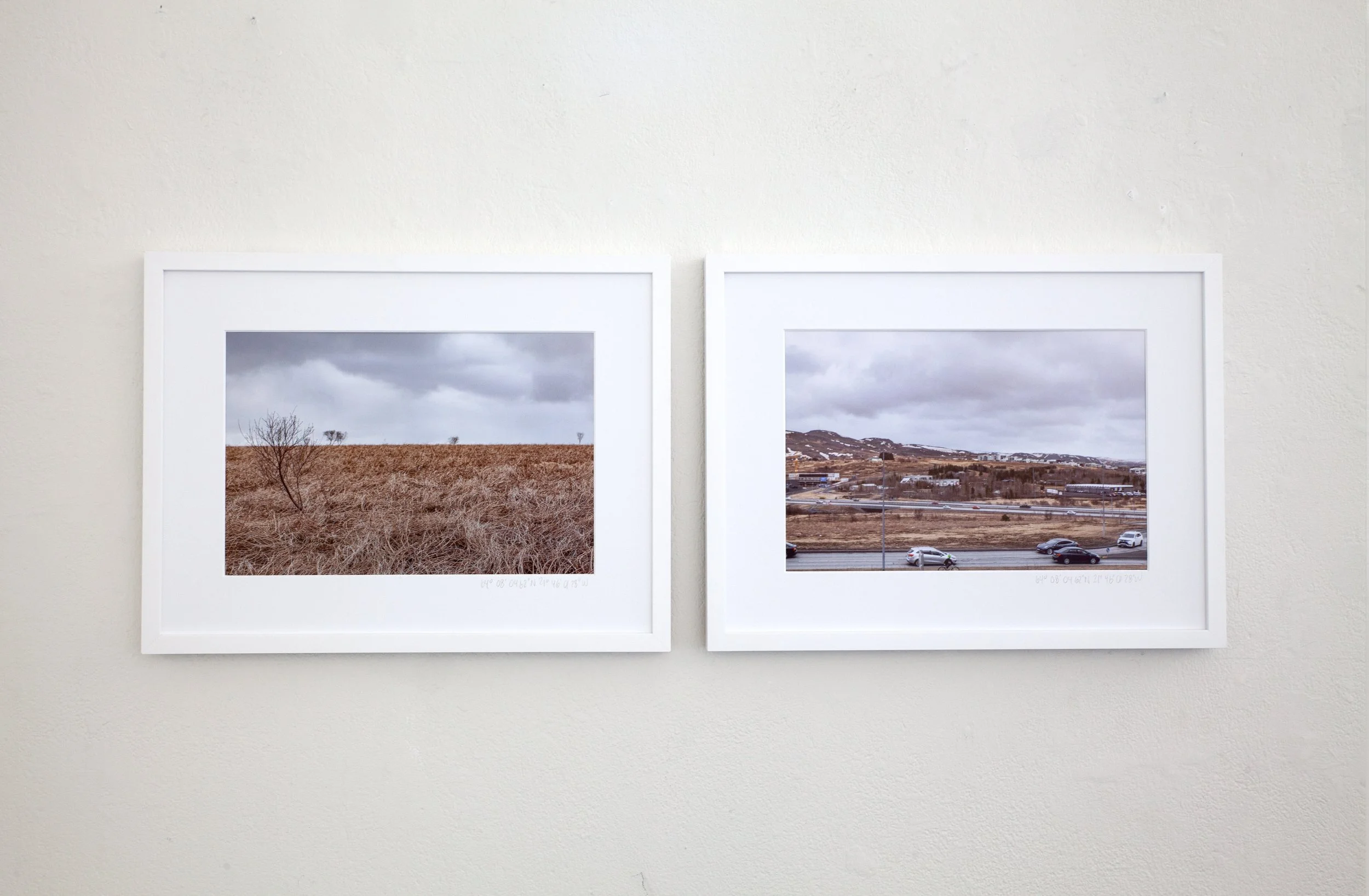
Pair 13: 64° 08′ 04.62″ N, 21° 46′ 01.28″ W. Archival pigment print on fine art paper, 30 × 20 cm, mounted in a passe-partout inscribed with the coordinates of the depicted location, 40 × 30 cm.
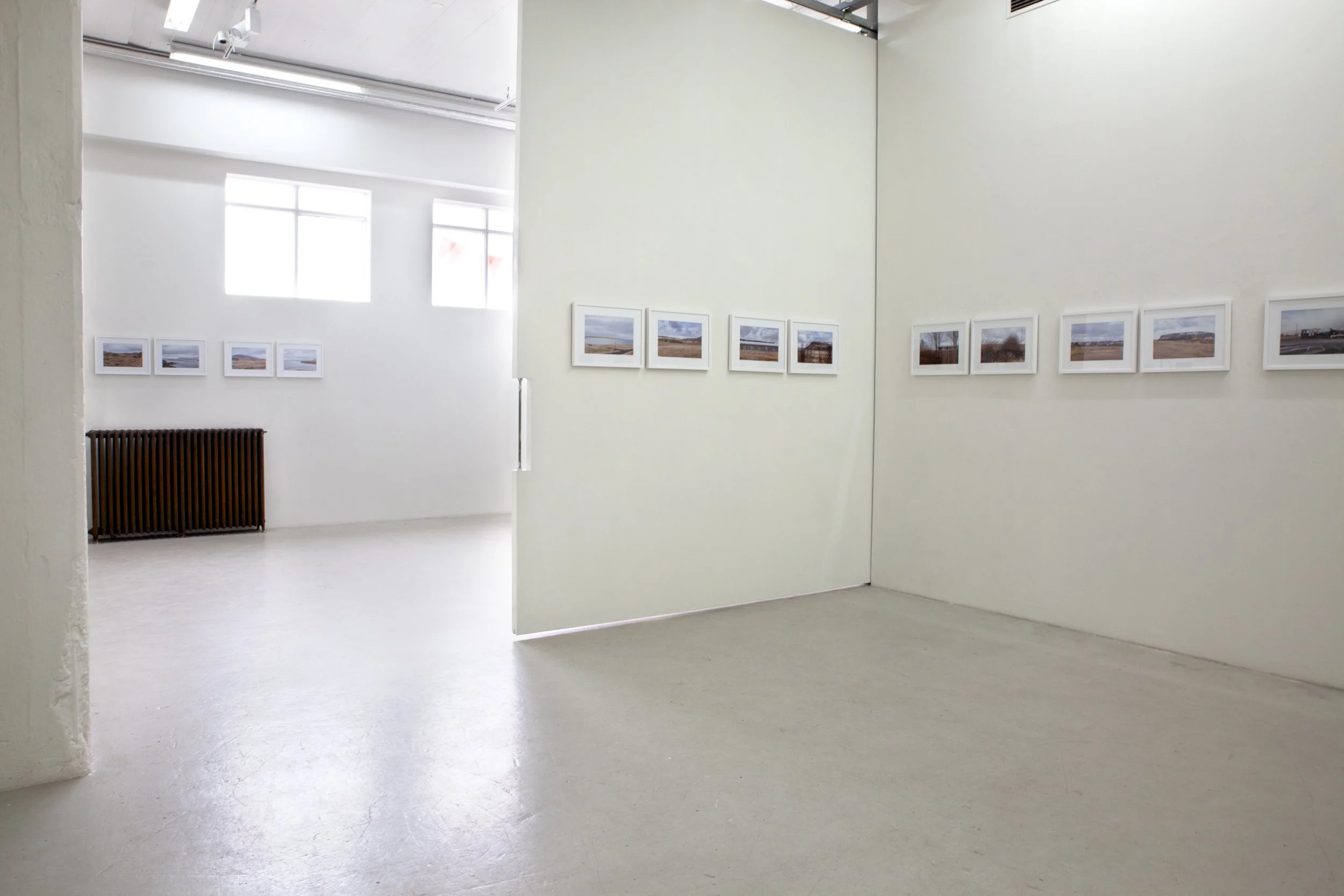
Installation view at IPA Gallery, Reykjavik.

Pair 14: 64° 08′ 23.85″ N, 21° 46′ 22.72″ W . Archival pigment print on fine art paper, 30 × 20 cm, mounted in a passe-partout inscribed with the coordinates of the depicted location, 40 × 30 cm.
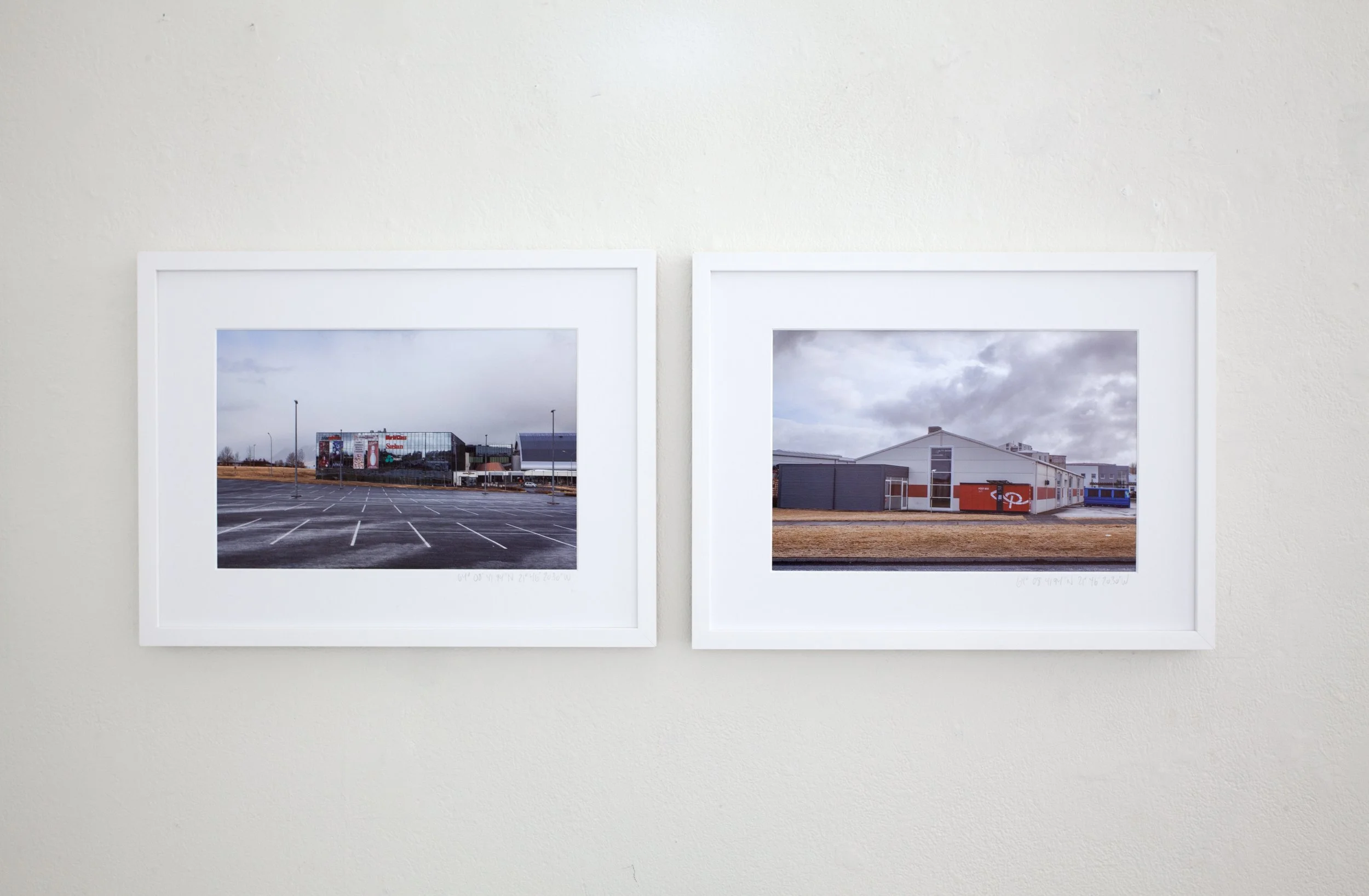
Pair 15: 64° 08′ 41.94″ N, 21° 46′ 20.30″ W. Archival pigment print on fine art paper, 30 × 20 cm, mounted in a passe-partout inscribed with the coordinates of the depicted location, 40 × 30 cm.
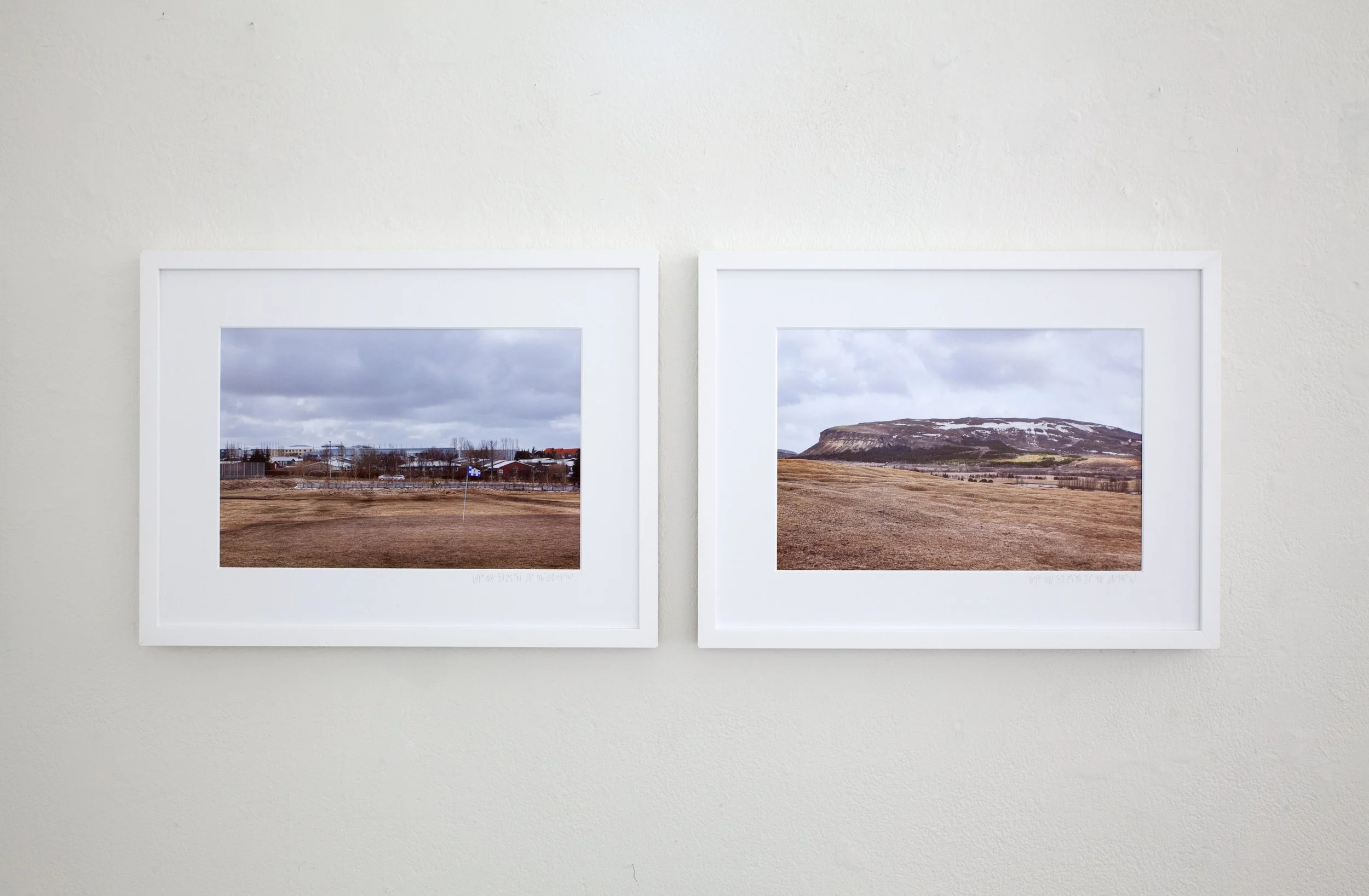
Pari 16: 64° 08′ 57.25″ N, 21° 46′ 08.49″ W. Archival pigment print on fine art paper, 30 × 20 cm, mounted in a passe-partout inscribed with the coordinates of the depicted location, 40 × 30 cm.

Pair 17: 64° 09′ 16.07″ N, 21° 45′ 41.55″ W. Archival pigment print on fine art paper, 30 × 20 cm, mounted in a passe-partout inscribed with the coordinates of the depicted location, 40 × 30 cm.
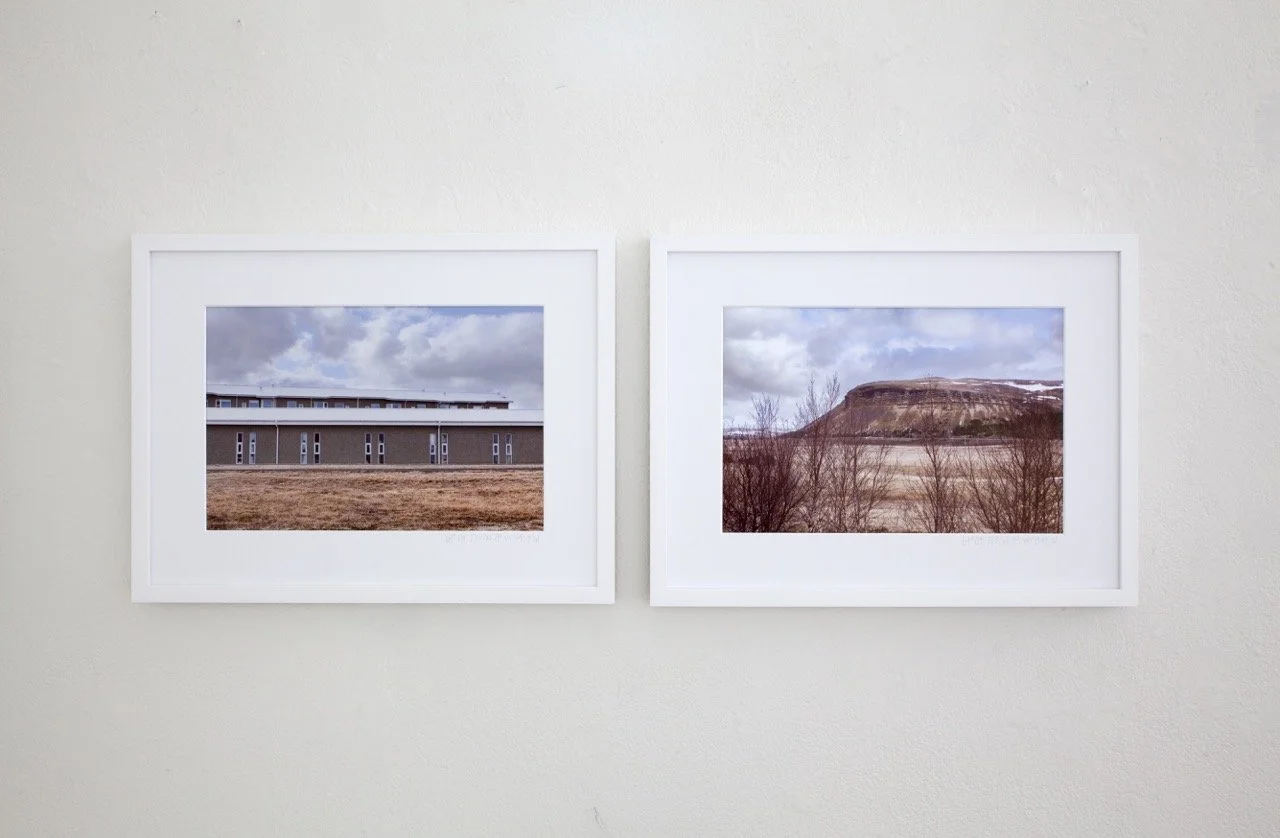
Pair 18: 4° 09′ 27.15″ N, 21° 44′ 59.42″ W. Archival pigment print on fine art paper, 30 × 20 cm, mounted in a passe-partout inscribed with the coordinates of the depicted location, 40 × 30 cm.
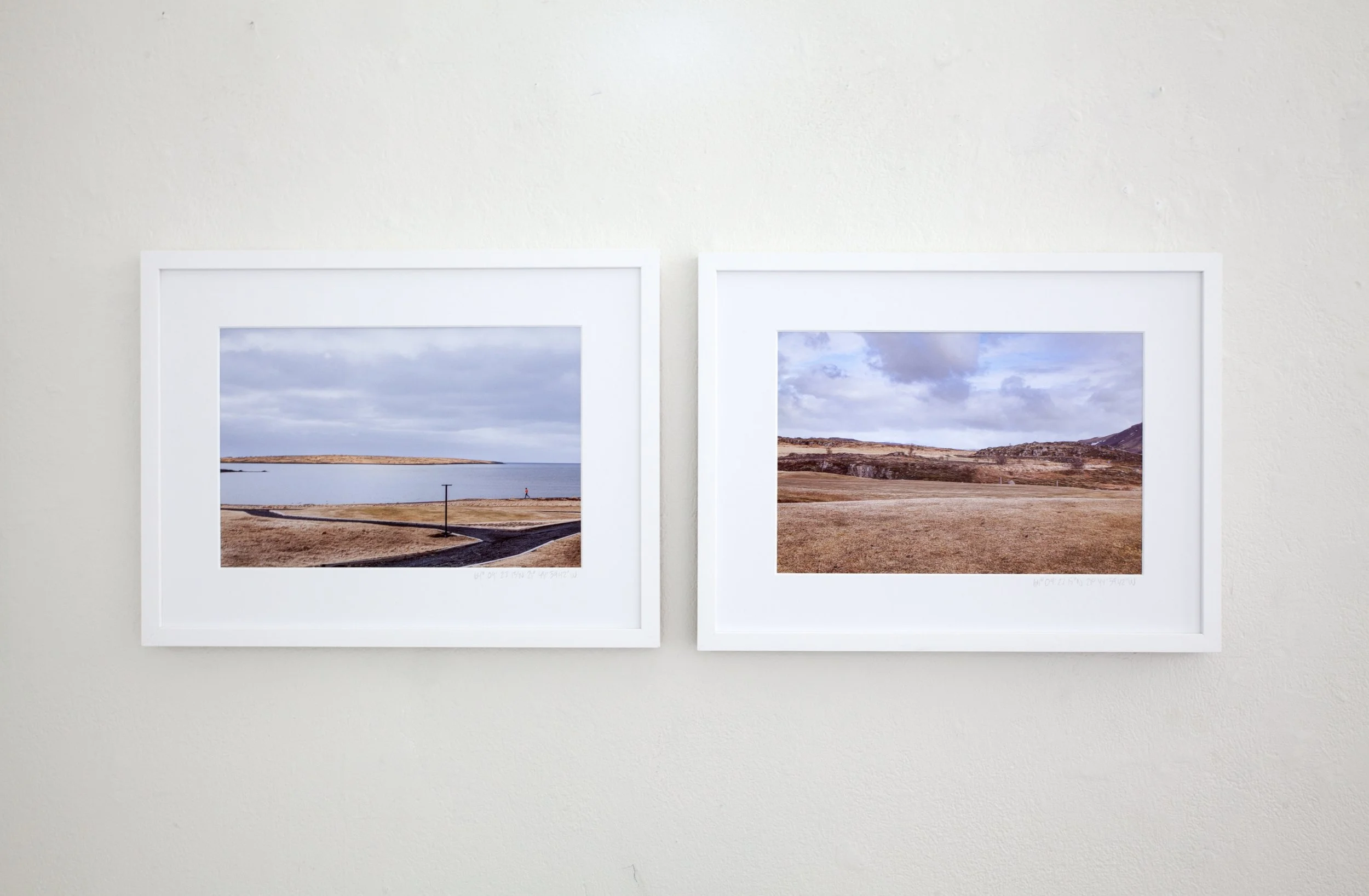
Pair 19: 64° 09′ 49.26″ N, 21° 44′ 53.28″ W. Archival pigment print on fine art paper, 30 × 20 cm, mounted in a passe-partout inscribed with the coordinates of the depicted location, 40 × 30 cm.
Curatorial essay by Dr. Ann-Sofie Gremaud
In this photographic series, Icelandic artist Hulda Rós Guðnadóttir explores the area of Grafarvogur. The photographs come to show us Grafarvogur as a place that ties together a number of questions relating to landscape and urban environment in Iceland. They do so in an understated way that comes to deflate the expectations of the sublime and unspoiled that sticks to Icelandic landscape depiction, while offering us something else instead.
The series consists of nineteen pairs of photographs, taken on nineteen spots during a walk through the Grafarvogur area in suburban Reykjavik and as Grafarvogur hægri >< vinstri they make up a series in chronological order.
In this series Guðnadóttir explores art in a dialogue with public space while she is also in conversation with other investigations of Icelandic landscape such as the paintings by Kjarval and Guðrún Kristjánsdóttir and the photographs of Rúri and Pétur Thomsen. The work engages with the Icelandic landscape - both as a familiar environment, as a resonance room for aesthetic experimentation in different media and as a site deeply entangled with foreign fantasies, national romanticism, and contemporary branding strategies. The project was conceived in 2020 at a moment when the coronavirus pandemic was defamiliarizing everyday life, shedding new light on even the most familiar environment. The complexity of this context can be traced in the images: The eerie emptiness in combination with soothing privilege of being able to take walks in a time of isolation, turn them into depictions of a new practice of walking.
Central to the work is also the interest in cartography and the dogmatic gaze: Coordinates function as references to classical mapping traditions, while the artist uses the camera as a research tool and methodological anchor as she has done in earlier projects as well. This time, however, she imposed strict dogmas on her process: She walked for five hours, stopping every ten minutes to take two photographs – first to the right, then to the left. The images were later colour graded but the changes that occurred during the walk, weather and increased tiredness, remain. The route itself has been drawn by hand from the collected coordinates, highlighting the connection between movement, mapping, and perception.
The project also plays with the tension between inside and outside gazes. It is created “out of season,” far from the peak of Iceland’s tourism cycle. For locals, this is the landscape as it appears most of the year: grey sea, black rocks, umber grass, and leafless trees forming a familiar backdrop. The chosen location opens up themes of the mundane and the well-known - the urban sprawl, the suburban edge, the prototypical Icelandic landscape that many residents would simply call our Iceland.As an Icelander living abroad, the artist returns to her old land(scape) after years of adapting to a different one. The low horizon and open spaces may have been unlearned. Even a typical, domesticated environment on the North-Eastern outskirts of Reykjavik can feel unfamiliar to someone who grew up in central Reykjavík. The work offers a different angle on otherwise well-known mountains, reframing them through distance, return, and bodily movement.
The project also draws on the tradition of travelogues and landscape documentation. Like a contemporary travel diary, it reimagines traveling by foot and recording the Icelandic landscape in a kind of visual sketchbook. The photographs are taken on site, then edited and completed in the studio, which ties back to traditional practices used by landscape painters. Along with changes in the weather, the physical strain of the walk becomes part of the narrative: mid-journey, the viewer can trace the artist’s fatigue, visible in an unconventional focus that in some cases comes close to being out of focus. In this way the photographs also also deal with the visual traces of the working body.
Our relationship to landscape encompasses different levels all at once: We experience it as our close environment as well as an image that we see through a gaze that makes it a palimpsest of layers of other images and cultural narratives. In this depiction of Grafarvogur there is a synergy between the abstraction of drawing the route from a bird’s perspective, the dogmatic predefined framework of the project together with the physical immersion in the environment. They each carry a cultural history - not least in an Icelandic setting and here they come together in the specific context of Grafarvogur as a dialectical suburban space: domesticated and familiar to the inhabitants but new to the artist – and potentially many of the viewers - and far from the emblematic tourist sites. In Grafarvogur hægri >< vinstri we see the backstage to the frontstage landscapes of Iceland such as Skogarfoss, Reynisfjara and 101 Reykjavík.
Ann-Sofie Gremaud
Footnote: Grafarvogur hægri >< vinstri translates Grafarvogur right >< left