Collaboration with Gallery Gudmundsdottir, Berlin



Participation in an academic conference in the Faroe Islands
‘Iceland and the Faroe Island seen from within and without: cross-cultural perspectives 17th - 21st century at Sjóvinnuhúsið (Fróðskaparsetur Föroya - University of the Faroe Islands) June 14 - 16 2022 with scholars Joanna Kodzik, Karen Oslund, Bergur Rönne Moberg, Ann-Sofie Gremaud, Bergur Djurhuus Hansen, Jan Borm, Arnar Eggert Thoroddsen, Knút Háberg Eysturstein, Malan Marnesdóttir, Katrín Anna Lund, Robert O. Nilsson, Kristín Ingvarsdóttir, Sumarlidi Ísleifsson, Alexandre Delangle, curator Kinna Poulsen, writers Carl Jóhan Jensen and Hallgrímur Helgason and visual artist Hulda Rós Gudnadóttir.

View from Sjóvinnuhúsið over Tórshavn harbour.
Organized by the University of the Faroe Islands in cooperation with the University of Iceland and UVSQ/Université Paris-Saclay by Dr. Jan Borm from UVSQ, Dr. Bergur Djuurhus Hansen from University of the Faroe Islands and Dr. Sumarlidi R. Ísleifsson from the University off Icleand.
Publication next year by Brill Academic Publishing as part of the “Arctic Humanities” series.
Participation with the 'Golden Ship' sculpture in group exhibition The First Day
A Group Exhibition
THE FIRST DAY
28. July - 9. September 2022
Gallery Gudmundsdottir, Berlin-Mitte
The First Day offers a reflection on the human condition and our place in the cosmos. These works open our imagination to fathom the vast and strange expanse of the universe and its possible worlds, with our earth sitting seemingly calm in its time/space vortex.

At Gallery Gudmundsdottir, Joachimstrasse 17, Berlin-Mitte. ‘The First Day’
“On the first day, God created light in the darkness.”
Genesis stories are a part of virtually every culture, with human imagination aiming to solve the mysteries of the creation of our world and existence, seeking to give direction and meaning to our lives. The theme of light is ever present in bringing about the first day, but in a most general way “a universe comes into being when a space is severed” (Spencer-Brown). As such, modern scientific cosmogony follows in these footsteps: the big bang as an explosive severance of an original singularity; the CMB (cosmic microwave background) or relic radiation as a universal shimmer of light remaining from the moment the first atoms formed and the universe became transparent; the birth of the first stars some 13.6 billion years ago, which the James Webb Space Telescope promises to capture live.
Even if we see resemblances, modern cosmogony does not pertain to give direction and meaning to our existence, for it has cut all its ancient ties with cosmology. Science, its foundation, provides means, but neither meaning nor ends. And thus, we today might side with the 18th century German physicist and philosopher Georg Christoph Lichtenberg, who, when learning of Wilhelm Herschel’s discovery of Uranus as the first new planet since antiquity, wrote in his sudelbücher: „To invent an infallible cure for toothache by which it might be immediately arrested, could well be worth as much and more than the discovery of yet another planet. “
THE FIRST DAY features work by Sarah Ancelle Schönfeld (1979), Gudny Gudmundsdottir (1970), Björg Thorsteinsdóttir (1940 –2019), Hulda Rós Gudnadóttir (1973), Anna Júlía Friðbjörnsdóttir (1973) and Erla S. Haraldsdóttir (1969), presenting a reflection on the human condition and our place in the cosmos. These works open our imagination to fathom the vast and strange expanse of the universe and its possible worlds, with our earth sitting seemingly calm in its time/space vortex. And they direct the view to the other side of creation, out seemingly supreme directive to, as Genesis 1.28 has it, subdue the earth, and the futures this may bestow on us.

At Gallery Gudmundsdottir, Joachimstrasse 17, Berlin-Mitte. ‘The First Day’ - Erla Haraldsdóttir, Anna Júlía Friðbjörnsdóttir
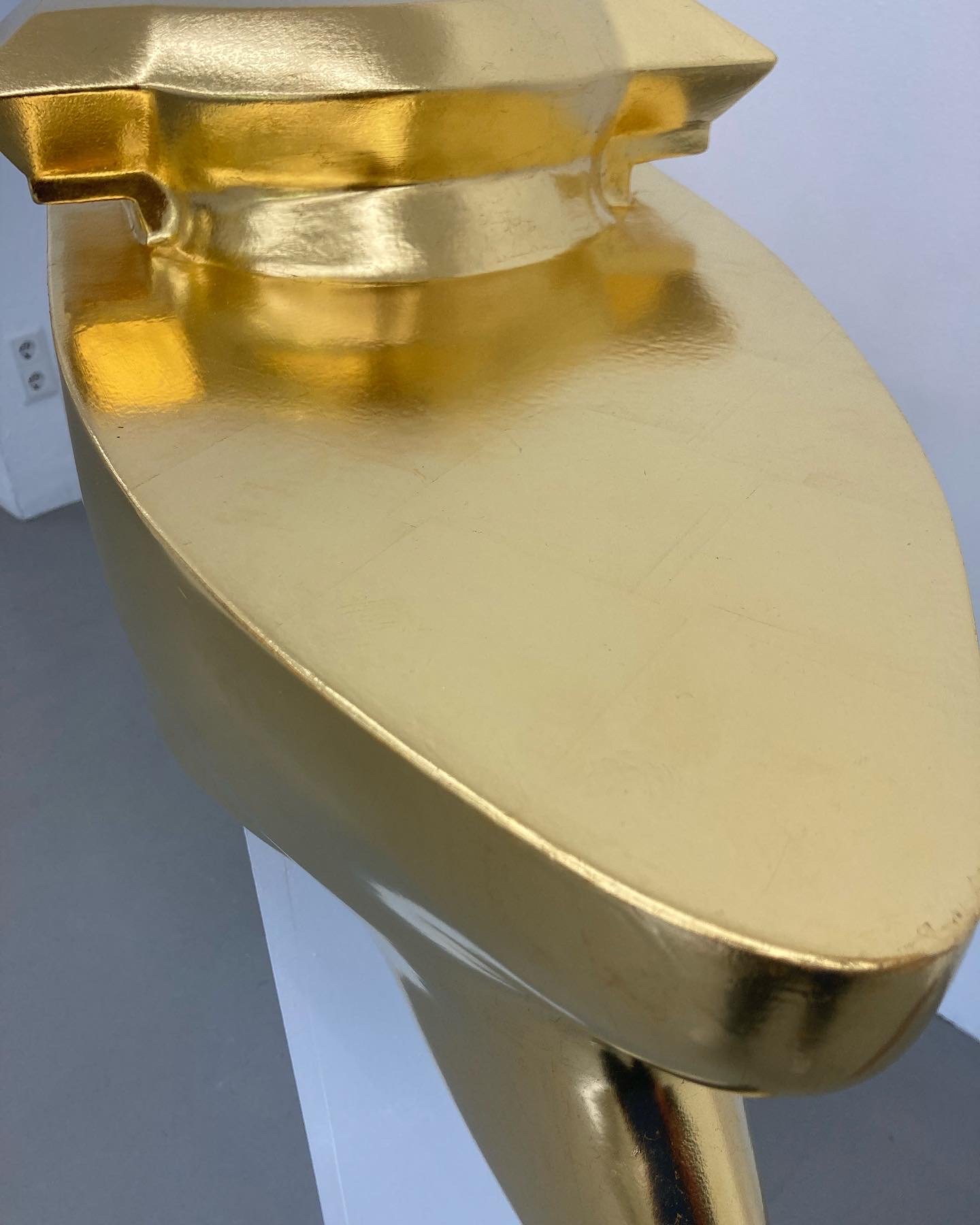
At Gallery Gudmundsdottir, Joachimstrasse 17, Berlin-Mitte. ‘The First Day’. ‘Golden Ship’ by Hulda Rós Gudnadóttir

At Gallery Gudmundsdottir, Joachimstrasse 17, Berlin-Mitte. ‘The First Day’ - Sarah Ancelle Schönfeld, Björg Thorsteinsdottir

At Gallery Gudmundsdottir, Joachimstrasse 17, Berlin-Mitte. ‘The First Day’ - Gudny Gudmundsdottir

At Gallery Gudmundsdottir, Joachimstrasse 17, Berlin-Mitte. ‘The First Day’ - Erla Haraldsdóttir

At Gallery Gudmundsdottir, Joachimstrasse 17, Berlin-Mitte. ‘The First Day’ - Björg Thorsteinsdottir

At Gallery Gudmundsdottir, Joachimstrasse 17, Berlin-Mitte. ‘The First Day’ - Sarah Ancelle Schönfeld

installed at HilbertRaum, photo: Clemens Wilhelm
Screening of videoworks from the Keep Frozen research project at Hilbertraum Berlin
Part of Spotlights program curated by Wilhelm Clemens at Hilbertraum 24th of September 2022

6 artists´ videos in 6 days plus 6 screenings 23.09 - 02.10.2022
#1 Tobias Yves Zintel,
# Hulda Rós Gudnadóttir
#Kim Schoen
#Sajan Mani
#Adnan Softic
#Juliane Zelwies
The Hibiscus flower is breath-taking but only lasts for 1 day.
SPOTLIGHTS presents a focussed view on 6 artists’ videos.
For only 1 day, each artist gives a solo presentation of 3 works installed at HilbertRaum.
On all 6 evenings, there are screenings of works by the artist-of-the-day at 7pm.
Prepare for a trip into the mind of an autistic child, into the hard work life on the docks of Reykjavik, into a German factory for fake books, into a fake Indian history, into the fake history of Europe, to the Norwegian trauma island Utøya, and so much more…


Exhibition at Scharaun, Siemensstadt-Berlin in May and June 2022

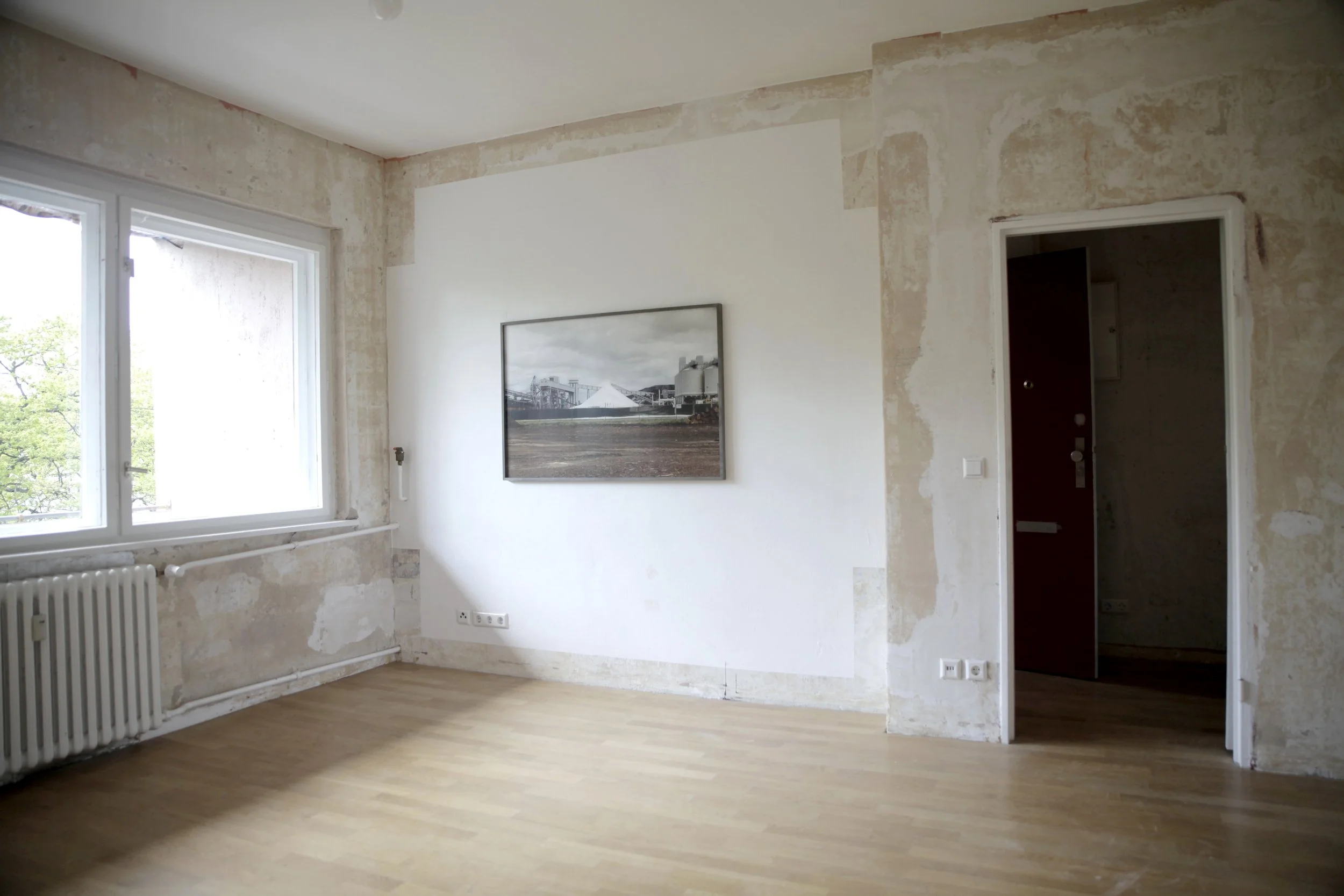
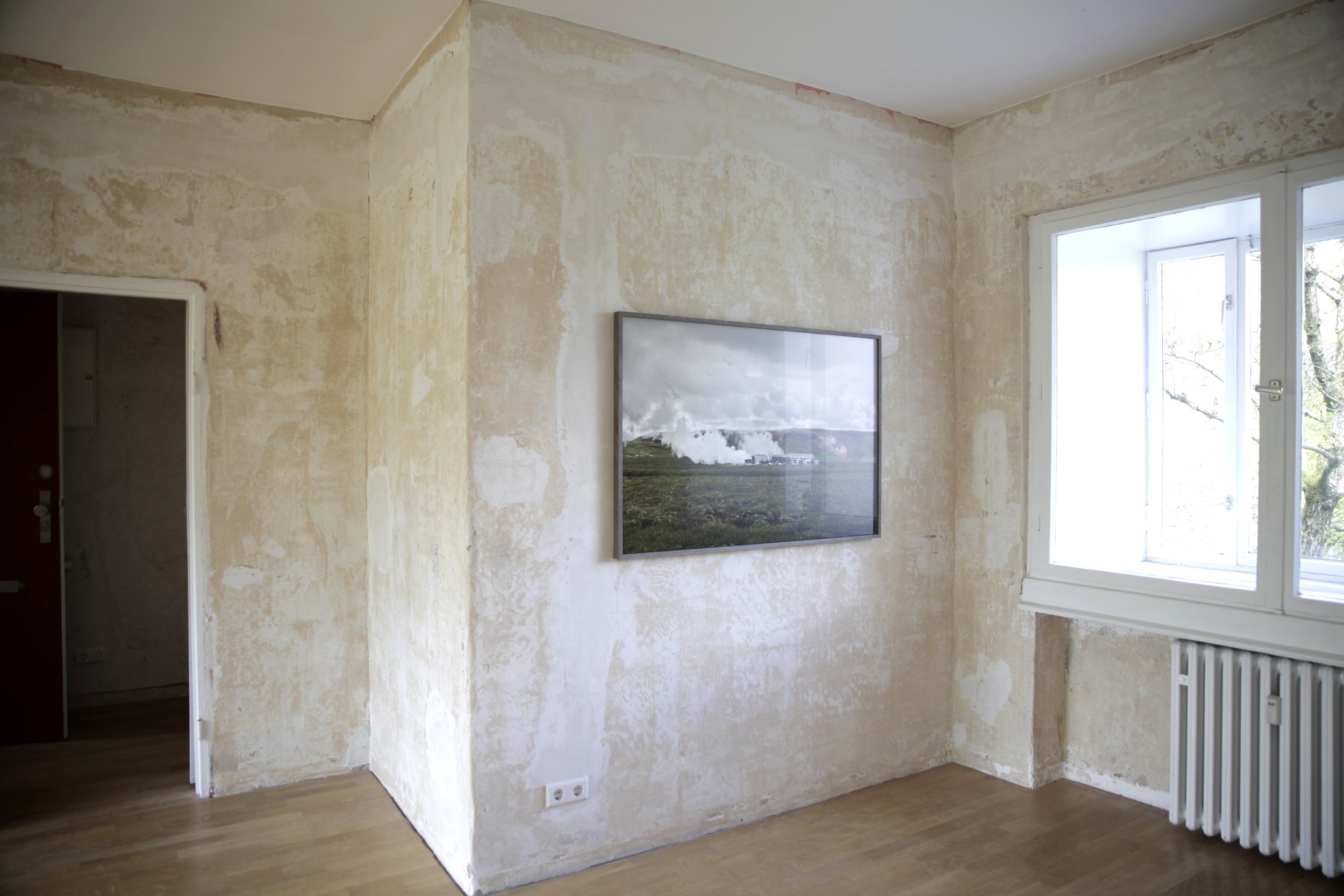


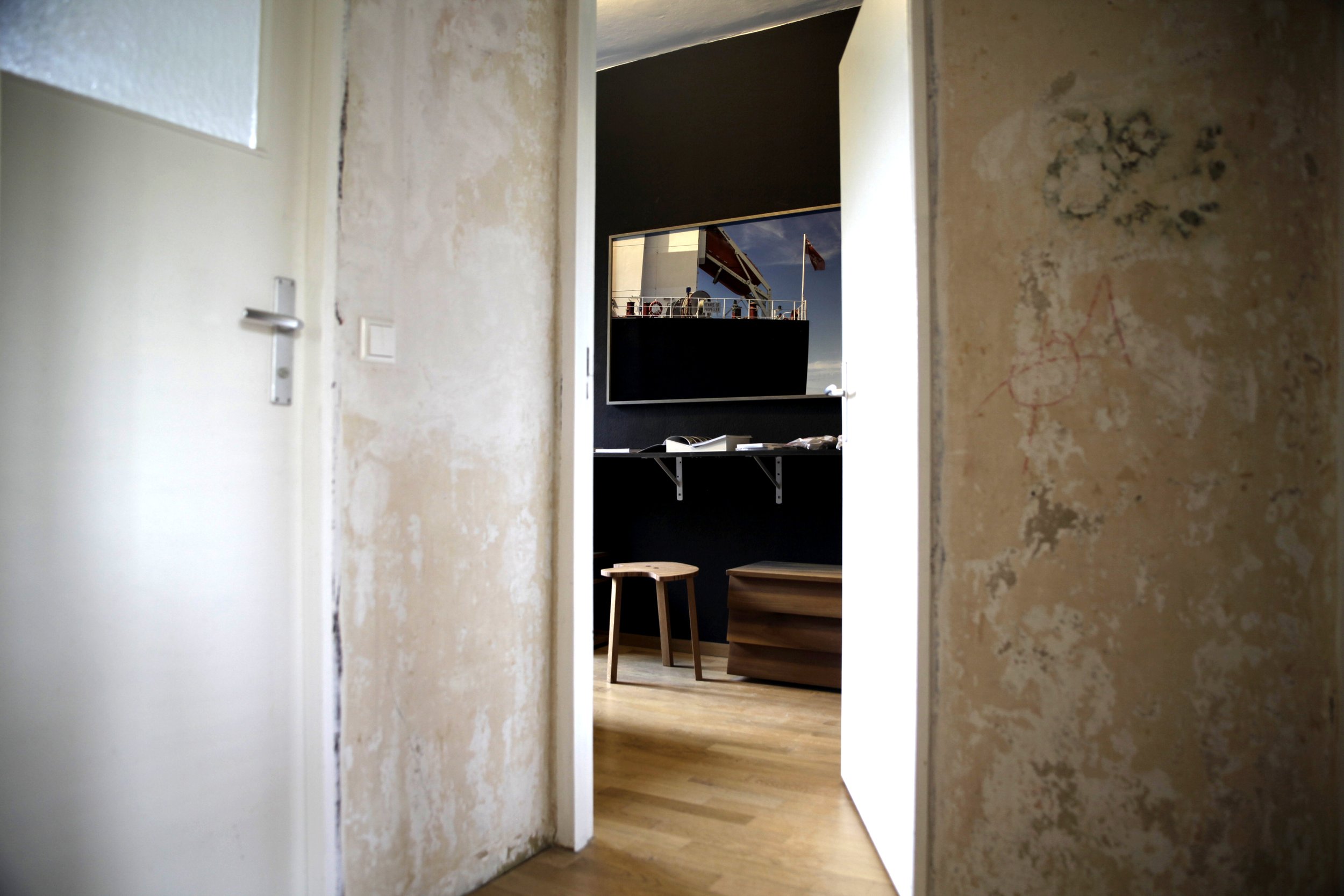

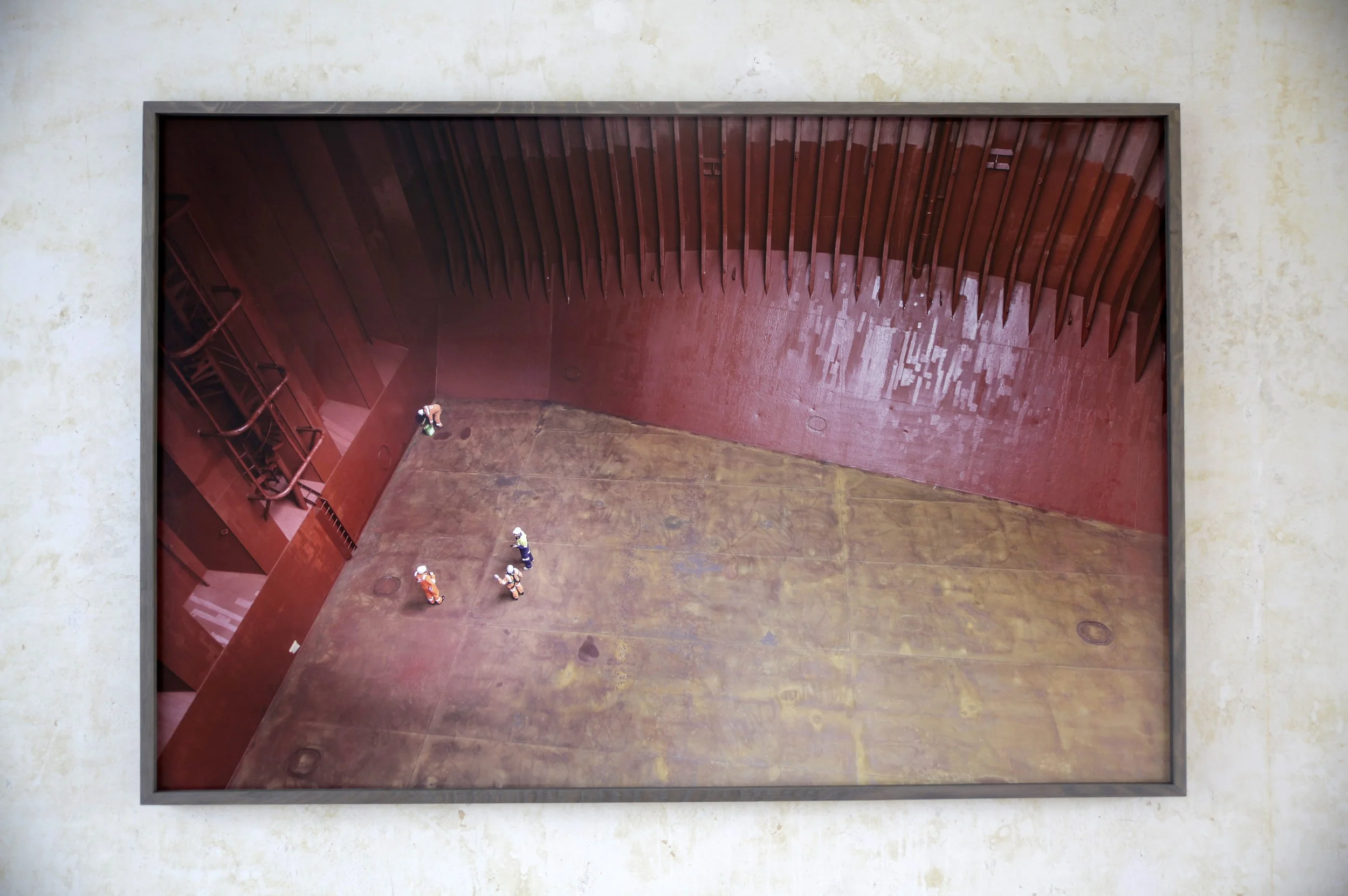


Now on Artsy with Gallery Gudmundsdottir
Gallery Gudmundsdottir Berlin
Hulda Rós Gudnadóttir is represented by Gallery Gudmundsdottir in Berlin. She had her first solo exhibition with the gallery in autumn 2021. Here is a link to the text by Kimberly Bradley that presents and contextualizes the works in the exhibition.


Fjölfeldi - Hlutfeldi - Margfeldi : www.multis.is

Multis is an internet based gallery that sells multiples by Iceland´s foremost contemporary artists. It is run by its founders Ásdís Spanó and Helga Óskarsdóttir who both have a long history of promoting and curating Icelandic art. Among the items on sale is Hooked, a multiple from the Keep Frozen series.
Multis ships worldwide.
In Autumn 2021 the Reykjanes Art Museum that is situated on the shorefront close to the international airport and the city of Reykjavik invited Multis to exhibit the multiples they have on sale in a traditional art exhibition environment.
The exhibition text:
Being able to create more than one copy of the same work has long followed the artist tradition. Many artists have created such works, which offers a different possibility than the unique artwork, and can be considered as an object somewhere between art and production. Works made in multiple copies are priced differently, are cheaper and thus made accessible to a larger group. The work goes from the standpoint of the individual and becomes an object that more than one can own, they are often smaller, and confirm their value not only by being a work by a certain artist, but also by being numbered and signed editions and then become part of a larger context, a narrative that is important to the person who acquires the work.
Multiples can be two- or three-dimensional and can be created using a variety of methods. In the fifteenth century, artists began to develop methods for molding works, as it was considered a great advantage to be able to distribute works as widely as possible. This led to a significant development of visual culture in the countries where the knowledge was available. In the eighteenth century, for example, artists invented methods that enabled them to create sculptures from, for example, clay, bronze or plaster and porcelain. Casting sculptures using mold or sand became popular in the production of works made in editions and these methods are still widely used in the making of art today. The methods of the graphic arts also fall under this definition, but works made in such a way have the undoubted advantage that it is easy to make the same work in many copies.
With the method of copper plating in the Baroque period, the distribution and reproduction of works of art became more general. The copper insert is a method used to make graphics, where the image is engraved with a needle in a copper plate and then printed on paper. The work Los caprichos, 1797 by Francisco Goya, was one of the first known multiples created in a limited edition. Looking at twentieth-century works of art, the work of Marcel Duchamps, Rotoreliefs from 1935, is one of the first multiples of modern art and in the form of multiples we know today, a series of six rotating discs, published in 500 copies.
The exhibition FJÖLFELDI - HLUTFELDI - MARGFELDI focuses on the works of twenty-nine contemporary artists who have worked for longer or shorter periods in creating multiples. In order for a work of art to fall under that definition, the works must be made in three or more copies.
The word HLUTFELDI is created by Magnús Pálsson, but in the exhibition you can find most of the works where he works in this way. The exhibition includes Magnús’ works that are still in the possession of the artist and his family, but many of his works are now owned by museums and collectors. Other works in the exhibition are made in a conversation with the MULTIS project over a two-year period.

WERK at Gallery Gudmundsdottir Berlin
Exhibition text by Kimberly Bradley:
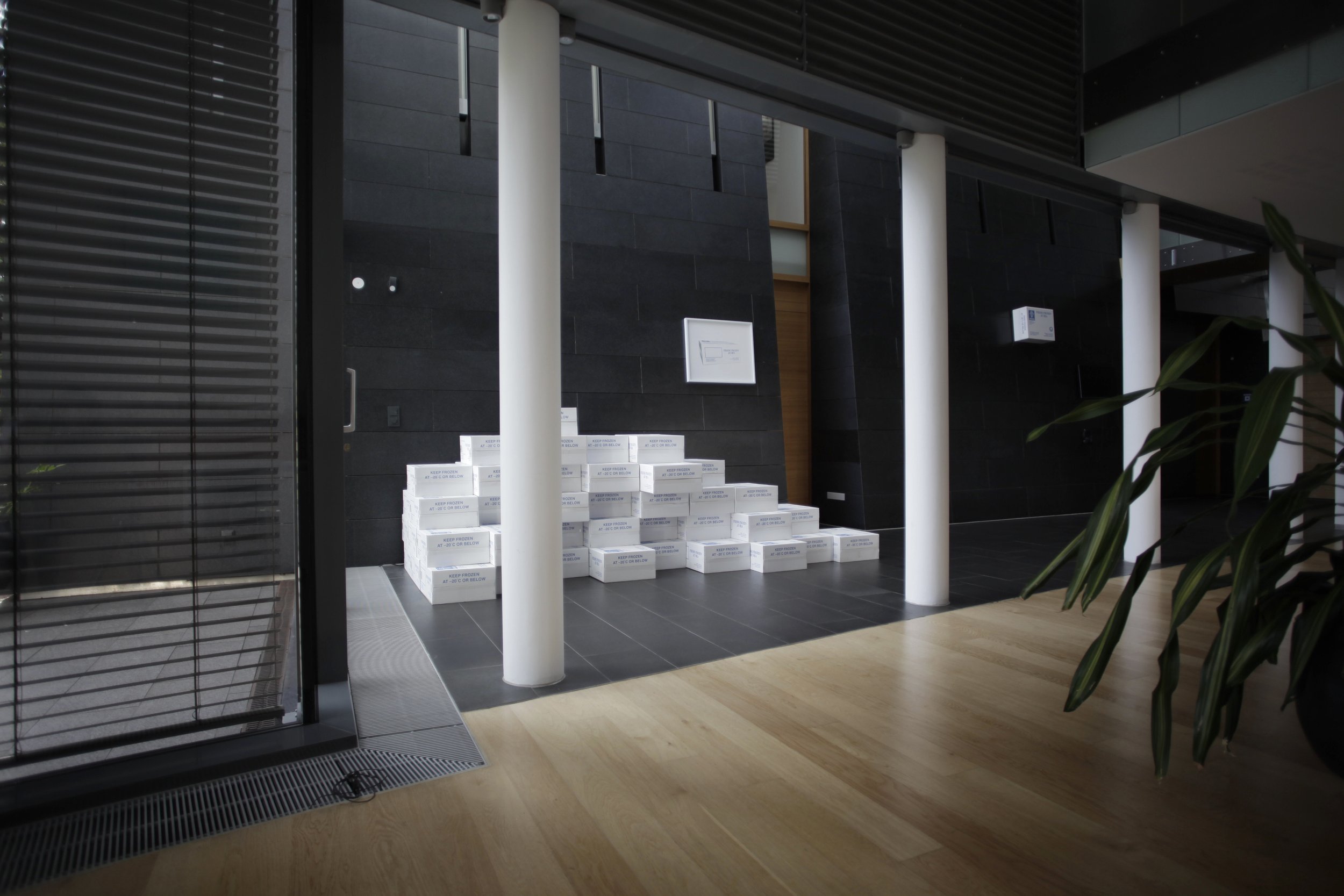
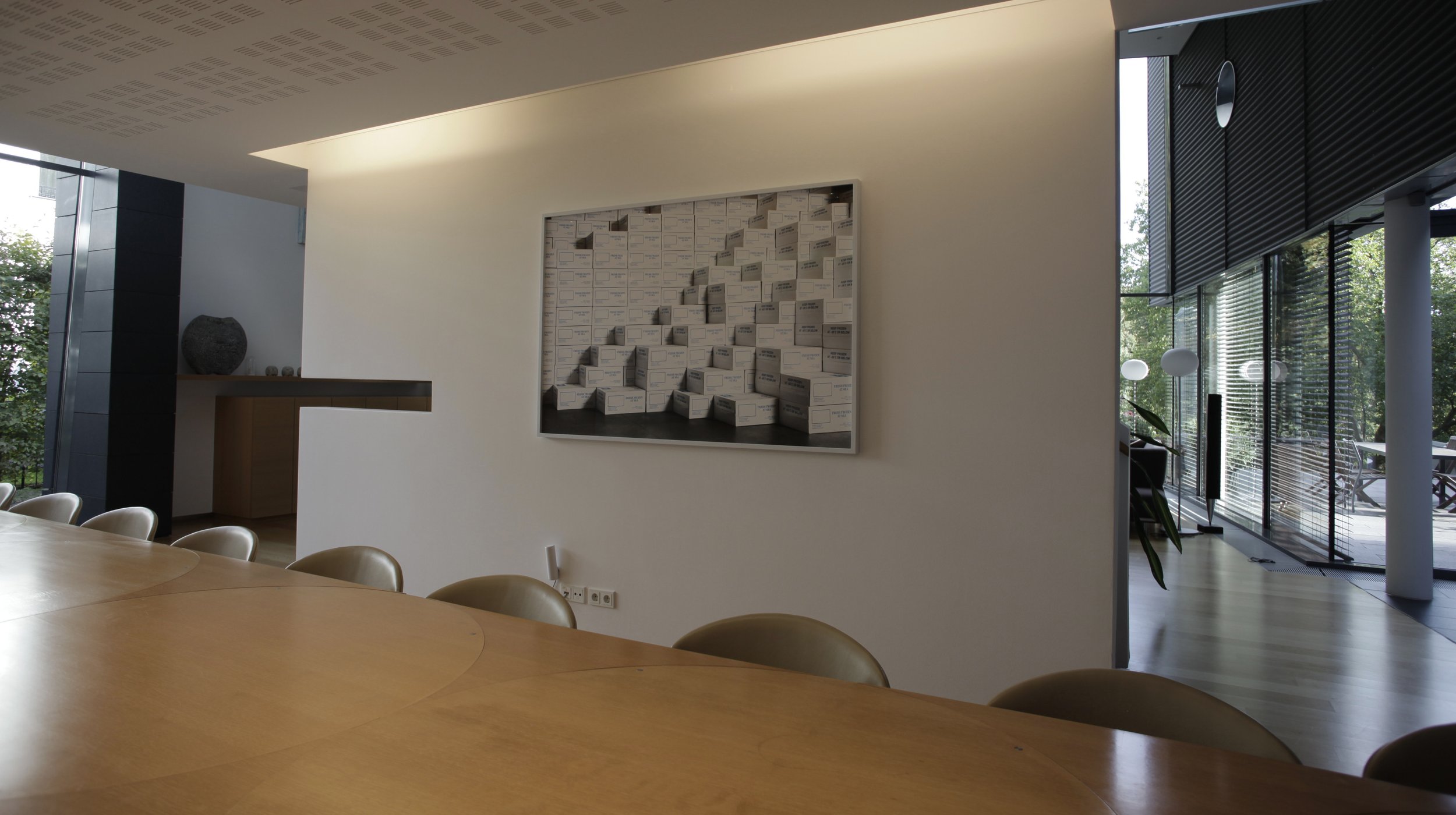
Cool, sober, crisp and clean, the photographs by Hulda Rós Guðnadóttir are at first look graphic studies of light, shadow, seriality and rhythm. On closer look it becomes clear that these mid-scale photographs, wrapped in sleek frames of the palest blue, depict white shipping boxes with royal blue lettering, stacked vertically or diagonally. Some boxes jut from the stacks at regular intervals like decorative building bricks; the overall effect is architectural and Minimalist. But not entirely: in some images a glimpse of floor is visible; in others, packing tape reflects flashes of light, breaking up the arrangement's rigor and rhythm. In the smallest photograph, a single such box is shadowlessly isolated from its background, floating in white.
In the corner of the gallery’s main space, we see the objects that are source material of these images: boxes emblazoned with the words “KEEP FROZEN AT -20°C OR BELOW; FRESH FROZEN AT SEA” are stacked here, too. These boxes are empty, but normally each would contain 25 kilos of frozen fish, to be transported by freezer trawler to Reykjavík’s harbor, where they are speedily unloaded by teams of dockworkers, entering the economy as one of Iceland’s primary natural resources.
The photographs, and the boxes, are the newest works situated within an extensive and ongoing body of artistic research that Guðnadóttir, whose academic background includes a degree in anthropology, began about a decade ago. At the time curious as to what the new cultural spaces, luxury housing, and boutiques in her home city’s harbor were replacing, she discovered a largely hidden aspect of the fishing industry in her native Iceland: teams of workers emptying fishing trawlers on a central dock (in general, 20,000 boxes in 48 hours in a working environment of -30°C: “keep frozen” indeed). Her contact with the workers, backed by research on Icelandic fishing policy under Danish colonial rule and thereafter, became the feature-length documentary Keep Frozen (2016) on view in the gallery's back room.
We again see several of these workers in the video Labor Move (2016), also on view in the gallery’s back space: Some of the aforementioned dockworkers later “performed” their work under Guðnadóttir’s direction—moving a fishing trawler’s worth of boxes nearly but not entirely identical to the ones pictured and installed here. Strategically lit in a dark space, burly men in helmets, coveralls, and gloves toss, stack, and roll the boxes, full this time. The camera follows moments of graceful movement, but also captures glimpses of brute force and physical fatigue.
Earlier this year, the artist mounted the solo exhibition WERK – Labor Move at the Reykjavík Art Museum, featuring the films along with a spatial installation of 5,000 boxes stacked high around the perimeter of the exhibition space, nearly lining it in rhythmic, precise arrangements. The photographs on view here were taken there, but they far transcend mere exhibition documentation. They are rather, in one way, a meditation on formal artistic considerations—one could connect them to Minimal Art's seriality, à la Donald Judd; or the photographs of Andreas Gursky, which comment on the scales of contemporary industrial production. Or even the cheekiness of Andy Warhol's 1964 Brillo boxes—Guðnadóttir had these boxes specially fabricated for the Reykjavík exhibition with a slight difference to the originals. The text on the cardboard no longer refers to industrial contents, but rather to the boxes’ manufacturing reality. In the right bottom corner of each box, the words WERK – Labor Move, Studio Hulda Rós Guðnadóttir, Made in Lithuania have been added.
In another way these works represent Guðnadóttir’s further abstraction of the global economy, and Iceland’s place in it, in times of profound change and paradigm shifts. The artist’s initial exploration of dockwork has resulted in a connected chain of interrelated but kaleidoscopically different artworks spanning time, each body of work connecting to the last but always departing from a divergent perspective. Each iteration has moved away from investigation and further toward art object or image—in essence, a conceptual manifestation of an image of an image of an image. What we see here is the artist’s most reduced expression of the intricacies (but also banalities) of labor, goods, and economies—an empty transport container as signifier. Perhaps best expressed by the single box sculpture installed at eye level on the gallery wall, the exhibition WERK represents a progression of activity, and above all thought, as complex and nuanced as the supply chains that surround, supply, and in the end ultimately confine us.
Article in the weekend cultural section of taz - Die Tageszeitung - Berlin
Die Virtuosität der Handgriffe
On WERK at Gallery Gudmundsdottir, WERK - Labor Move at Reykjavik Art Museum and the Keep Frozen art works.
By Julia Gwendolyn Schneider

Installation pictures from Swimming Pool - Troubled Waters exhibition


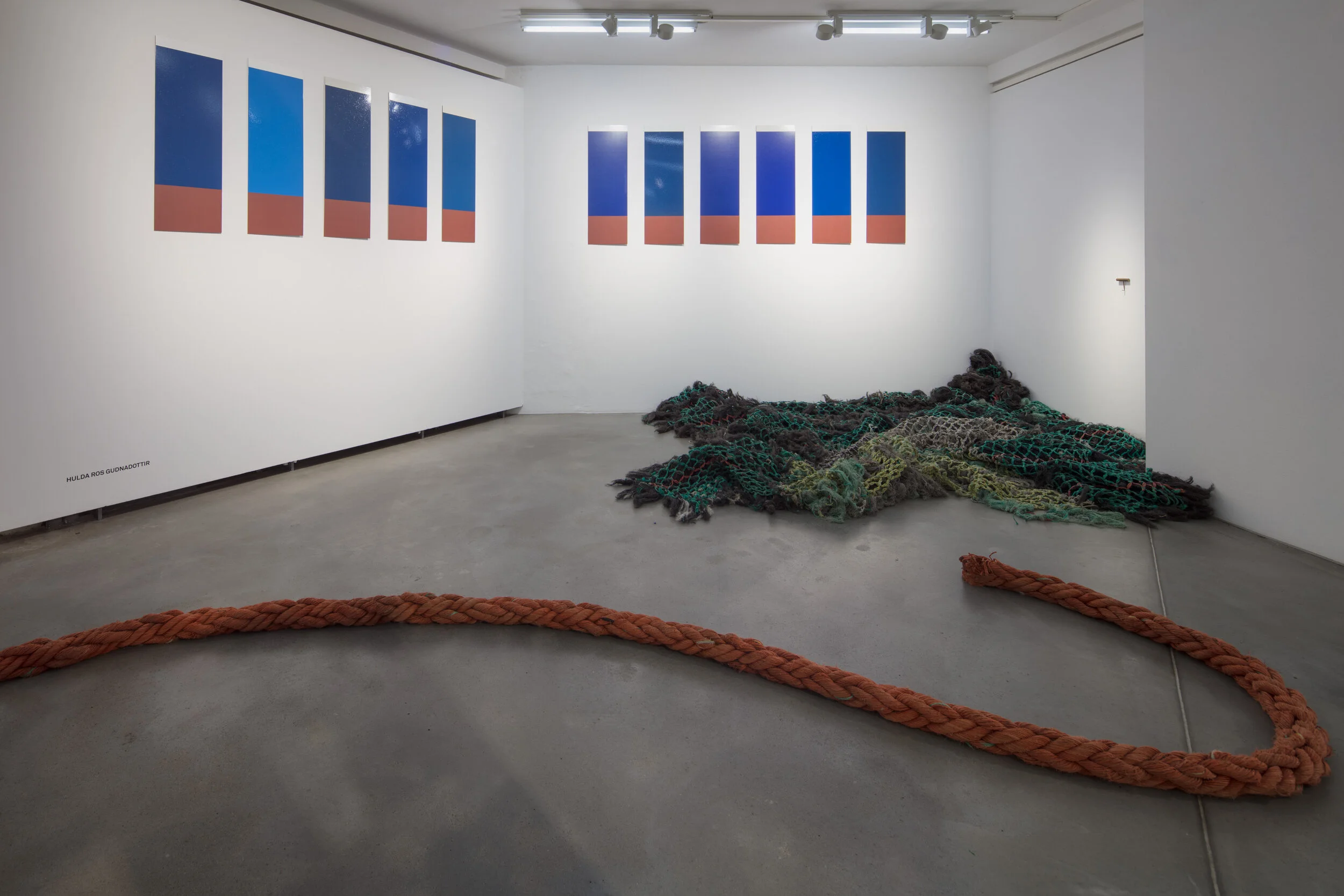

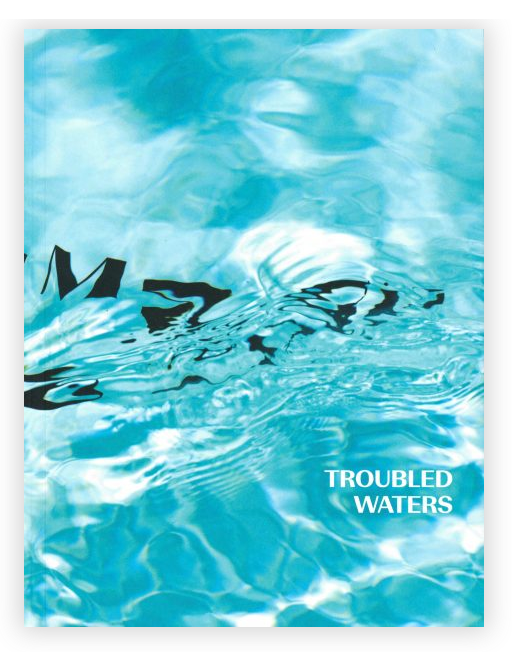
Swimming Pool - Troubled Waters catalogue can be ordered!
162 p., numerous colored illustrations, german/english, 23 x 30 cm
AUTHOR*S
Andrew Berardini, Övül Ö. Durmusoglu, Gustav Elgin, Maaike Gouwenberg, Gudny Gudmundsdóttir, Nele Heinevetter (TROPEZ), John Holten, Linda Jalloh, Àngels Miralda, Mearg Negusse, Bert Rebhandl, Vanina Saracino, Valeria Schulte-Fischedick, Olaf Stüber, Carola Uehlken
Order here.

Keep Frozen showing at Scharaun Berlin
‘Kino Simensstadt - Der Komplex Arbeit’ film program curated by Jaro Straub and Olaf Stüber.
Mobilizing the Arctic. Polar Bears and Puffins in Transnational Interplay
Katla Kjartansdóttir and Kristinn Schram contextualize the puffin works in a book titled ‘ Mobility and Transnational Iceland: Current Transformations and Global Entanglements’ available here for pdf downlaod.

''The puffin has also played a key role in several works by contemporary Icelandic visual artists Hulda Rós Guðnadóttir. In her work 'Don´t Feed them after Midnight (2006), a mixed media installation, performance and design, Guðnadóttir deals critically with the image of the Icelandic artists as a weird, elf-like figure akin to the vulnerable puffin. As stated in the short introductory text on her website, this work is ''a game of reappropriation (sic), of taking control over the creation of meaning of the symbols representing one´s own identity'' (Guðnadóttir 2006). The puffin is also a central figure in her work 'Material Puffin' (2014) in which he plays with human/animal relations, national imagery, and gender roles. In this work, the artist appears wearing a festive pink gown and a large puffin mask in the harbour area in Reykjavík. As can be seen on one of the stills from the work, shown below, she holds a gas pump in her hand and seems to be spraying gold and glitter into the ocean. In her multi-layered visual narration, the artist gives the masculine harbour area a feminine touch an evokes challenging questions in relation to tourism and urban development, sustainability, ecological awareness, and future visions. In yet another recent work, entitled 'All is Full of Love' (2019), Guðnadóttir again engages with the puffin as a mass-produced tourist souvenir and material emblem of contemporary Icelandic cultural identity. In this work, the artist critically explores questions relating to the commodification of ethnic identity (Comoroff and Comoroff 2009) that are linked to the massive growth of tourism in Iceland and the role of the artist (as a puffin) within ongoing social and cultural developments. Again, dressed in pink, she playfuly positions, and literally masks herself as a puffin, with a large puffin mask on her head, inviting the viewer to participate in discussions of current socio-economic issues in the country, complex human/animal relations, and their local/global interplay. In Guðnadóttir´s works, the puffin evokes questions of how overexploitation can lead to the exhaustion or even complete extinction of natural resources. Along with the snowy owl and the European turtledove, the Atlantic puffin has recently been placed on the BirdLife International list of birds in danger of extinction (BirdLife International 2018). Although the puffin is indeed cute and cuddly, it can also be described as a non-human reminder of the fragile ecosystem of the Arctic, ecological anxieties, and the gloomy ecological prospects for our post-human/post/anthropocentric times, which include climate change, habitat-loss and/or bird extinction.''

Working in the studio with dancer Karolina Ginman and choreographer Margrét Sara Guðjónsdóttir adapting Margrét´s hyperstates to the SILICA project. Photo by María Erla Marelsdóttir, ambassador of Iceland to Germany during her studio visit in June 2021.
Work in process S-I-L-I-C-A behind the scenes.

WERK - Labor Move at Reykjavik Art Museum
≥≥≥ 05.02 - 09.05 2021 Reykjavik Art Museum, Hafnarhús
’WERK - Labor Move’, solo exhibition curated by Birta Gudjonsdottir.
The installation WERK - Labor Move is made especially for the museum’s main hall as the building Hafnarhús was originally built as a warehouse on the quay. The exhibition is based on an examination of the functioning of the multi-layered global economy, and the perspective of the familiar, the local, is used to analyse and project a connection with the global. Parallels in the manual labor which went on in this building before are examined in the context of the gentrification process of the port area and similar development around the world. Hafnarhúsið is the first building by Reykjavík Harbour to be given a new role as a building for art and cultural activities and has become characteristic of the area, similar to the development of harbour areas everywhere.
The work consists of a three-channel filmic work, Labor Move; sculptures, directly related to the filmic work; and a video recording titled Labor Love which shows the assembling of the sculptures in the building in the run-up to the exhibition opening.
The exhibition consists of more than 5000 identical boxes that usually contain frozen fish. They create an immersive installation in a space of ca. 350 m2. The 3-channel video Labor Move is the centre point of the installation. We see several dockworkers performing specifically for the camera, based on movements they have become accustomed to over a long period of time while unloading boxes of frozen fish from within the hull of the first trawler and over to the quayside at Reykjavík Harbour. The same movements are repeated, they throw heavy boxes from one place to another with considerable coordination and skill. Labor Move is an art work in itself, but also a documentation in film and sound about the 48-hour performance of the dockers in front of viewers in the exhibition space in Leipzig in 2016. The 48-hour duration of the performance is the same time as the dockworkers usually have to unload the fish from a freezer trawler.

Artist Hulda Ros Gudnadottir with curator Birta Gudjonsdottir inside the installation WERK - Labor Move
Artist - Curator conversation / WERK - Labor Move
Ca. forty minutes video conversation between Hulda Rós Gudnadottir and curator Birta Gudjonsdottir about the solo exhibition WERK - Labor Move at Reykjavik Art Museum 5th of February to 9th of May 2021. With English subtitles. Courtesy of Reykjavik Art Museum.
Flash Art, review by Andreas Schlaegel
Read here.

Artists in Conversation
Online event / Embassy of Iceland in Berlin, Künstlerhaus Bethanien and Icelandic Art Center.
‘Three artist from Iceland in Conversation’ - moderated by Cassandra Edlefsen Lasch live online on the 23.03.2021. Hulda Rós Guðnadóttir, Anna Rún Tryggvadóttir, Styrmir Örn Guðmundsson
Video documentation here.
Swimming Pool - Troubled Waters catalogue can be ordered!
The catalogue is published on the occasion of the exhibition “Swimming Pool – Troubled Waters” that opens on the 6th of August 2021 at the Künstlerhaus Bethanien, Berlin.
162 p., numerous colored illustrations, german/english, 23 x 30 cm
AUTHOR*S
Andrew Berardini, Övül Ö. Durmusoglu, Gustav Elgin, Maaike Gouwenberg, Gudny Gudmundsdóttir, Nele Heinevetter (TROPEZ), John Holten, Linda Jalloh, Àngels Miralda, Mearg Negusse, Bert Rebhandl, Vanina Saracino, Valeria Schulte-Fischedick, Olaf Stüber, Carola Uehlken
Order here.